
Oil-rich South Sudan goes a year without paying its own officials
7.8 million of its nearly 12 million people face acute hunger, governor's ten per cent tax demand leaves food aid barges stuck at Malakal
Images
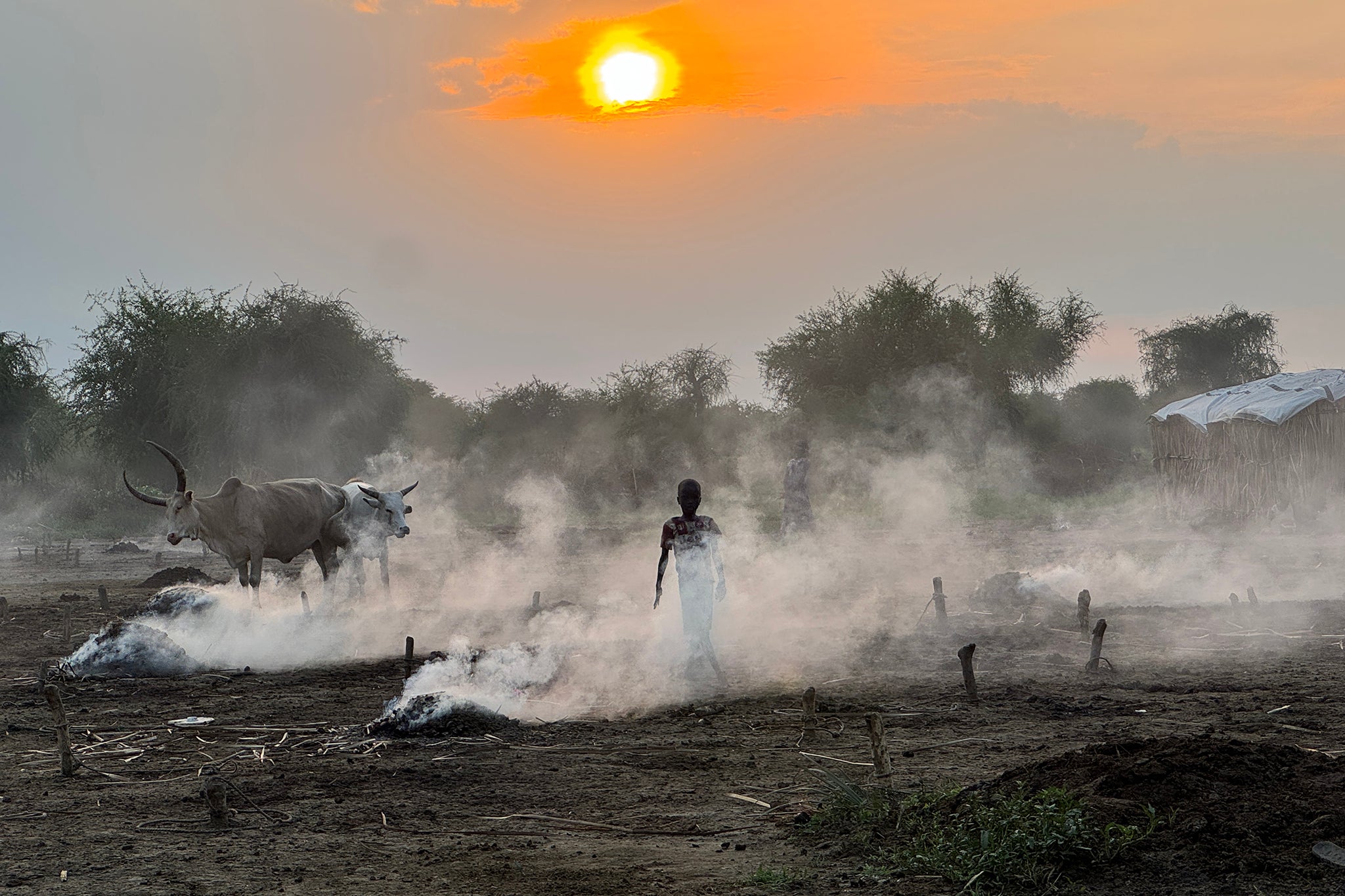 Villagers in New Fangak, on the White Nile, burn dung to keep flies off their cattle herds (The Independent)
The Independent
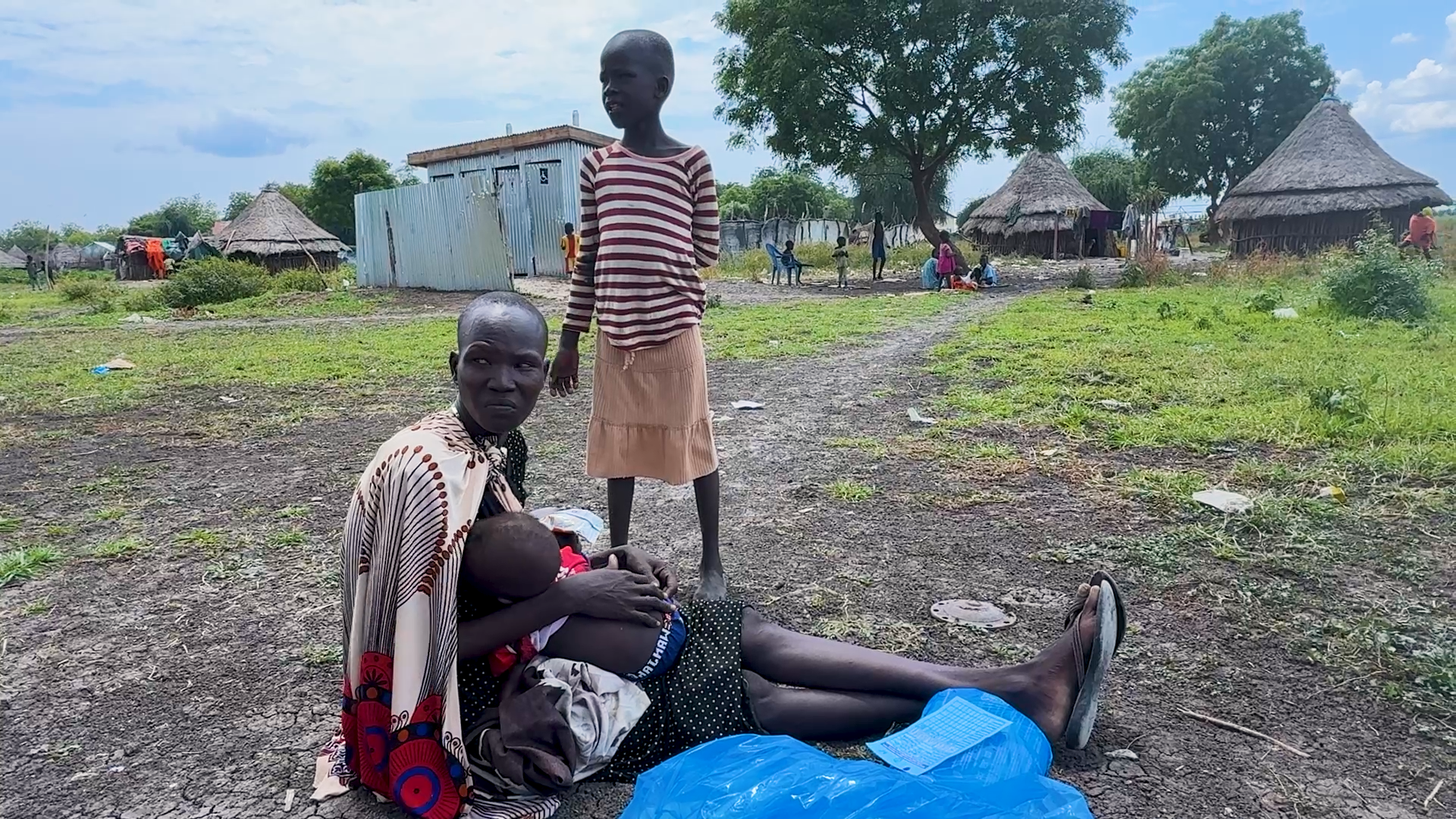 Nye Bel describes how her village was attacked and she fled with three of her four children, losing her eldest son in the chaos (Sam Kiley/The Independent)
Sam Kiley/The Independent
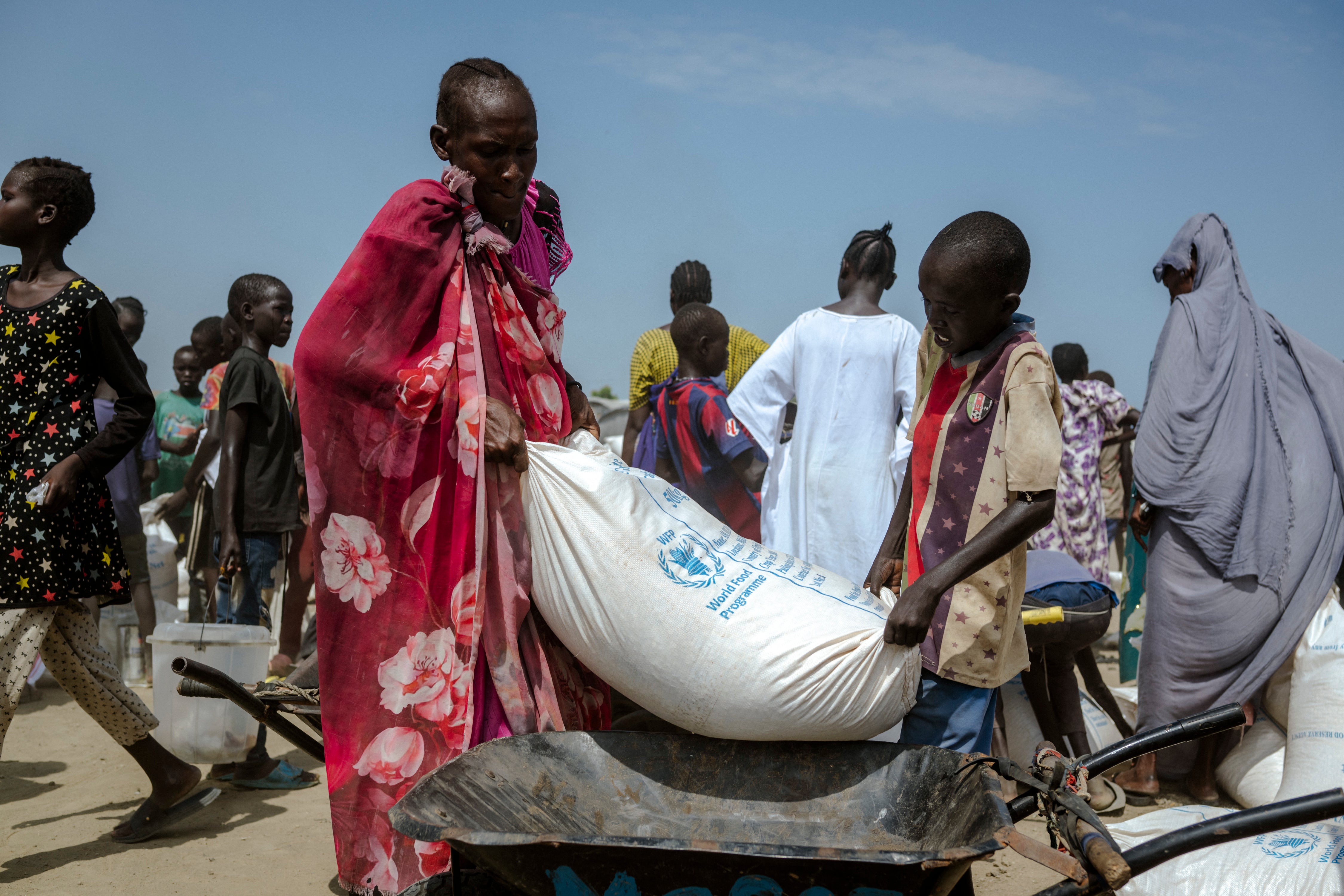 A young boy and his mother struggle to lift a heavy bag of maize into their wheelbarrow at a distribution center in the Bentiu internally displaced persons camp, Unity State, South Sudan (AFP/Getty)
AFP/Getty
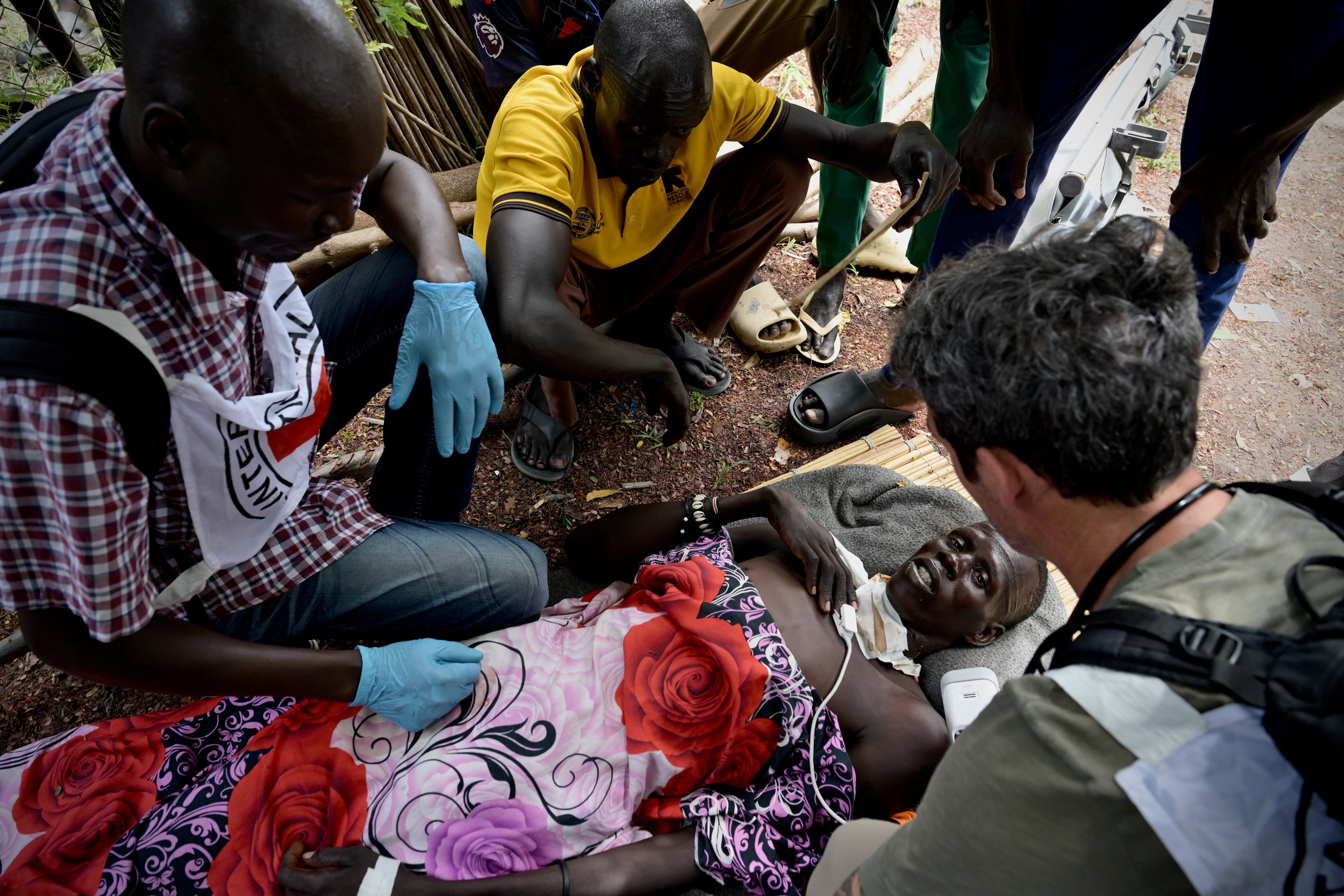 A wounded patient receives treatment in South Sudan (ICRC)
ICRC
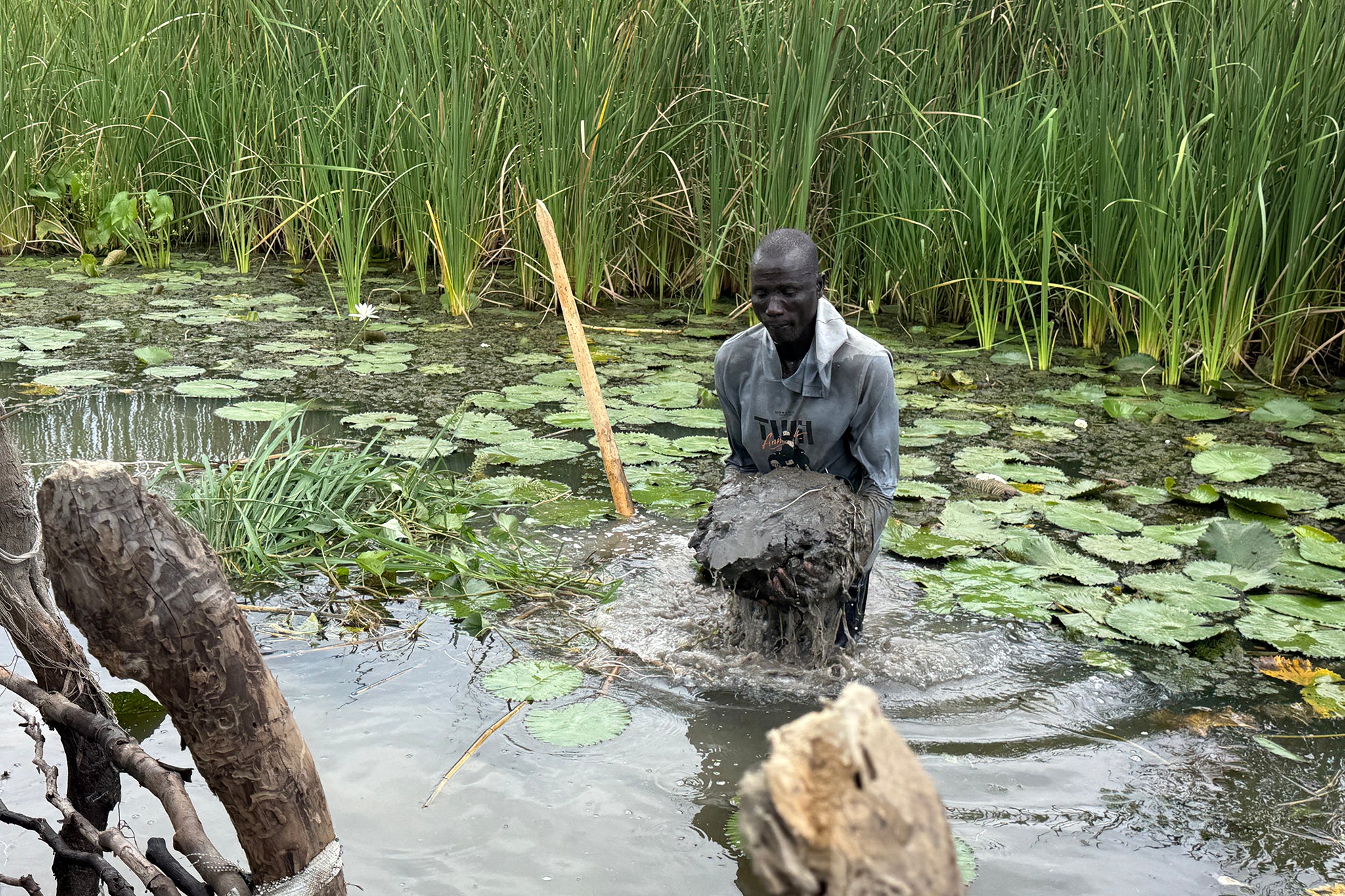 Volunteers in Kadet, along the White Nile, dig mud from the flooded fields to build dikes to protect their villages (The Independent)
The Independent
Barges carrying World Food Programme grain have sat at the riverbank in Malakal for weeks. The government-appointed governor of the inland port on the White Nile is demanding a value-added tax of at least ten per cent on all food shipped upriver. The United Nations has refused to pay, so the food does not move.
The country gained independence fifteen years ago and has earned tens of billions of dollars from oil since. More than half its population of nearly twelve million is hungry; humanitarian agencies count 7.8 million people facing acute hunger, two million of them children. Government officials have not been paid in more than a year. The third civil war is in a lull — not because anyone signed a peace, but because there is no cash to pay the soldiers.
A recent UN report concluded that the government has been "captured by a predatory elite that has institutionalised the systematic looting of the nation's wealth for private gain". The UN calls the condition state capture: the country operates as a cash-cow for a tiny section of society. The looting does not require the war to end, and it does not require the hunger to ease; it requires the flows to keep moving — oil money out, aid money in. Every new emergency brings donor money that travels the same routes, past the same officials, and the ten per cent levy at the river port is only its most visible toll.
The Independent reports from Akobo, on the eastern border with Ethiopia, where hundreds of new arrivals register with the UN every day. Registration exists to stop food aid being stolen by armed groups; the registered receive sacks of sorghum, jerry cans of cooking oil and sachets of peanut paste for malnourished children. Rations there have been cut back over the past two years as foreign aid budgets shrank, even as donors are asked for hundreds of millions of dollars in new emergency food. Nye Bel, who fled a night attack on her village with three of her four children — her husband and her seven-year-old son vanished in the chaos — survived first on the kindness of others and now depends on those rations.
The soldiers the state could not pay have been walking home. On the way to their farms, many have sold their rifles — for food and seeds.