
US and Russia back Lana Nusseibeh for UN secretary general
UAE's former envoy denied her country armed Sudan's RSF, UN panel says the Emirates supplied crucial support
Images
 Nusseibeh, as UAE ambassador to the UN, arriving to address the 80th general assembly in New York in September 2025. Photograph: Eduardo Muñoz/Reuters
theguardian.com
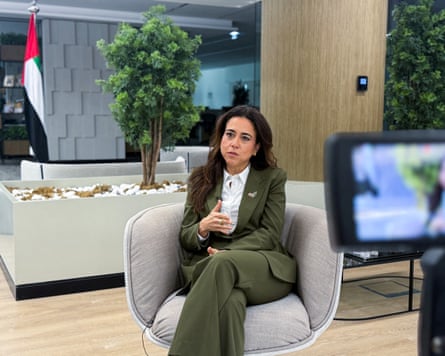 Lana Nusseibeh in March, when she was the UAE’s minister of state. Photograph: Abdelhadi Ramahi/Reuters
theguardian.com
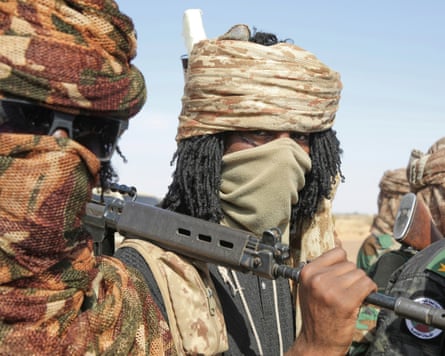 Fighters who defected from the RSF gathered in western Omdurman, Sudan, earlier this month. Photograph: Marwan Ali/AP
theguardian.com
Lana Nusseibeh, the United Arab Emirates' former ambassador to the United Nations, is in Britain this week presenting herself as a candidate to lead the organisation — and insisting she is "no longer a UAE official". She is backed by the United States and Russia. Last Friday, China, France and Britain, three of the five permanent members of the Security Council, voted to "discourage" her candidacy.
Under the UN's electoral system, a candidate needs nine positive votes from the fifteen-member council and no discouragement from any permanent member before going to the general assembly. Nusseibeh says her cause is not lost: "Sometimes, the use of the veto is tactical. Sometimes, it's a holding position, sometimes, it's a leveraging position." The centre of resistance, the Guardian reports, is probably the Foreign Office in London, which holds the pen on Sudan at the UN.
Sudan is the record she is trying to shake off. As UAE ambassador — she addressed the general assembly in New York as recently as September 2025 — and then as minister of state, Nusseibeh repeatedly denied that the Emirates had armed the Rapid Support Forces in Sudan's civil war, and publicly disputed the findings of UN investigators. Last month a UN panel of experts suggested the UAE had supplied crucial support to the militia. The war, which began with a power struggle between the military and the RSF in April 2023, has displaced more than fourteen million people.
Asked whether she regretted dissembling — denying the UAE had armed the RSF, or her role in challenging UN reports critical of her country — Nusseibeh said she regretted that "the Sudanese civil war had continued for so long". Sudanese diaspora and human rights groups have denounced the nomination; British NGOs have called her an apologist for war crimes.
Her pitch is competence and geography. "These are very geopolitical times... You need a geopolitical secretary general, because the fact is these geopolitical ruptures are not going away." She asks that her candidacy be seen "in the round" — her role in forcing humanitarian aid into Gaza, her support for Afghan women, her promotion of interfaith tolerance. She has taken a leave of absence from the UAE government to campaign. "Like every candidate, I come from somewhere, but the independence of the incoming secretary general is the key to their credibility."
If she gets the job, she says, Sudan will be the litmus test of her success.