
Duran Duran guitarist Andy Taylor dies at 65
Tyneside rocker gave Birmingham synth-pop its American guitar edge, too ill to attend his 2022 Hall of Fame induction
Images
 Rock leanings … Andy Taylor of Duran Duran, pictured in Maison Rouge Studios, July 1984. Photograph: Virginia Turbett/Redferns/Getty Images
theguardian.com
 Alexis Petridis
theguardian.com
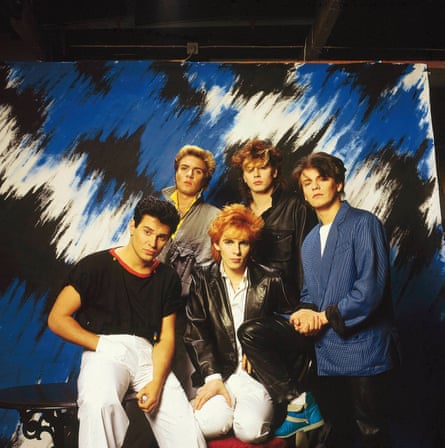 L-R: Duran Duran’s Roger Taylor, Simon Le Bon, Nick Rhodes, John Taylor and Andy Taylor pictured together in 1983. Photograph: Fin Costello/Redferns
theguardian.com
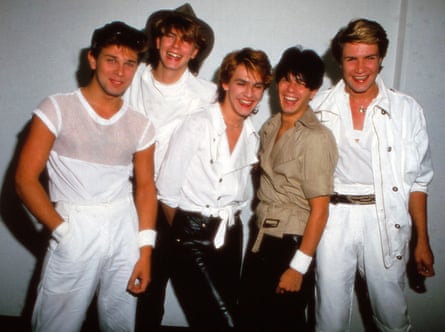 Duran Duran poses backstage in San Francisco during the band’s second US tour in 1982: (L-R) Roger Taylor, John Taylor, Nick Rhodes, Andy Taylor and Simon Le Bon. Photograph: Joel Selvin/Getty Images
theguardian.com
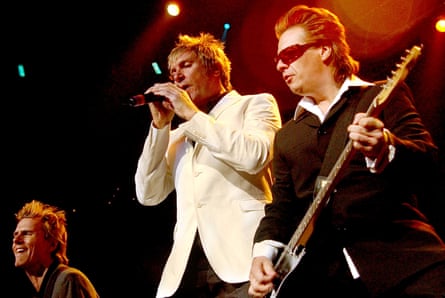 Andy Taylor (R) performs with Duran Duran in Boston in 2003. Photograph: Brooke Ismach/ZUMA Press Wire/Shutterstock
theguardian.com
 bnonews.com
 bnonews.com
 bnonews.com
 bnonews.com
 bnonews.com
Andy Taylor, the guitarist who played on Duran Duran's biggest hits, has died at 65. His family and former bandmates announced the death in a joint statement on the band's website on Wednesday: Taylor died at home on Monday, surrounded by his family, after a long battle with prostate cancer. The band's tribute was precise — "His playing drove the songs that took us around the world."
Taylor joined in 1980, answering a Melody Maker advertisement and making what he later called "that fateful journey down to Birmingham" from Tyneside. Duran Duran had formed two years earlier with a stated intention: to fuse Chic's sophisticated disco with Roxy Music's extravagant art-pop. The other four were glam and Chic devotees; Taylor's tastes ran to rock of a more traditional stripe. One writer in the Guardian described the band's early sound as a "rough, undisciplined" blend of electronics, disco-influenced rhythms and punk energy. Taylor turned it into cohesive songs.
His distorted guitar runs through "Girls On Film" and "Hungry Like the Wolf" — on the latter he translated Nick Rhodes' synth lines into something more appropriate for guitar. That mattered most in the United States, a country that had shrugged at punk and glam and would rather forget disco. The guitar gave conservative American radio programmers a hint of traditional rock amid the synthesisers and slap bass. The standard explanation for Duran Duran's American conquest is MTV, which embraced their expensively made videos early; the Guardian argues the band became bigger in the US than any other British pop act of the era partly because of Taylor's amplifier.
He wore the New Romantic hair dye and make-up happily enough at first. By the band's 1985 Sanremo appearance the contrast was photographic: his bandmates in baggy designer clothing, Taylor in long hair, a ripped vest, scarves, a studded belt and sunglasses. He left the following year for a solo deal and hard rock, recording with former Sex Pistols guitarist Steve Jones; his second solo album, 1990's Dangerous, covered Thin Lizzy, Bad Company, AC/DC and Montrose. Drummer Roger Taylor quit the same year, though for different reasons — he wanted a quiet life.
The five reunited in the early 2000s and released Astronaut in 2004. Taylor was inducted into the Rock and Roll Hall of Fame with the band in 2022 but was too ill to attend the ceremony.
His wife Tracey said he "was the rock of our family. For all the incredible experiences music brought him, family always came first." He is survived by Tracey, their children Georgina, Isabella, Bethany and Andrew, and grandson Albie. In lieu of flowers, the family asked for donations to Prostate Cancer UK.