
Pitt Rivers Museum returns Naga ancestors after 80 years in Oxford
39 remains collected under colonial duress go home with no Indian repatriation law, museum still holds 6,500 Naga objects
Images
 Oxford’s Pitt Rivers Museum will return 39 pieces of human remains to India following a six-year-long negotiations.
theguardian.com
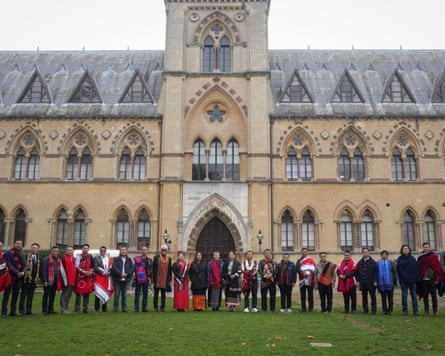 Members of the Naga delegation in Oxford, where the university transferred custodianship. Photograph: FNR RRaD Pictures
theguardian.com
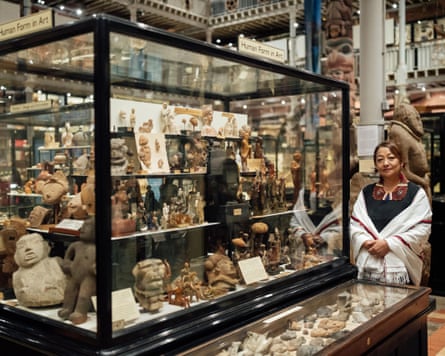 The 6,500 Naga objects in the Pitt Rivers Museum are part of a long discourse about restitution. Photograph: Pitt Rivers museum
theguardian.com
 A courtroom sketch of Nikhil Gupta in New York in 2024. Photograph: Jane Rosenberg/Reuters
theguardian.com
 Barefoot College brings solar-powered lighting to rural areas. Photograph: Rebecca Conway/Getty Images
theguardian.com
Oxford's Pitt Rivers Museum has handed custodianship of 39 pieces of human remains to a Naga delegation of leaders and scholars, ending almost eight decades in which the bones — among them two children, a woman and a village chief — sat on open glass shelves. The handover took place in early November, after six years of negotiations and consultations.
The remains were collected by two British colonial administrators, John Henry Hutton and James Philip Mills, between 1910 and 1940. Anthropologists say the collecting occurred under duress during colonial expeditions. Naga warriors traditionally took the heads of enemies killed in raids, and Naga academics have spent years contesting the assumption that every skull on the Oxford shelves was a headhunting trophy.
The museum took the remains off display in 2020, after an ethical review of its human-remains exhibits — among them the tsantsa, the shrunken heads of the Shuar people, whose display the museum acknowledged had reinforced racist stereotypes. Removal from a shelf, however, is not return. The bones went to storage, and the process began only when Dolly Kikon, a Naga anthropologist at the University of California, Santa Cruz, read about the deinstallation in the Guardian and contacted the museum.
What followed had no state machinery behind it. India, unlike Australia, Canada and the United States, has no national law governing the return of Indigenous ancestral remains — no ministry to petition, no procedure to follow. The work fell to volunteers. The Forum for Naga Reconciliation facilitated the transfer, and a group called Recover, Restore and Decolonise travelled to towns and villages to ask elders and students what they wanted done with the ancestors in Oxford. Kikon calls it the first repatriation of human remains to India.
The museum's director, Laura Van Broekhoven, has described the process as a 'long journey' and said 'hope is possible as we work towards reconciliation and healing'. The journey continues without the 39: Pitt Rivers still holds 6,500 Naga objects, including clothing, and around 178 objects that contain, or may contain, human hair.