
Oxfam finds war contamination across Gaza
Report identifies heavy metals, explosive residues and asbestos in air soil and water, authors call the damage environmental war crimes while Israel rejects the genocide finding
Images
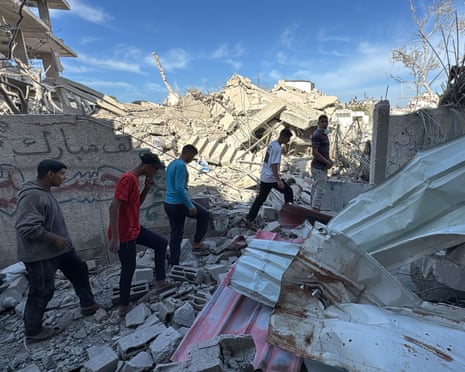 Palestinians among the wreckage of shelters after demolition operations carried out by the Israeli army near Al-Maghazi refugee camp last week. Photograph: Ahmed Ibrahim/APAImages/Shutterstock
theguardian.com
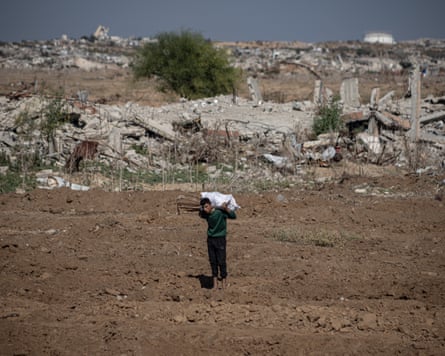 Land bulldozed by Israeli forces near the Nuseirat refugee camp in central Gaza last week. Photograph: Omar Ashtawy/HL/Getty
theguardian.com
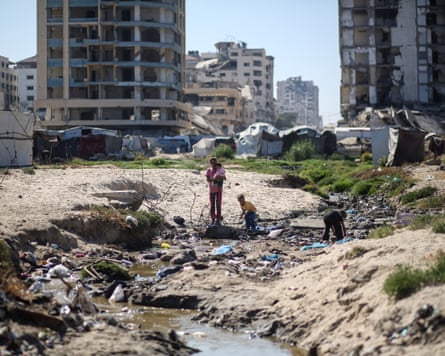 Displaced Palestinians living near a rubbish-filled sewage waste flow in Gaza City. The destruction of sanitation systems leaves people with little protection from contamination. Photograph: Ahmad Hasaballah/Getty
theguardian.com
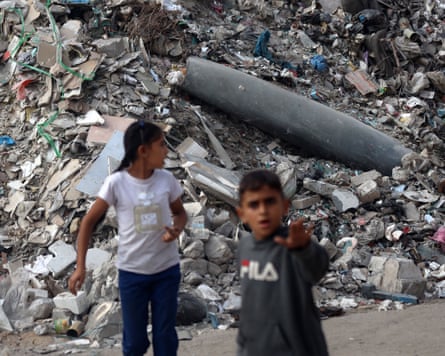 Children walk past an unexploded missile at a Gaza City rubbish dump. Photograph: Majdi Fathi/NurPhoto/Shutterstock
Shutterstock
Gaza's air, soil and water now carry heavy metals, explosive residues, asbestos from destroyed buildings and raw sewage, according to a report by Oxfam and the Conflict and Environment Observatory that its authors call the most comprehensive picture to date of the environmental damage from Israel's military assault. The findings are drawn from satellite imagery, remote sensing, scientific analysis and open-source data.
The report's summary conclusion is that contamination across the strip is "widespread, severe and consequential", with "serious implications for public health and civilian survival". Gaza's sanitation systems have been destroyed, leaving raw sewage pouring into the sea and leaking into the ground. Oxfam International's executive director Amitabh Behar describes a small, densely populated territory where continuous exposure is inevitable, with toxins reaching people through air, food, water and direct contact with debris, and children and pregnant women facing the highest risks. The health consequences, the report warns, will persist for generations unless clean-up, remediation and recovery are prioritised.
Around the measurements sits a frame with legal claims attached. Behar describes Israel's "ongoing genocide" as including "military assaults on its environment", which he calls "environmental war crimes" breaching international humanitarian and human rights law. The language tracks the UN's independent commission of inquiry, which found in 2025 and again this year that Israel had committed genocide in Gaza and that Israeli officials including Prime Minister Benjamin Netanyahu had incited those acts. Israel's mission in Geneva rejected the commission's findings as a "libellous sham". Netanyahu is separately wanted by the International Criminal Court for war crimes. The assault has killed more than 74,000 Palestinians and wounded at least 175,000, with thousands still unaccounted for under the rubble.
The study is a remote assessment, built on satellite imagery, remote sensing and open-source data rather than sampling on the ground. Behar's stated remedy is clean-up, remediation and recovery, prioritised — the report does not say who would carry out the work, under what authority, or who would pay.
Photographs published alongside the report show bulldozed land near the Nuseirat refugee camp and displaced families living beside a rubbish-filled sewage flow in Gaza City.