
Aberdeenshire firm trials buoys that charge vessels at sea
Oasis Marine prototype taps wind turbine generators by subsea cable in the Cromarty Firth, refuelling point moves from harbour to turbine
Images
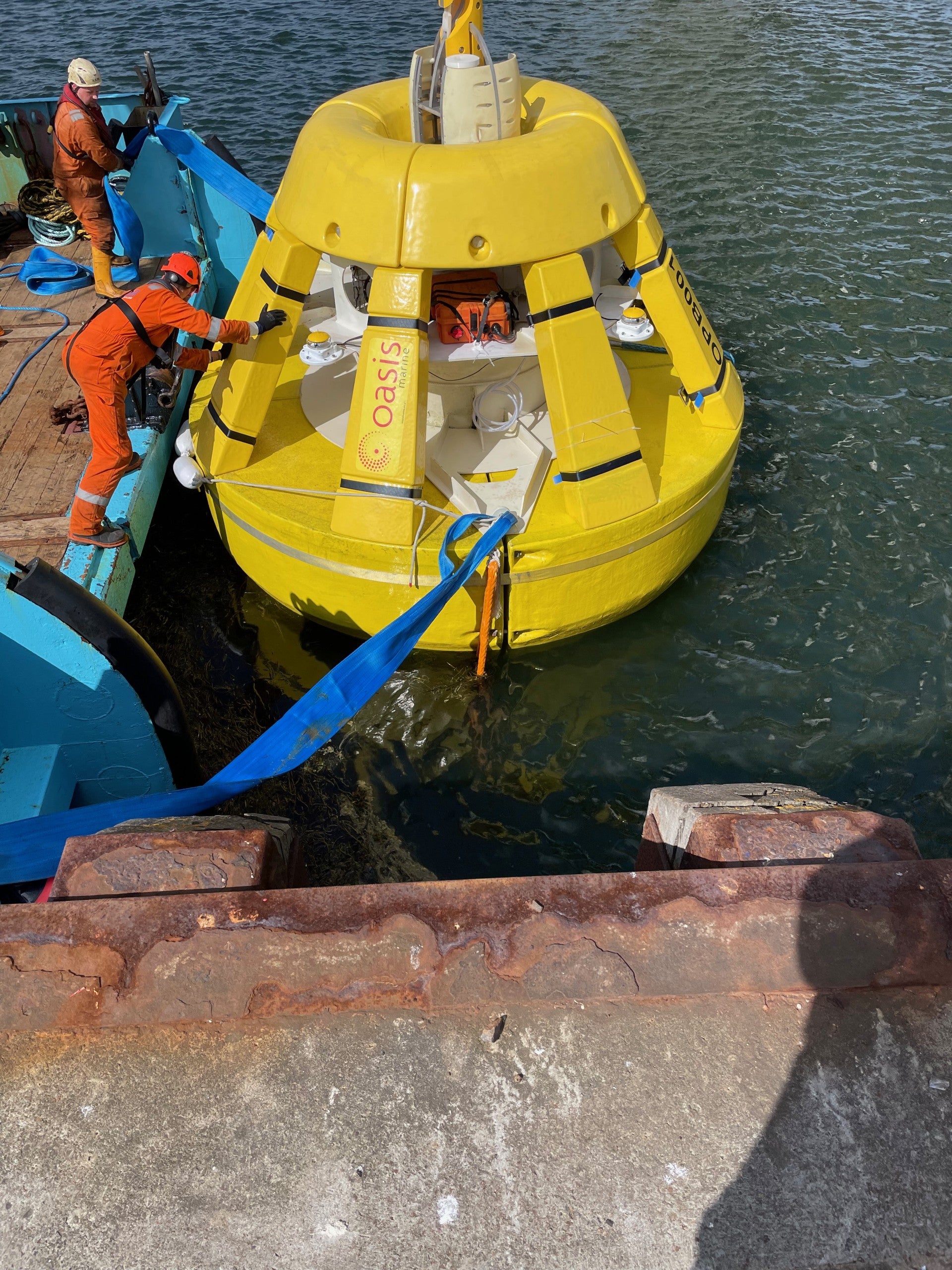 The device is being targeted at vessels servicing offshore windfarms (Oasis Marine/PA)
Oasis Marine/PA
A prototype buoy that lets vessels recharge at sea is being trialled in the Cromarty Firth. The device, built by Aberdeenshire engineering firm Oasis Marine, connects to offshore wind turbine generators by subsea cable, letting boats pull up, plug in and replenish their power supplies with low-cost clean energy away from harbour walls. The firm hopes the technology can ultimately help cut emissions from shipping.
The first customers Oasis Marine has in mind are the maintenance ships servicing offshore wind farms, vessels that otherwise run diesel or marine gas oil on station. Feasibility studies have shown offshore charging of hybrid and electric support vessels is technically and operationally viable with the device, according to the firm, and the prototype testing covers vessel approach, mooring, power connection and safety. Boats with conventional engines can still moor alongside and run their electrics, heating and air conditioning off the buoy, and the hardware can be retrofitted to existing turbine generators or incorporated into new designs.
Founder and chief technical officer George Smith describes the technology as elegantly simple, built on lessons carried over from the oil and gas industry. "We know from experience that anything going offshore has to be reliable — and simplicity is a cornerstone of reliability," he said. "Offshore wind has revolutionised energy production and now we're doing the same for the vessels that keep those wind farms running. But this is about more than just one buoy. We're building the infrastructure that can help global shipping decarbonise on a vast scale."
The buoy stays in the water until early summer next year so its performance can be assessed. The ambitions past wind-farm maintenance run to merchant ships, cruise liners and the service vessels for oil and gas platforms — charging infrastructure at sea, positioned where the turbines already stand rather than where the harbours are. The trials are backed by a Scottish Enterprise grant and, since this month, by a crowdfunding round.