
NHS launches major AI breast cancer screening trial
700,000 women invited as Edith tests one radiologist plus algorithm where two now read every mammogram, fifth of breast radiologists due to retire by 2030
Images
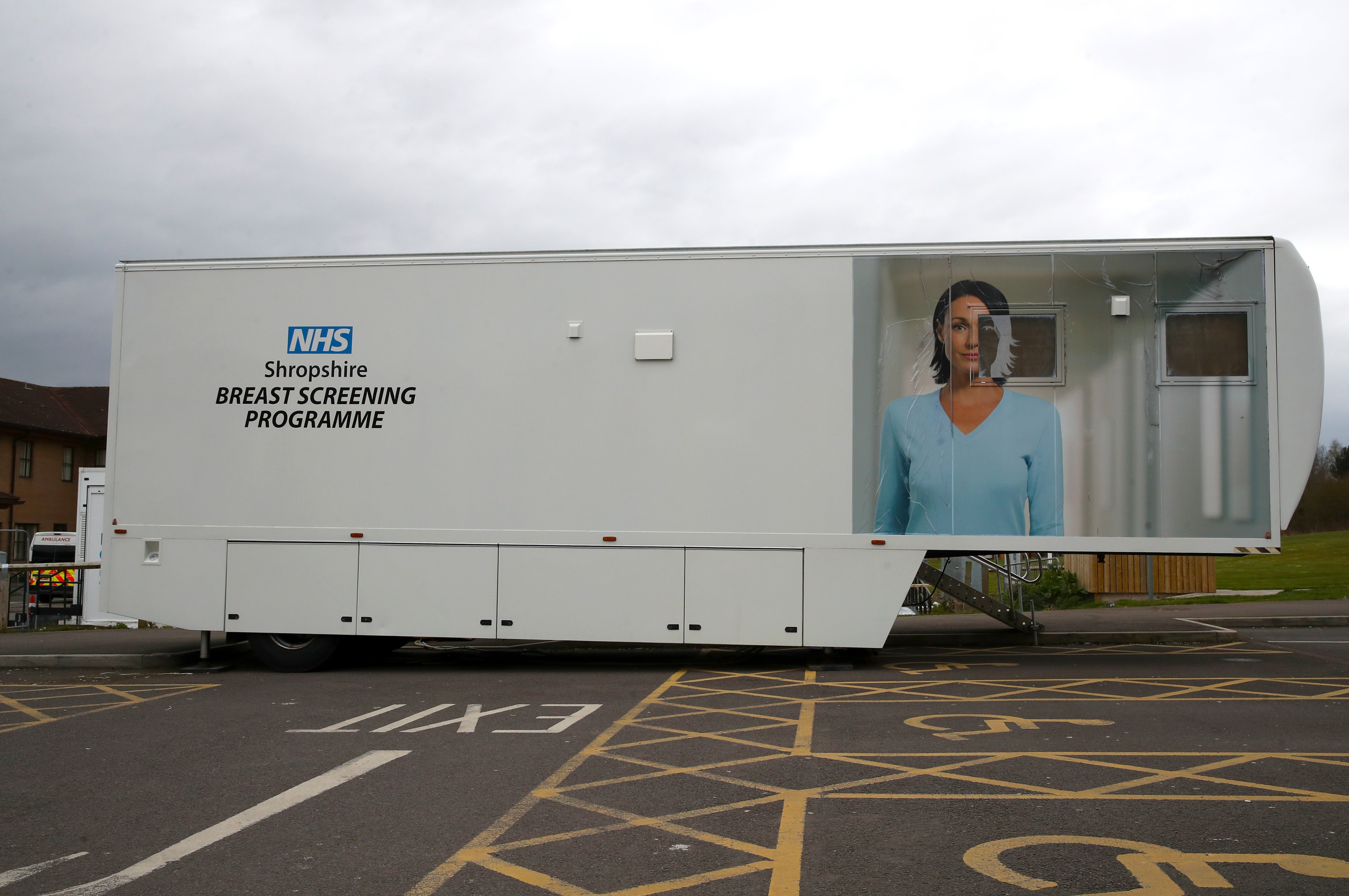 An NHS breast screening unit at Telford Hospital (Nick Potts/Press Association)
Nick Potts/Press Association
NHS England is inviting around 700,000 women into a trial testing whether artificial intelligence can help detect breast cancer earlier. The study, named Edith, is worth £10 million, will run at 30 sites over the next three years, and is led by the University of Warwick, the University of Cambridge and Cambridge University Hospitals NHS Foundation Trust. Recruitment of the first women has begun in Cambridge, with thousands more invitations to follow at further sites in the coming months.
What Edith tests is a staffing arrangement. Every mammogram in the NHS breast screening programme is currently checked by two trained specialists; the trial will see whether an AI system can assist one specialist instead, freeing radiologists' time and — in the programme's own framing — helping look for cancers too small to see or feel. Women invited can opt out and attend screening as usual. The programme invited 2.75 million women in 2024/25, 10 per cent more than the previous year, with around 70 per cent taking up the offer; around 59,000 breast cancers are diagnosed in the UK each year.
The backdrop is a workforce leaving faster than it is replaced. Dr Stephen Harden, president of the Royal College of Radiologists, says patients already face long, anxious waits for scan results because of a shortage he calls dire, and the college's research found the breast radiology workforce grew by an average of just 2 per cent over the past five years. He calls the trial's potential real but says it "will not be a quick fix" to the need for more radiologists.
What a state system buys with an algorithm is not only what it finds. Four AI systems have been rigorously tested for accuracy, according to Sian Taylor-Phillips, professor of population health at Warwick and a National Institute for Health and Care Research professor, and all clinical decisions during Edith will remain with NHS staff. Each additional flag the algorithm raises is still a recall appointment, a biopsy and weeks of anxiety inside the same system that cannot fully staff its reading rooms. A three-year dataset from 700,000 women is also the kind of evidence on which later procurement decisions are built, in Britain and well beyond it. Health Secretary Yvette Cooper, visiting the trial team at Addenbrooke's Hospital, said the technology could let women start treatment far more quickly but needs "proper safeguards" to be used safely.
The Royal College's research puts more than a fifth of the breast radiology workforce on the retirement path by 2030. Edith reports back in three years.