
Russian corvette Merkury destroyed by suspected Ukrainian sea drones in Benghazi
Eastern Libyan authority calls strike a violation of sovereignty, port grew in importance to Moscow after loss of Syrian bases
Images
 Smoke rises from a fire after an explosion on Merkury, a Russian warship docked at Benghazi port, Libya. Photograph: 2026 Planet Labs PBC/Reuters
theguardian.com
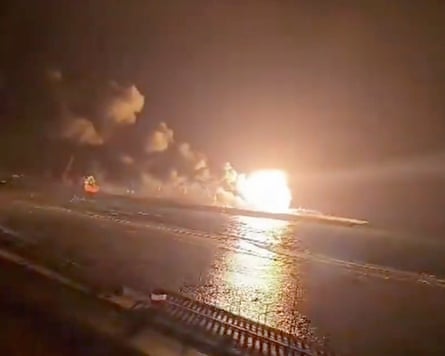 An explosion on the ship in Benghazi, where it had been refuelling on its way back to Russia. Photograph: X.com
theguardian.com
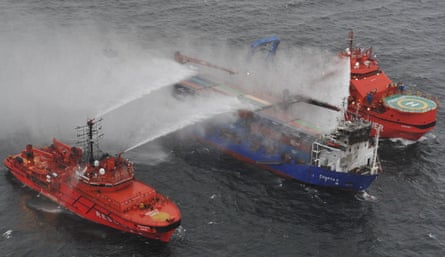 Emergency services are working to extinguish a fire onboard the Russian cargo ship Sparta II, which was struck in the Baltic Sea. Photograph: Finnish Border Guard/Reuters
theguardian.com
A Russian navy corvette was severely damaged by an explosion at the naval base in Benghazi, with Libyan officials attributing the blast to Ukrainian sea drones. The vessel, identified by the specialist website Naval News as the Merkury, had stopped in the eastern Libyan port to refuel and resupply on its way back to Russia when at least two drones struck it, according to an initial investigation cited by officials affiliated with the self-styled Libyan National Army, which controls eastern and southern Libya. A fire broke out at the base, and two medical sources told Reuters there were injuries but no deaths. No one had claimed responsibility at the time of reporting.
The officials said several Ukrainian sea drones were launched from a base run by Ukrainian forces in western Libya, that four were intercepted and destroyed, and that two hit the warship. Naval analyst HI Sutton judged the attack was probably conducted by sea drones after a photograph of one emerged apparently taken off the Libyan coast. Initial reports and footage suggest the Merkury was struck from above, potentially by a drone launched only a few kilometres from the target in port. Naval News assessed the corvette — the smallest class of warship — as almost certainly destroyed. In a separate incident, another sea drone hit a commercial vessel off the port of Benghazi on Sunday evening, according to Libyan military sources speaking to Reuters.
The strike extends a war that has already moved well beyond the Black Sea. A small unit of Ukrainian special forces operatives has been based at Misrata in western Libya and is believed to have coordinated drone attacks on Russian tankers and transport ships over the past year. Ukraine has stepped up long-range barrages against Russian targets far from the frontlines, and if the Benghazi damage is confirmed, the Guardian notes it would rank among Kyiv's most successful naval strikes in the almost five-year war. For Russia, the port is not incidental: Moscow is close to the Benghazi authorities, uses the port to supply its forces, and the facility's importance has grown since Russia lost its bases in Syria.
The eastern-based Libyan authority condemned the suspected attack as a violation of Libya's sovereignty and a threat to maritime safety, and said it would take legal and diplomatic measures against anyone found responsible. "The Libyan government will not allow Libyan ports, territory or territorial waters to be turned into an arena for settling scores or exporting international conflicts," the authority said in a statement, adding that port and naval base facilities, including warehouses, were safe and that normal operations would resume once the fire was brought under control. Russian authorities gave no immediate reaction. The country where the drones were launched and the country whose ship burned both deny hosting the other's war — while a Ukrainian special forces unit sits in Misrata and Russian vessels refuel in Benghazi.