
Paraguay regulators flagged $146 million in linked Ueno loans months before the bank froze nearly three million accounts
Dubai of South America pitch drew the deposits now locked in central bank resolution, ousted president Peña sits under house arrest on corruption charges
Images
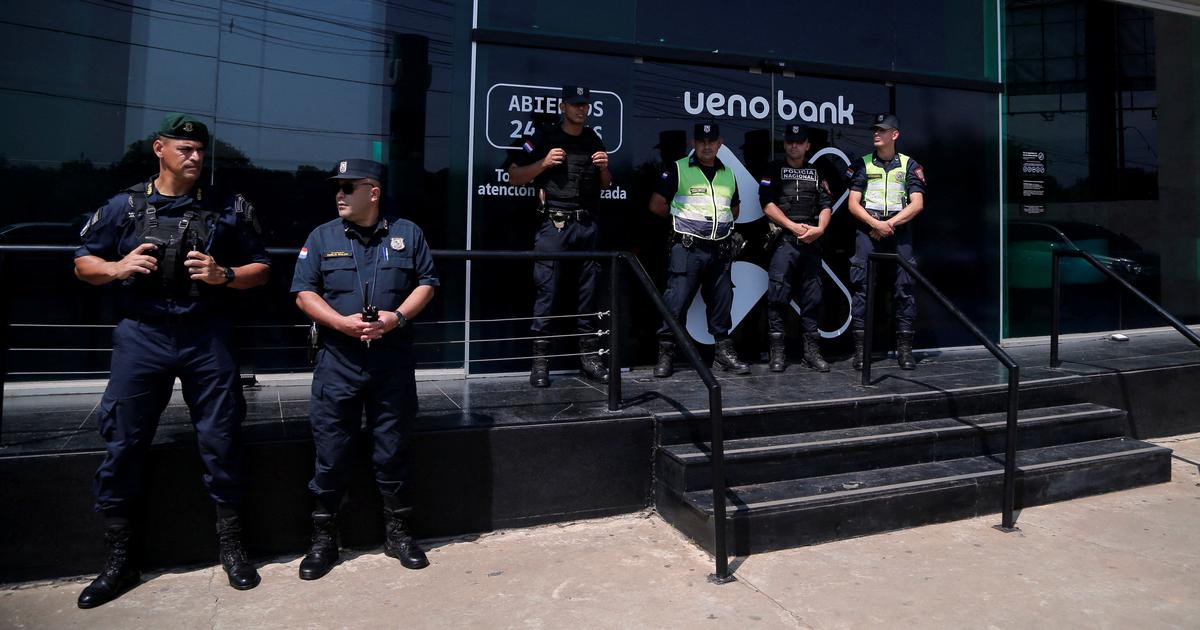 Police stand guard outside a closed Ueno Bank branch in Nemby Paraguay on November 3.
|
Reuters
scroll.in
Five months before Ueno Bank's customers found the app would not give them their money, Paraguay's banking supervisors had put the problem in writing. A supervisory report published in June described roughly $146 million in loans to three companies linked to Grupo Vázquez, the bank's controlling shareholder, some of which had been transferred to group employees. The supervisors questioned the collateral and the ultimate use of the funds. The exposure was not contained.
On November 2, the central bank placed Ueno into resolution — a bankruptcy-like process managed directly by the central bank — after accounting adjustments left the bank's solvency ratio below half the legal minimum. The next day, millions of Paraguayans opened the app and found they could no longer get their money. Ueno says it has nearly three million customers, about half the country's population.
The bank had grown fast on exactly the model the state was selling. Founded as a digital lender in 2021, it won customers with mobile banking and cash-back offers, and pushed credit cards to low-income and rural customers that conventional banks had never served. Its expansion ran on unusually close relationships with political elites and public institutions. It coincided with Paraguay's own sales pitch abroad: low taxes, economic stability, business-friendly policy, marketed internationally as the Dubai of South America. Investors came — and so did conservative influencers, many of them Brazilian, who held Paraguay up against the left-wing governments they derided elsewhere in the region. Under President Santiago Peña, an economist by training elected in 2023 with close ties to the bank, Paraguay ranked among Latin America's most enthusiastic allies of the Trump administration.
Within days the banking crisis became a constitutional one. Peña resigned on November 5; the Senate then voted unanimously to remove him from office, stripping him of parliamentary immunity; he was placed under house arrest and charged with corruption-related crimes. Vice President Pedro Alliana was sworn in to serve until 2028. Protesters outside Congress accused Peña and the ruling Colorado Party of stealing their savings, while police stood guard outside a closed Ueno branch in Nemby.
The supervisory report questioning the collateral was published in June. The app stopped working on November 3.