
Morocco commits 366 million euros to home-grown defence industry
King Mohammed VI roadmap targets 40 percent domestic supply and 65 percent export revenue by 2035, Tata and EDGE already build armoured vehicles and munitions on Moroccan soil
Images
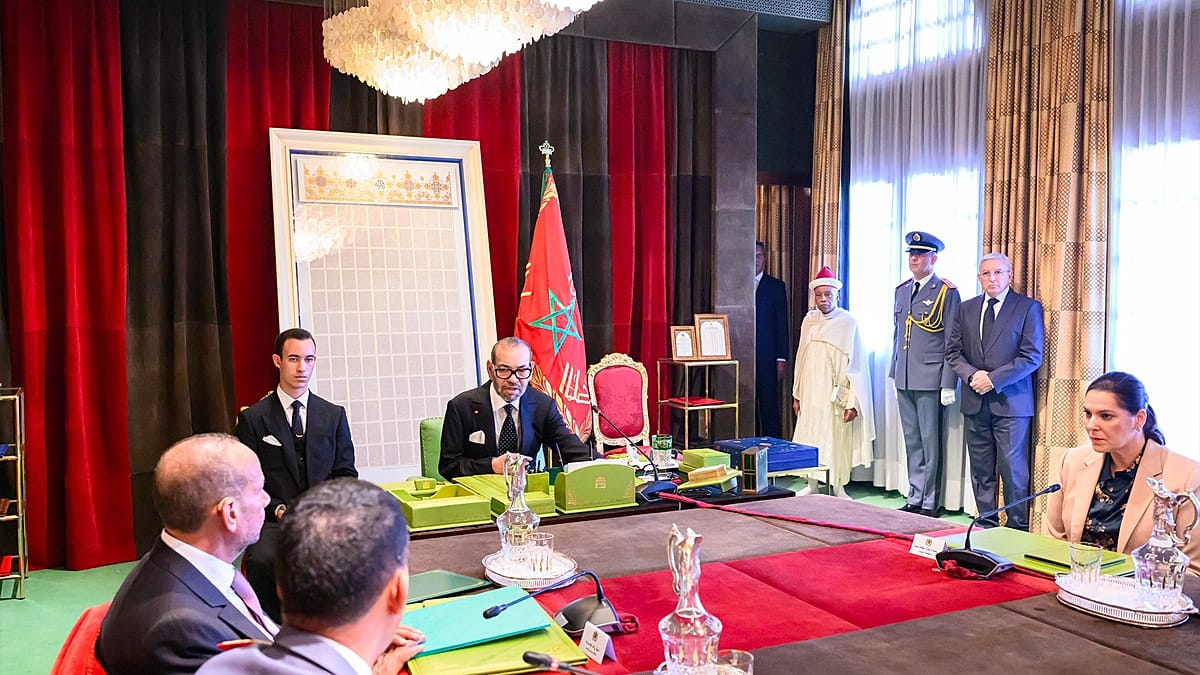 Morocco commits €366m to build a national defence industry by 2035
euronews.com
Morocco's Royal Cabinet announced on Wednesday that King Mohammed VI has allocated 4 billion dirhams — roughly 366 million euros — from the Hassan II Fund for Economic and Social Development to launch a national defence industry roadmap, with 2035 as the target date. The goals are specific: around 50,000 direct and indirect jobs, 40 percent of the Royal Armed Forces' and security services' equipment needs met by domestic production, and more than 65 percent of defence industry revenues generated from exports.
According to the Stockholm International Peace Research Institute, Morocco ranks among Africa's leading importers of major weapon systems. The roadmap is a bet that this can be reversed by building on what Morocco already has — automotive, aviation and electronics manufacturing — with priority given to drones and autonomous systems, land and naval systems, defence electronics, cybersecurity and artificial intelligence. Two new industrial zones dedicated to defence manufacturing will be created in Ben Guerir and Benslimane, alongside existing zones in Nouaceur and Sidi Yahya.
Foreign partners are already on the ground. India's Tata Advanced Systems is cooperating with Morocco to manufacture WhAP 8×8 armoured vehicles in Berrechid, with a progressively increasing share of locally produced components. Moroccan company MMI manufactures military turrets and remotely controlled weapon systems. At the Marrakech Air Show in October, the Emirati group EDGE signed two agreements: a memorandum of understanding to explore manufacturing small arms and aircraft engines locally, and a supply deal for Desert Sting 16 and Thunder P-31 guided munitions intended for integration into the Royal Moroccan Air Force's fleet of unmanned combat aircraft.
A new strategic agency will implement the policy and support investors, and an industrial holding company will organise the production ecosystem and mobilise public and private capital. The king has also ordered a specialised academy offering advanced training in partnership with industry, drawing on Moroccan civilian and military expertise including professionals based abroad, and a programme to channel young talent into engineering, electronics and digital fields.
For a country bordering a hostile Algeria and with the Western Sahara question frozen, imported weapons arrive with someone else's veto attached. The country that ranks among Africa's biggest arms importers has given itself until 2035 to make 65 percent of its defence sales exports.