
UN court rules Myanmar committed acts of genocide against Rohingya
Gambia filed the case in 2019 after no major power would, ruling carries no appeal and no penalty
Images
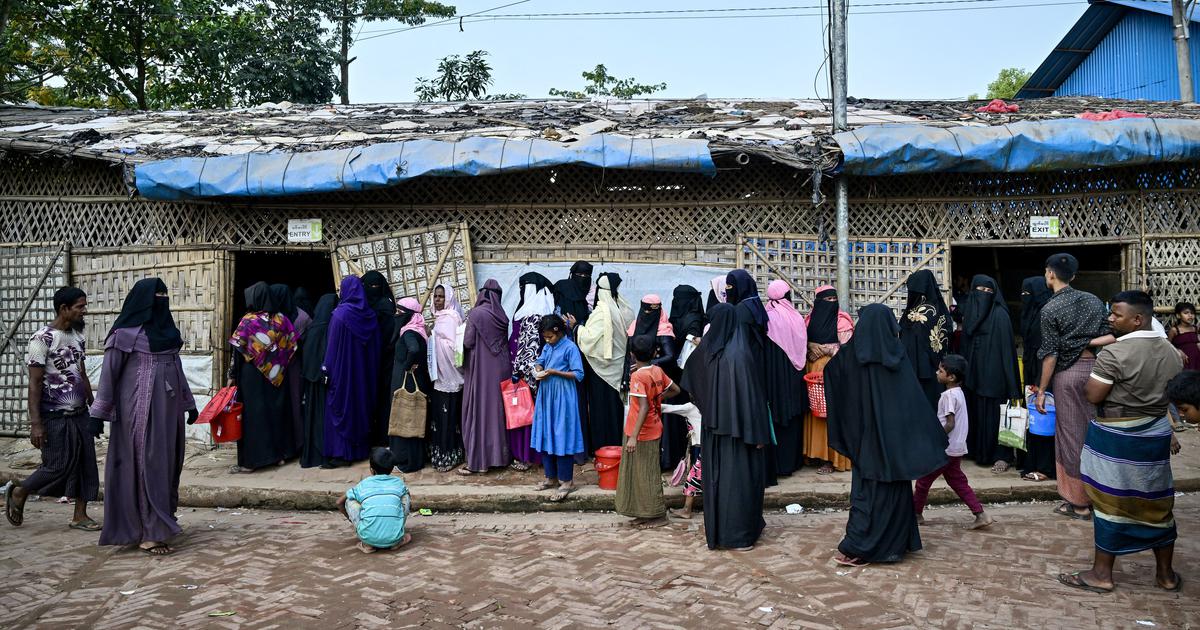 Rohingya refugees from Myanmar wait to receive relief supplies at a camp in Ukhia, Bangladesh.
|
Munir Uz Zaman/AFP
scroll.in
The International Court of Justice ruled on Thursday that Myanmar committed acts of genocide against the Rohingya, finding that security forces engaged in indiscriminate killings, the separation and execution of men, widespread sexual violence, and the deliberate burning of Rohingya homes. The court held that the estimate of 10,000 Rohingya violently killed in the 2017 clearance operations was supported by the evidence. The case was filed in 2019 — not by a Western government, but by Gambia.
The Genocide Convention allows any state party to bring a case against another, and Gambia was the country that used it, documenting mass killings, sexual assaults, torture, enforced disappearances and the destruction of entire villages. Myanmar tried to block the case on jurisdictional grounds and failed in 2022. At the hearings in 2019, the country was represented by Aung San Suu Kyi, then de facto leader and Nobel peace laureate, who conceded that war crimes may have been committed but denied any genocidal intent. Myanmar's formal defence was that the operations in Rakhine state were counter-terrorism.
The ruling is the first time the court has held a state responsible for genocide. In the 2007 Srebrenica case, it found the massacre was genocide but that Serbia was not directly responsible — guilty only of failing to prevent it. Thursday's judgment goes further, and it comes with two structural features worth noting: there is no right of appeal, and the court cannot impose criminal punishments or penalties of any kind. The judgment is a finding, not a sentence.
The court weighed the question under Article II of the 1948 convention — whether acts were committed with intent to destroy the group in whole or in part — not whether a genocide took place in the colloquial sense. A UN fact-finding mission had already concluded in 2018 that the 10,000-death estimate was conservative. Hundreds of thousands fled to Bangladesh during the violence, and more than a million Rohingya refugees live there today.
The judgment cannot be appealed and cannot be enforced by the court itself. The million-plus Rohingya in Bangladesh's camps are the evidence the judges accepted, and they are still there.