
UN Security Council deadlocks on next secretary-general after ninth vote
Grynspan and Grossi both vetoed by permanent members, Trump Xi and Putin pledge UN reform while refusing to pick its chief
Images
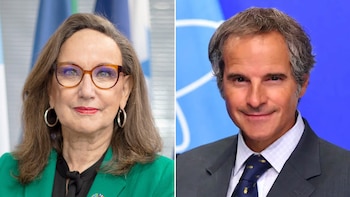 Grynspan-Grossi
infobae.com
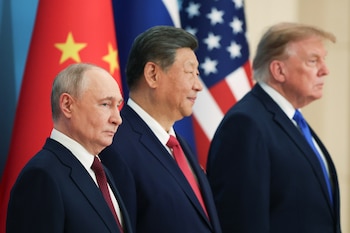 Vladimir Putin, Xi Jinping y Donald Trump en la cumbre de Shenzhen, (China)
infobae.com
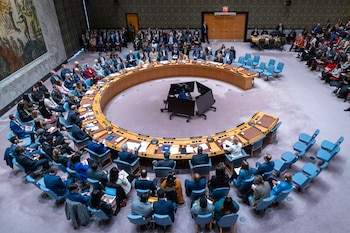 El Consejo de Seguridad de la ONU hoy fracaso de nuevo en su intento de designar al próximo secretario General de la ONU
infobae.com
The UN Security Council has failed, after nine rounds of voting, to agree on a successor to Secretary-General António Guterres, whose mandate expires in 41 days. Costa Rica's Rebeca Grynspan and the IAEA's Rafael Grossi lead the field, and both were formally vetoed by permanent members in the latest straw poll, according to Argentine outlet Infobae.
The mechanics are stark. The Council's fifteen members split into five permanent ones — the United States, China, Russia, France and the United Kingdom — holding vetoes, and ten non-permanent ones required to supply the nine affirmative votes for a nomination. In the ninth vote, conducted with permanent members casting red ballots, Grynspan drew ten votes in favour, including three from permanent members, against four objections, two of them permanent. Grossi drew eight in favour, with three permanent members voting against him. Grynspan is backed by China and Russia but lacks the consent of the United States. Grossi carries American support but has been rejected by the United Kingdom — a government that has watched him run the Iran nuclear dossier for years. Beijing and Moscow, for their part, proposed at the last BRICS summit that the next secretary-general should be a woman from Latin America, a preference that conveniently narrows the field in Grynspan's direction. The deadlock arrives the same week Trump, Xi Jinping and Vladimir Putin met in Shenzhen and issued a joint statement committing the three powers to 'reforming' the UN so it responds 'more effectively to global challenges'. The permanent members cannot agree on who should run the institution, but they can agree, jointly, on a statement about how it ought to be reformed — by them.