
Burnham arrives in Brussels to finalise Brexit reset deal
UK drops vote demand on EU food law and doubles youth mobility quota to 100,000 a year, EU diplomat warns cherry-picking the single market makes Britain a rule taker
Images
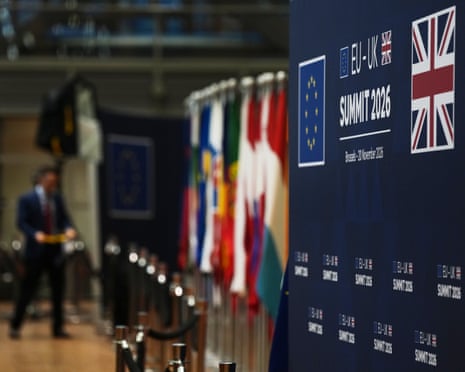 Journalists arrive as preparations are made for the EU-UK Summit at the European Council building in Brussels. Photograph: Virginia Mayo/AP
theguardian.com
 Andy Burnham at a roundtable with business leaders in Brussels on Friday. Photograph: Hannah McKay/Reuters
theguardian.com
 Burnham and European Commission president Ursula von der Leyen at a summit in Dublin this month. Photograph: Stefan Rousseau/Reuters
theguardian.com
 The EU surrender summit begins... Burnham to finalise concessions
dailymail.com
Andy Burnham arrives in Brussels on Friday to close a Brexit reset deal. "It will go down to the wire," one EU diplomat said on the eve of the summit. "Our feeling is that the Brits have to move if they want a deal." The provisional package doubles the youth mobility quota London first sought to 100,000 EU citizens a year, raises the age limit to 31, and pairs it with a food and drink agreement under which the UK will be consulted on new EU food law but will hold no vote over it. Germany, the Guardian reports, was prepared to take unlimited numbers of young Britons in the other direction.
The final 48 hours show which government moved. Britain had demanded a voting role on food standards and public-health rules; France treated that as a line in the sand, and London conceded. Brussels gave ground on tuition fees, dropping its demand that EU students pay home rates at British universities — as a last-minute concession to get the deal over the line, and only in form: the declaration will state no fee level at all. A supplementary agreement defers the number to six months of further negotiation.
"It puts down a marker warning the UK that cherry picking bits of the single market mean you are a rule taker," one EU diplomat told the Guardian. Another described Britain's alternatives as "basically muddling along with a version of the status quo or rejoining." Several large member states have told London there will be no further round of mini-deals after this summit. Talks will open on British access to the energy single market, which both sides call a shared interest since the Ukraine war; some EU capitals refused to discuss pharma or chemicals at all.
Days before the summit, Donald Trump delivered what European leaders describe as an angry tirade over EU funding for Ukraine and staged a trilateral meeting in Shenzhen that EU officials dismissed as a "photo op." Burnham, for his part, told reporters that Russia is intent on attacking Britain too. A Britain that cannot count on Washington is buying back the arrangement Brussels was always willing to sell — the Daily Mail's "surrender summit" sits closer to the arithmetic than the prime minister's "stronger together."
Nigel Farage called the approach a betrayal and predicted the debate the government would rather avoid — "It's perfectly clear that this very very soon becomes a debate about do we rejoin or do we stay out" — while conceding that the agricultural deal would make things "a little bit easier" for food exporters. The package is to reach parliament as a "cutting costs bill."
The declaration will not mention what EU students are to pay at British universities. That figure is due within six months, after the summit photographs have been taken.