
Colombia to put down ten of Pablo Escobar's hippos
Environment minister promised a Jurassic Park-style sanctuary and called keeping them cheaper than killing them, at least three residents injured by hippos include one now in a wheelchair
Images
 Colombia to put down 10 of Pablo Escobar’s hippos under new control plan
english.elpais.com
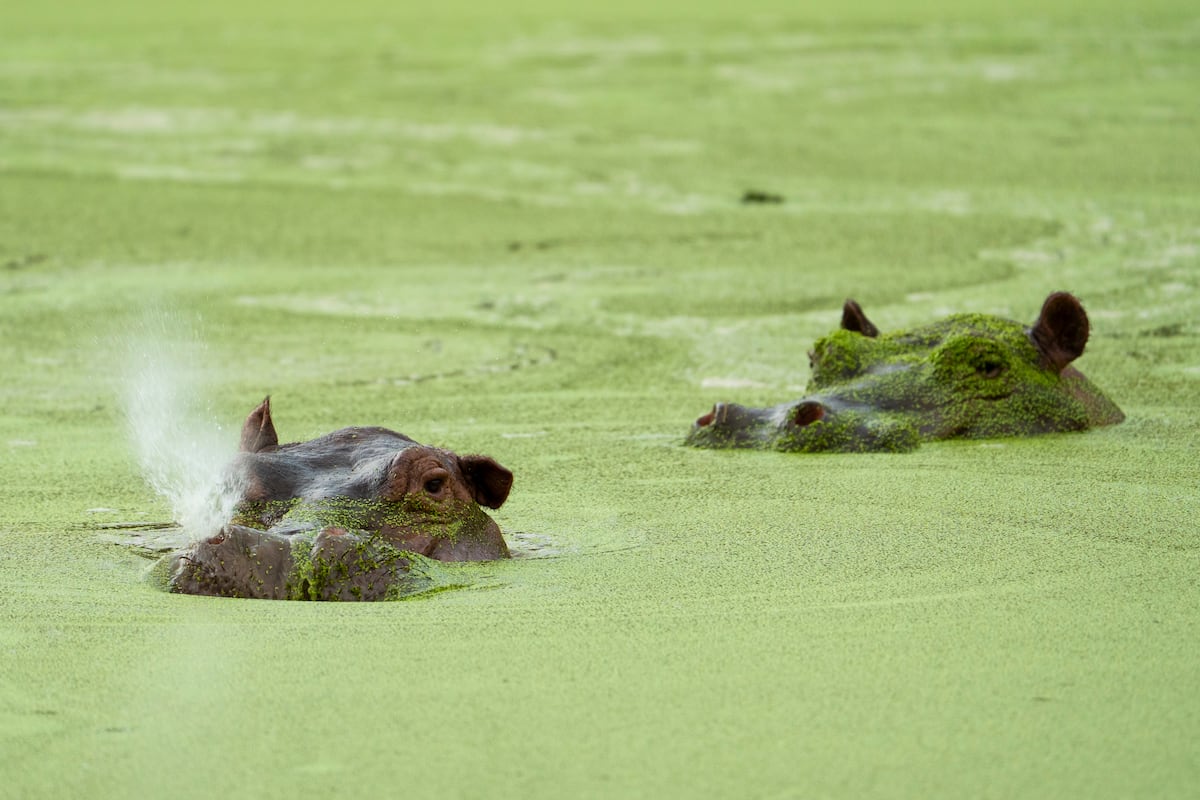
Colombia's environment ministry announced on Wednesday a management protocol that includes the chemical euthanasia of ten hippos in the department of Antioquia over the next four months. It is the first use of the technique in four decades, and the first time authorities will kill a hippo since the controlled hunt of an animal known as Pepe in 2009. The ten were selected because they live near populated areas and are considered a risk to local communities.
The order reaches the desk of Environment Minister Fabio Arjona, who took office promising a sanctuary for the invasive species "similar to Jurassic Park" and told EL PAÍS that "it's cheaper to keep them than to kill them." Pablo Escobar brought four hippos — three males and one female — to his Hacienda Nápoles estate. The animals outlived him, and responsibility for the herd has been passed from one government to the next while it spread through the rivers of the Magdalena Medio. The regional authority Cornare has managed the species for fifteen years: population monitoring since 2009, confinement trials, thirty-five surgical procedures, fifty-eight hippos sterilised, relocations to Colombian zoos, and environmental education in local communities. The herd kept growing.
People who live alongside the animals have started paying for the delay. At least three residents of the Magdalena Medio have been injured in hippo attacks; one is now in a wheelchair, and the others are fishermen attacked while working. In September, mothers in Puerto Nare filed a legal action over one of the hippos now slated for euthanasia — an animal that appeared in late July in the river that twenty-three students cross daily on their way to a rural school. "Ethically and environmentally, it is the best measure. And it had to be taken sooner or later," says David Echeverri, head of biodiversity management at Cornare. "Better now than to be forced into it after someone dies from an attack."
The national plan rests on four pillars: population monitoring and research, control and management interventions, community engagement and institutional coordination, and environmental education. Besides euthanasia it provides for sterilisation, relocation and confinement, and the ministry is working with South African government experts on training in capturing and handling hippos in the water. Biologist Katherin Corrales Bravo, an invasive-species specialist at Corpoboyacá, welcomed the announcement and questioned it in the same breath: "What is promised and what is done are two different things. We have heard governments say for many years that they will take charge."
The operation begins with a pilot phase budgeted at about 500 million pesos — some 150,000 dollars. The rollout over the following four months requires more than 8 billion pesos, about 2.4 million dollars, and that money has not yet been secured.