
Bukele bombs Haitian gang leader's mansion
Port-au-Prince celebrates strike on Jeff Larose's villa for second day, Miami court convicts Florida pastor for plotting Moïse's 2021 assassination
Images
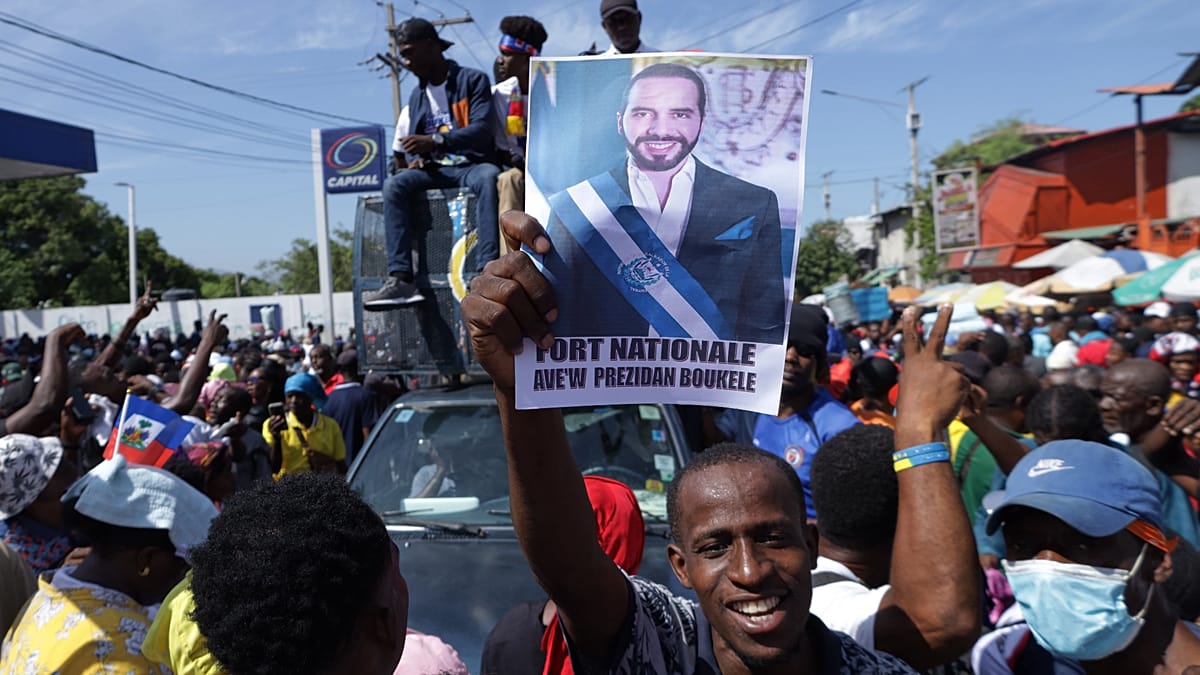 Bukele confirms airstrike on Haitian gang leader Jeff's luxury mansion
euronews.com
 Jovenel Moïse in Port-au-Prince in 2020. Haiti has not had a president since he was killed in July 2021. Photograph: Dieu Nalio Chery/AP
theguardian.com
El Salvador's president Nayib Bukele confirmed Wednesday that his forces attacked and destroyed the Port-au-Prince mansion of Jeff Larose, one of Haiti's most powerful gang leaders. Whether Larose was inside is not known. For a second day, thousands of Haitians filled the streets of the capital to celebrate, chanting the Salvadoran president's name.
Bukele posted video on X showing Larose posing in front of his villa, Salvadoran helicopters approaching, and columns of smoke rising over the property. He called the operation "my gift to the Haitian people on the anniversary of the Battle of Vertières" — the 1803 battle that secured Haiti's independence from France. Larose, also known as Jeff Canaan, Jeff Gwo Lwa or Taliban, runs one of the country's most structured criminal organizations, according to the International Crisis Group, and has controlled the Canaan district north of the capital for years. "We asked for help and Bukele answered us," a 45-year-old vendor, Mario Jean-Pierre, told AP. The strike followed a November 8 attack on the residence of Wilson Joseph, leader of the 400 Mawozo gang; the two men were allies and are counted among the capital's main criminal bosses. Bukele deployed about 2,500 Salvadoran troops to Haiti in October, after four of his soldiers went missing following an attack in gang-controlled territory. Analysts caution that the harder task is holding retaken ground and preventing gangs from taking reprisals against residents.
The same day, a federal court in Miami convicted a Florida pastor on charges including conspiring to kill Haiti's last president. Christian Emmanuel Sanon, who was born in Haiti and moved to the United States as a teenager, faces life in prison after a trial of nearly eight weeks. Prosecutors described south Florida as the hub where the plot against Jovenel Moïse was planned and financed: the group met in April 2021, agreed that Sanon — its initial choice to replace Moïse — would award infrastructure and security contracts to two Florida companies known as CTU, and eventually paid about two dozen mostly retired Colombian soldiers with money obtained from US government programs meant to help businesses during the pandemic. By June 2021 the conspirators had concluded that Sanon lacked the constitutional qualifications and the popular support to be president, and switched to a former supreme court judge. US prosecutors have charged more than 40 people over the assassination; a dozen have been convicted, five of them to life sentences.
Haiti has not had a president since Moïse was killed in July 2021, and an election is scheduled for next year. The plot that killed him was planned in South Florida, funded with pandemic business aid, and adjudicated in a Miami courtroom.