
EU proposes 45 billion euro loan for Ukraine's 2027 needs
Slovakia, Czechia, Hungary and Bulgaria refuse to take part as Merz threatens budget blockade, Kyiv repays only once Russia pays reparations
Images
 As Russia’s attacks have escalated, the cost of Ukraine’s defence and the toll of economic disruption continues to rise. Photograph: Oleksandr Gimanov/AFP/Getty Images
theguardian.com
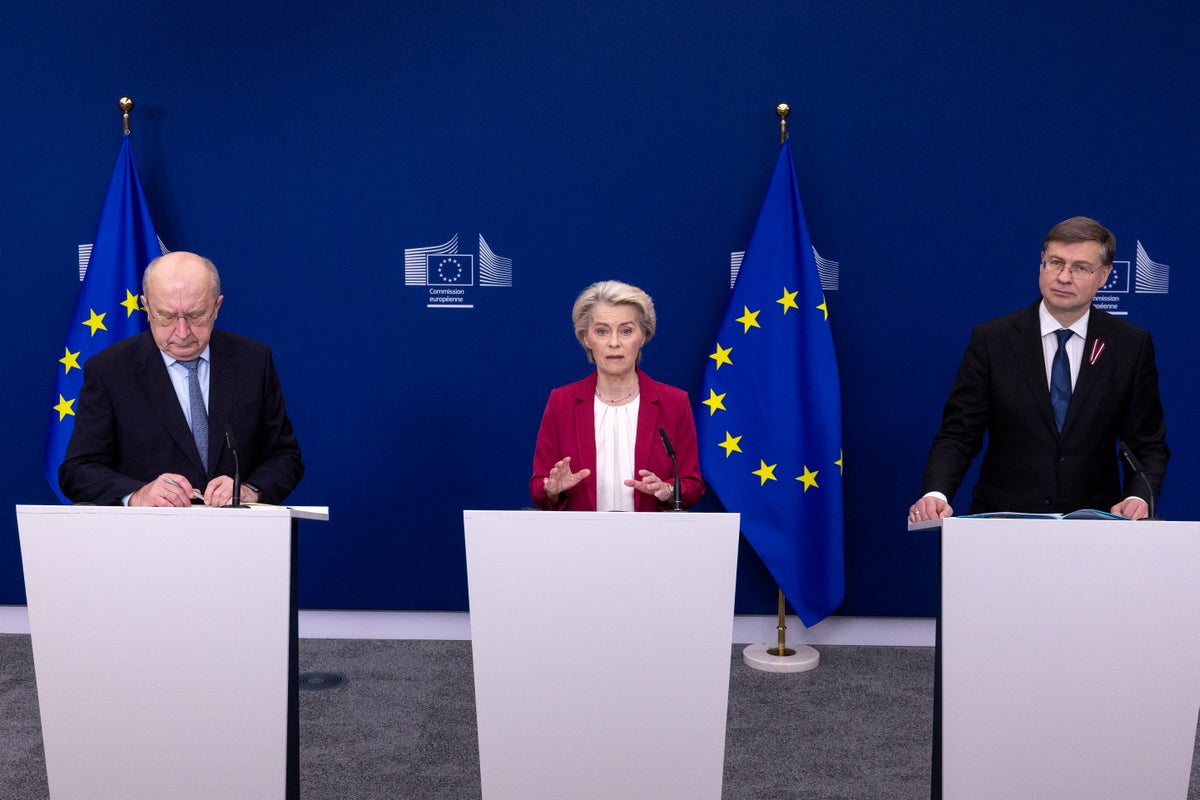 EU proposes fresh $49 billion loan for Ukraine as war costs mount
independent.co.uk
The European Commission proposed on Wednesday a €45 billion loan for Ukraine's 2027 budget, split between €25 billion for weapons and €20 billion for civilian needs such as schools and hospitals. The money covers the EU's share of a €70 billion funding gap that President Volodymyr Zelenskyy convinced EU leaders of last month; Brussels wants Ukraine's allies outside the bloc — it named Norway, the UK and Canada — to find the remaining €25 billion.
"We think this is the best way to give Ukraine a strong hand at the negotiating table," Commission President Ursula von der Leyen said. "And Ukraine only needs to repay once Russia pays for the damage it has caused in Ukraine."
That repayment clause carries the design. The plan would use interest generated from Russian assets frozen under EU sanctions to help pay the loans — the same income stream currently servicing the €45 billion loan the G7 issued to Ukraine in 2024. Around €204 billion in frozen Russian assets sat at Euroclear, the Belgian clearing house, at the end of September; Euroclear estimates it has paid out about €8 billion in windfall profits so far. Belgium has vetoed loaning the assets themselves. Countries outside the EU with triple-A credit ratings — the commission named Australia, Canada, Liechtenstein, Norway, Singapore and Switzerland — could provide guarantees of up to €5 billion to expand European borrowing on capital markets.
The member-state politics are less smooth. Slovakia, Czechia, Hungary and Bulgaria have said they will not take part in the new round, and all four are net beneficiaries of the EU budget. Von der Leyen insisted that "all 27 member states say very clearly that they want to support Ukraine," and offered holdouts the option of directing their commitments to the civilian rather than the military leg of the loan. German Chancellor Friedrich Merz, whose country is the largest payer into the EU budget and Ukraine's biggest EU donor, has warned he will block the 2028-2034 budget unless every member state joins a collective commitment "without exception."
It is the second instrument of its kind in a year. Eleven months ago the EU agreed a €90 billion interest-free loan covering most of Kyiv's needs for 2026 and 2027, after contributions from non-EU allies fell short of expectations. EU defence commissioner Andrius Kubilius said Russia is expected to use 10 million drones this year and 20 million in 2027: "Ukraine with EU assistance needs to match — and will match."
Leaders take up the loan and the seven-year budget at a Brussels summit late next week. Euroclear has so far produced about €8 billion in profits from the frozen assets; the borrowing now resting on that income — the G7's €45 billion from 2024 and the €45 billion proposed on Wednesday — totals €90 billion.