
European Commission accused of sugarcoating Egyptian welfare figures to unlock billions in loans, leaked documents show poverty rolls shrank while MEPs were told they grew
Egypt has received €3.5bn as it jails an entire investigative newsroom
Images
 Ursula von der Leyen and Abdel Fatah al-Sisi after a meeting in Cairo in March 2024. Photograph: Stavros Ioannides/PIO/AFP/Getty Images
theguardian.com
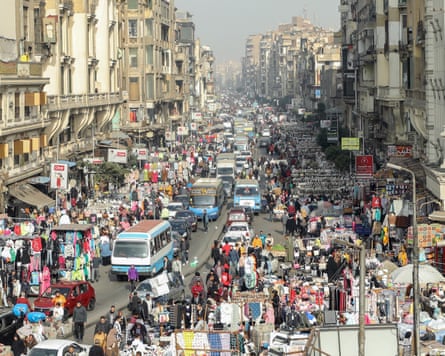 A street scene in Cairo. Photograph: Anadolu/Getty Images
theguardian.com
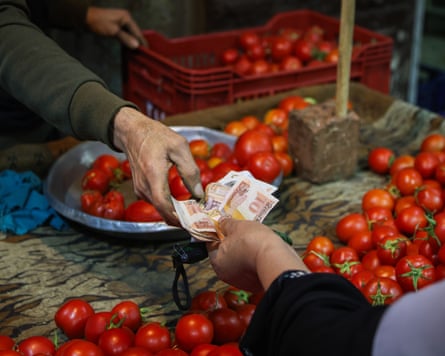 A customer pays for tomatoes with Egyptian pound banknotes at a market in Cairo. Photograph: Bloomberg/Getty Images
theguardian.com
The European Commission approved €2.5bn in soft loans to Egypt after telling EU lawmakers that Cairo had expanded welfare coverage for the poor. The figures behind those approvals show a net reduction of 85,734 households — people struck off the rolls rather than added.
The loans form part of the €7.4bn "strategic and comprehensive partnership" announced by commission president Ursula von der Leyen in Cairo in March 2024 alongside Abdel Fatah al-Sisi, a package meant to prop up Egypt's economy, deter migrants heading to Europe, and steady a region shaken by the 7 October attacks and the war in Gaza. Its €5bn loan component, known as macro-financial assistance, is nominally reserved for countries that respect human rights and democracy. Those conditions are vague; the economic benchmarks are specific, and they decide when the money moves.
Leaked documents seen by the Guardian show the commission telling MEPs that Egypt had "broadly fulfilled", and then "fulfilled", two separate targets to increase the number of poor people enrolled in social welfare programmes between 2024 and 2026. A rough calculation using World Bank figures suggests that expansion without removals would have put roughly 245,000 additional households — about 909,000 people — on the benefit rolls. The same documents show the commission pressing Egypt to "further expand" its cash transfer programmes. The data relevant to the targets has since been deleted from an Egyptian government website.
In the same period, Egypt has jailed six journalists — the entire newsroom of Matsadaash, a factchecking and investigative platform — amid allegations of torture. Last month one of the country's last independent news outlets was closed and its editor, Lina Attalah, was convicted; she had been sentenced in absentia to one year in prison for "publishing false news" without her knowledge. Dutch MEP Tineke Strik, one of the European parliament's leading voices on EU–Egypt relations, has tabled a question demanding clarification, saying the commission has used the loans "primarily as a tool to lure Egypt into migration cooperation, while considering formal conditions and its reporting obligations towards parliament as an inconvenient formality".
Egypt has so far received €3.5bn in three instalments; a final payment remains outstanding. Attalah is due in court this week to appeal her conviction.