
Voyager 1 reaches one light-day from Earth
Every command now takes two days to confirm on 49-year-old hardware, Golden Record carries spare instructions inside a cover built to wear away
Images
 Credit:
Glen Swanson via collectSPACE.com
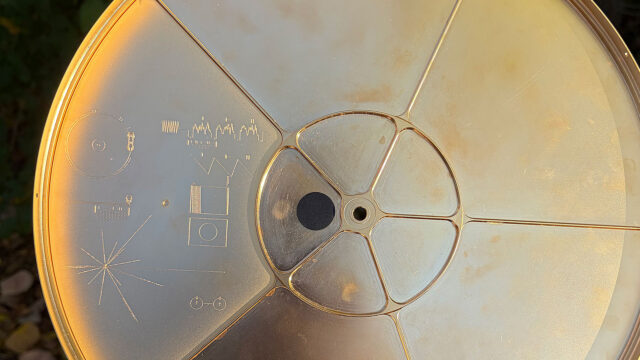 a golden metal disc is inscribed with hieroglyphs and symbols.
Credit:
Glen Swanson via collectSPACE.com
 Credit:
Glen Swanson/NASA/JPL
 Credit:
collectSPACE.com/Tim Gagnon
 Credit:
Smithsonian
 A NASA image shows one of the Voyager space probes, Voyager 1
newsweek.com
 A Voyager space probe is seen, the Jet Propulsion Laboratory, the California Institute of Technology (Caltech), Pasadena, California, 1977.
newsweek.com
 The Milky Way is seen over the south Indian Ocean on December 29, 2011
newsweek.com
Voyager 1 crossed the one-light-day mark at 5:16 a.m. EST on Wednesday, becoming the first human-made object to put a full day of light between itself and Earth. A command radioed from NASA's 230-foot antenna in Australia now spends about 24 hours reaching the spacecraft; the confirmation spends another 24 coming back.
The probe left Earth on September 5, 1977, with a mission to fly past Jupiter, Saturn and Saturn's moon Titan. It crossed into interstellar space in 2012 and kept going, and flying it has become a two-day conversation. "We have to carefully plan for every command because it takes about two days to confirm successful implementation," power analyst Bhavana Gupta told NASA — though, as she added, the team has had a lot of practice. The arithmetic carries one accidental mercy: Earth turns once every 24 hours, so the Australian dish faces the same way when the answer arrives as when the question went out, which propulsion engineer Todd Barber notes makes scheduling and verification easier. The distance — more than 646,000 laps of the planet — is being marked with a campaign NASA calls "Shine Bright for Voyager's Light-Day."
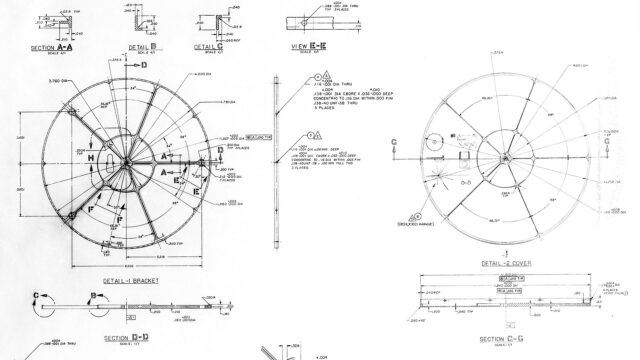
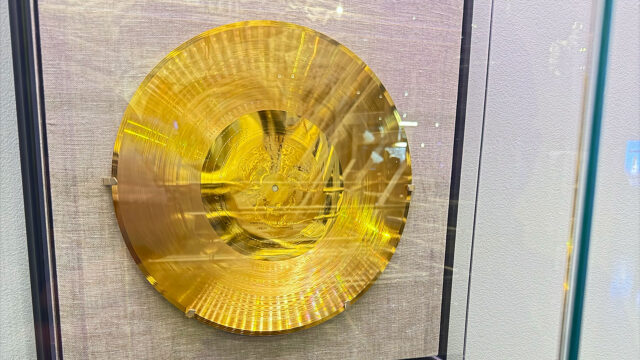
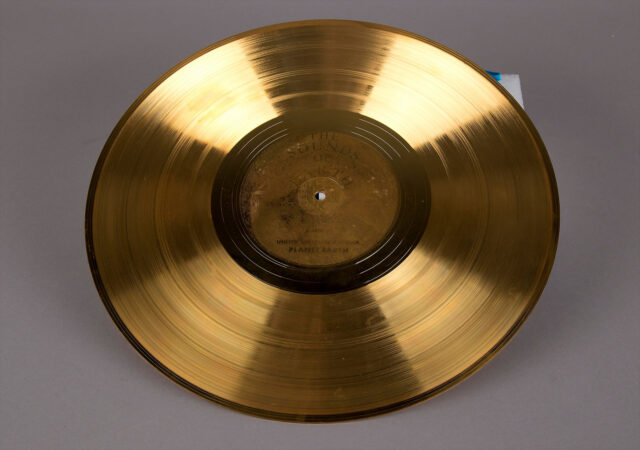
The milestone also gave Glen Swanson, former chief historian of NASA's Johnson Space Center, an occasion to publish what he has found in the archives. The Golden Record bolted to each Voyager — a message for whatever finds the spacecraft, assembled partly as a nod to the phonograph's centenary — carries its famous operating instructions on the outside of its protective cover, where the designers recognized that dust would eventually rub the inscriptions smooth. So they repeated the instructions on the inside. Swanson and Jon Lomberg, the record's design director, have also traced duplicates of the disc made and distributed almost five decades ago; their book on the hardware — "the bottle itself," in Swanson's phrase, as opposed to the message in it — is due from the University of Chicago Press in 2027.
The crossing fell 49 years, two months and 11 days after launch, to a spacecraft built to visit two planets.