
Russian strikes leave Kyiv with four hours of power a day
Ballistic missiles hit two Dnipro bridges as outages stretch to 37 hours, Zelenskyy blames Klitschko for winter unpreparedness
Images
 Kyiv’s mayor, Vitali Klitschko, has been accused of failing to prepare for power shortage despite clear signs Russia would target the city. Photograph: Valentyn Ogirenko/Reuters
theguardian.com
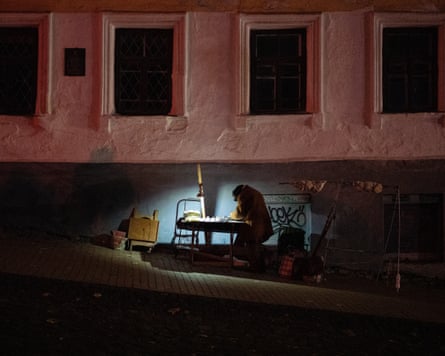 Power outages left Kyiv in darkness after Russian attacks on civilian infrastructure on 8 November 2026. Photograph: Danylo Antoniuk/Anadolu/Getty Images
theguardian.com
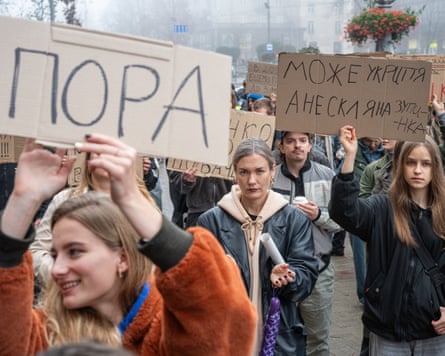 Kyiv residents demonstrate outside City Hall demanding Klitschko’s resignation over winter readiness and shelter shortages 17 October 2026. Photograph: Danylo Antoniuk/Anadolu/Getty Images
theguardian.com
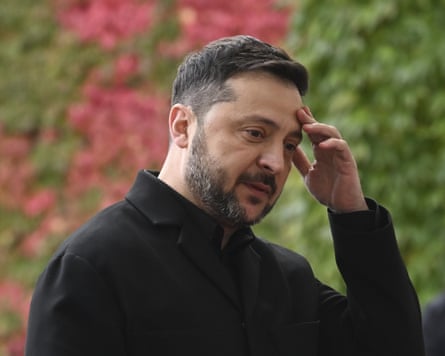 Ukraine’s president, Volodymyr Zelenskyy, has attacked Klitschko’s leadership. Photograph: Halil Sağırkaya/Anadolu/Getty Images
theguardian.com
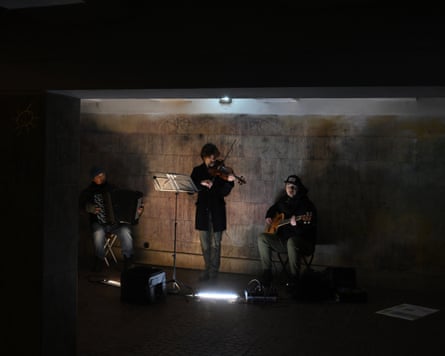 Musicians plays in a dark underpass in the Ukrainian capital of Kyiv during a power outage on 14 November 2026, caused by attacks on energy facilities in the country, amid the Russian invasion of Ukraine. Photograph: Sergei Supinsky/AFP/Getty Images
theguardian.com
Russian strikes on Ukraine's energy grid have left many homes in Kyiv with electricity for only four hours a day. This week ballistic missiles hit two crucial bridges crossing the Dnipro river, threatening to cut off the two sections of the capital, and the man answering for the blackouts is Mayor Vitali Klitschko, the former boxing champion.
The darkness followed attacks on civilian infrastructure on 8 November. In Desnianskyi, a working-class district of 600,000 people on Kyiv's left bank, some homes went without power for up to 37 hours straight, according to district head Maksym Bakhmatov. He ranks the causes plainly: "First, because of Putin. Second, because of lack of normal management from the mayor." His district has neither the budget nor the financing for larger projects such as decentralising power generation, he says, and there are no alternative generators inside Kyiv. "For now we have almost a collapse of city."
The bridge strikes form part of a broader Russian strategy of severing Ukraine's western and eastern sections from each other. President Volodymyr Zelenskyy wrote last week that "the situation is worst in Kyiv – people and businesses are facing prolonged power and water outages, and the challenges are extremely serious." The causes, in his account, are "the failure to implement decisions at the city level on preparations for the heating season, as well as of this Russian operation against Ukraine's energy infrastructure."
Klitschko has been under street pressure for weeks. Around 500 people gathered on Khreshchatyk, the downtown boulevard, in October to accuse him over the energy crisis, and demonstrators outside City Hall on 17 October demanded his resignation over winter readiness and shelter shortages. One sign borrowed from his boxing career: "Kyiv is in blackout – Klitschko will get knocked out."
Klitschko's defence, offered the same day as the president's statement, was a question: how was Kyiv supposed to stop the Russian special operation?