
Dutch data centres now draw 5 percent of national electricity
CBS finds large facilities quadrupled their consumption since 2017 with the centre count unchanged, Amsterdam's billion-euro Microsoft-leased campus sidesteps the national hyperscale ban by being three smaller facilities on paper
Images
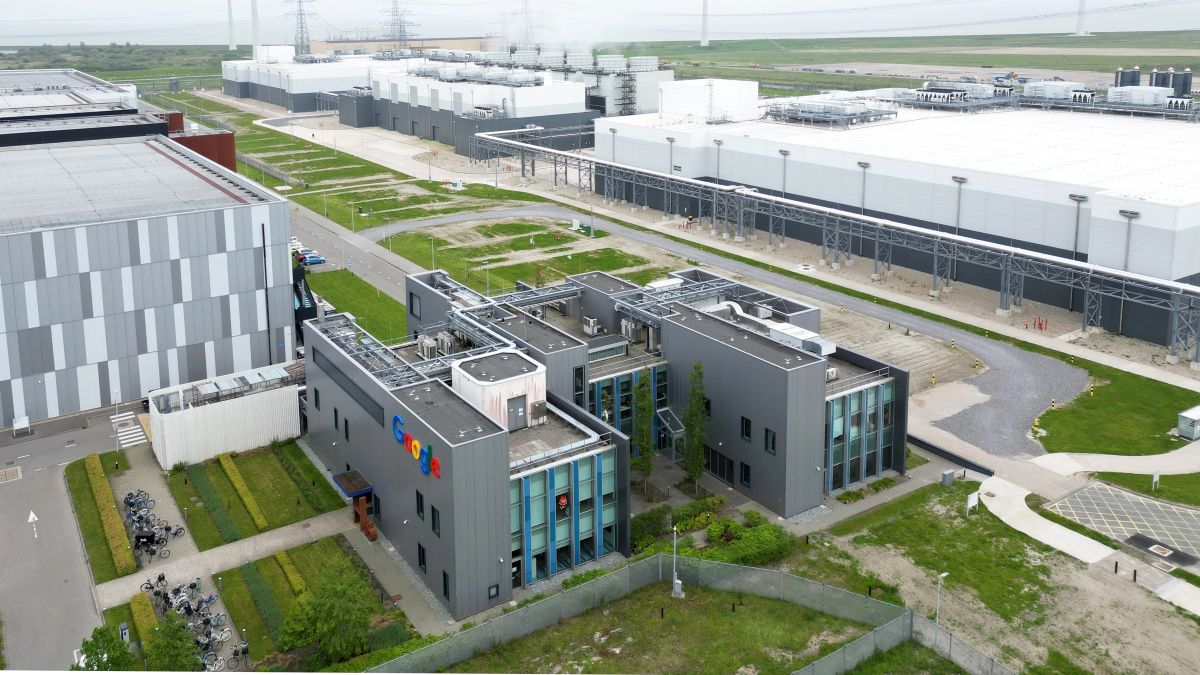 Aerial view of the Google datacenter in the Eemshaven. Photo: Depositphotos.com
Depositphotos.com
Data centres consumed 5 percent of all electricity used in the Netherlands last year, the national statistics office CBS reports — up from 1.5 percent in 2017. Around 200 centres drew 5,664 gigawatt hours in 2025, roughly 12 percent more than the year before.
Fifty large facilities account for 93 percent of the total, and their consumption has quadrupled since 2017 while their number has stayed roughly the same. The draw per building is what grew. The remaining 150 or so centres share the rest, and the official tally excludes universities and hospitals running their own server rooms, which CBS estimates at a further 142 gigawatt hours. Within the EU only Ireland gives data centres a larger slice of its electricity: Eurostat's 2024 figures put Ireland at 21.3 percent, the Netherlands at 4.6 percent and Germany at 4.2 percent, with the Dutch third in absolute terms behind Germany and Ireland.
The figures landed less than two weeks after police cleared activists from the building site of a new campus in Amsterdam's Westpoort district. The occupation was organised by the climate and justice group Geef Tegengas, with Extinction Rebellion joining. The 1-billion-euro, 78-megawatt campus is being built by the developer Pure DC and will be leased to Microsoft; according to NRC, it will use as much electricity in a year as the whole of Amsterdam. Microsoft said it understood the project "stirs up strong emotions" and respected the right to protest peacefully.
The Netherlands banned hyperscale data centres in 2022. Critics point out that the Westpoort campus gets around the ban because, on paper, it is three smaller facilities.