
Migrant arrivals to Canary Islands spike ahead of Spanish election
Over 11,000 land in first half of November, Spain answers with emergency declaration and more reception-centre funding
Images
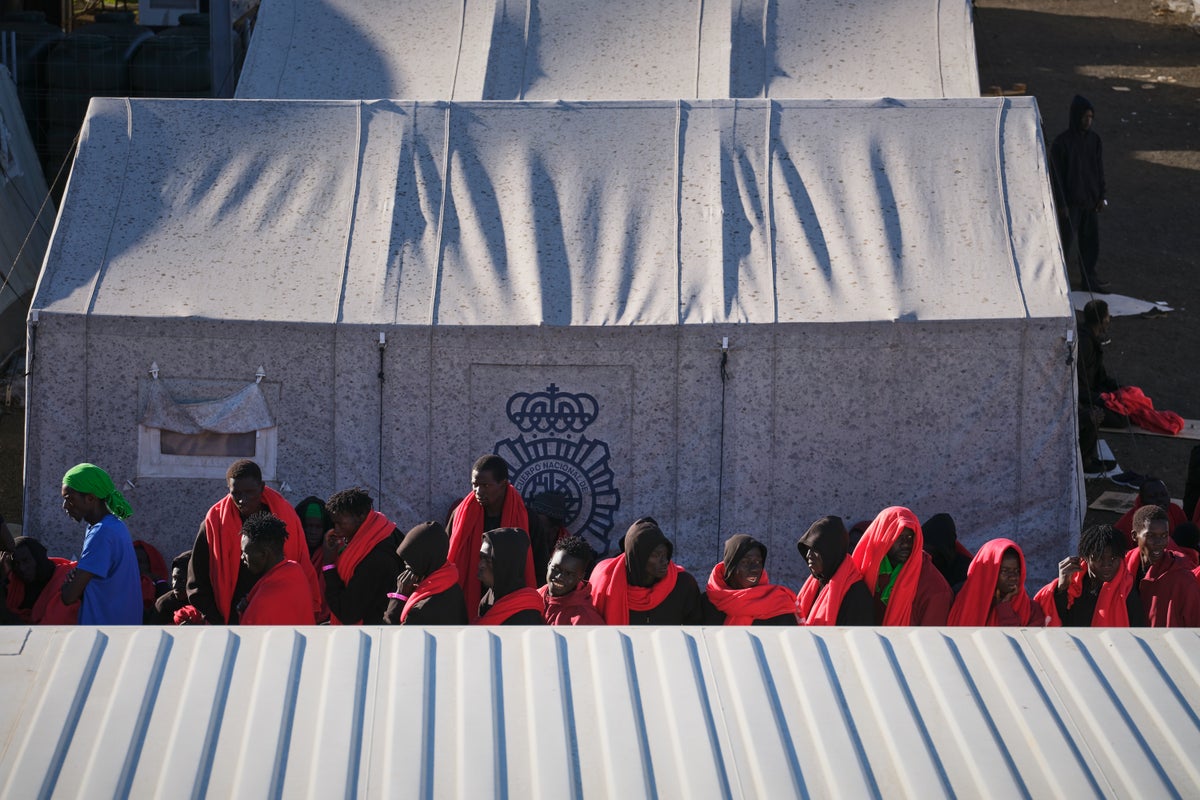 Migrant arrivals from Africa to the Canary Islands spike as Spain's general election nears
independent.co.uk
More than 11,000 migrants reached Spain's Canary Islands in the first half of November, Spanish government figures show — a sharp increase on the same period last year. Spain holds a general election on November 29.
For most of the year, arrivals had run below last year's levels. The surge began in late October, as the campaign got under way, and the first two weeks of November already account for more than half of the 17,788 migrants who reached the islands irregularly in all of 2025 — a year that was itself down 62 per cent on the one before, according to the International Organization for Migration.
Most of those landing come from Senegal, Mali, Gambia and Guinea, according to José Antonio Rodríguez, spokesperson for the regional Red Cross immediate response team. They arrive with hypothermia, dehydration and "trench foot," a bacterial infection caused by prolonged exposure to salt water contaminated with fuel and human waste. "It's very complicated, like a gangrene," Rodríguez said; at least a few people on every boat carry the infection.
The pressure falls hardest on the smallest islands. El Hierro has about 12,000 residents, and regional leader Fernando Clavijo has called the boat arrivals there unsustainable, asking Madrid for more help. Spanish authorities usually transfer migrants from El Hierro to larger islands with more infrastructure to shelter and process them.
The archipelago has also become the campaign's opening stage. Vox leader Santiago Abascal launched his bid on the islands, calling the arrivals "an invasion" and telling supporters on Tenerife: "Whoever enters Spain illegally will leave Spain and will never be made legal." Several opinion polls put Prime Minister Pedro Sánchez's Socialists behind the combined support of the conservative Popular Party and Vox. Sánchez's party pushed earlier this year to legalise more than one million undocumented immigrants already in the country, and in July tens of thousands of people crossed from Morocco into the Spanish territory of Ceuta in two days, with more than 140 dying in the attempt.
Autumn brings calmer seas on the Atlantic route, one of the world's deadliest crossings. Many migrants take longer courses to evade security forces, journeys that last days or weeks, and often arrive unaware of which island they have reached.
Spain's answer to the spike, announced last week, was an emergency declaration on the archipelago and additional funds to create more space in state-run reception centres.