
Sculptor restores last flight-worthy Shuttle external tank, Endeavour displayed in full launch configuration in Los Angeles
The foam that doomed Columbia now shaped by a fine-arts graduate
Images
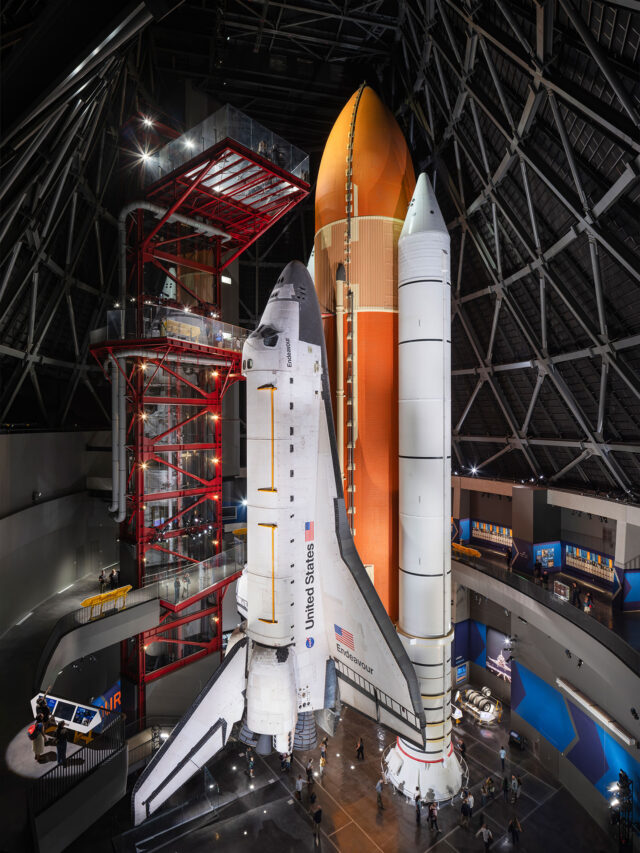 A winged orbiter and its launch components are seen on museum display in a room large enough to fit the towering display.
Credit:
California Science Center / ZGF Architects/Mike Kelley
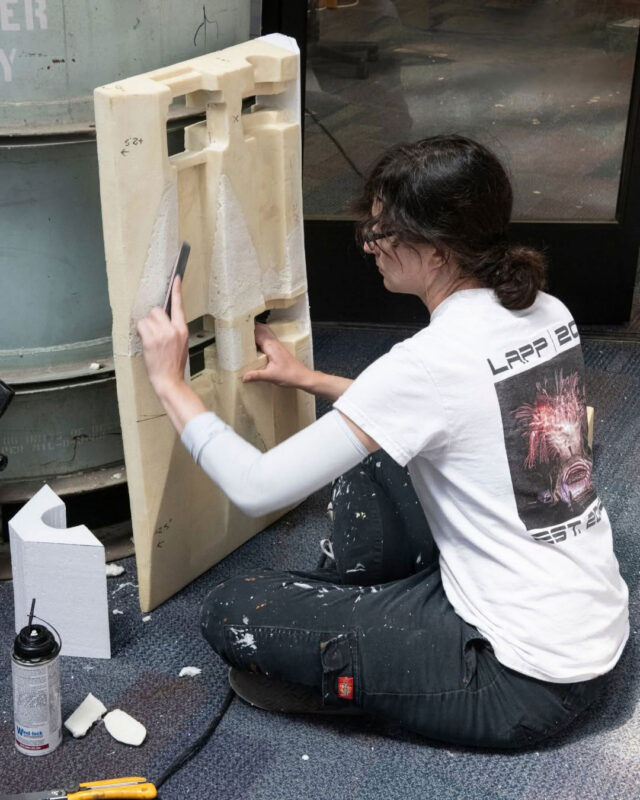 A woman in a white printed shirt and black paint-stained jeans works on sculpting foam for a museum exhibit.
Credit:
California Science Center
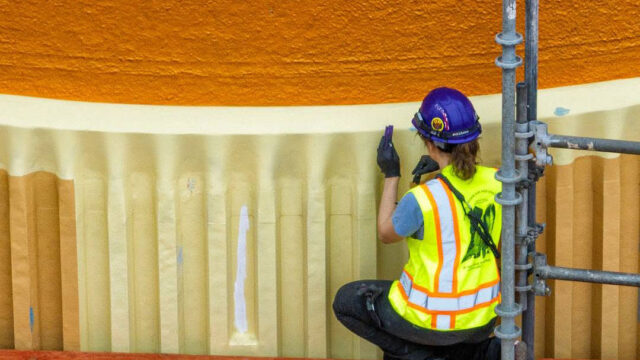 a woman with her back to the camera wearing a bright yellow safety vest and blue hard hat works on a large aerospace tank atop scaffolding.
Credit:
California Science Center
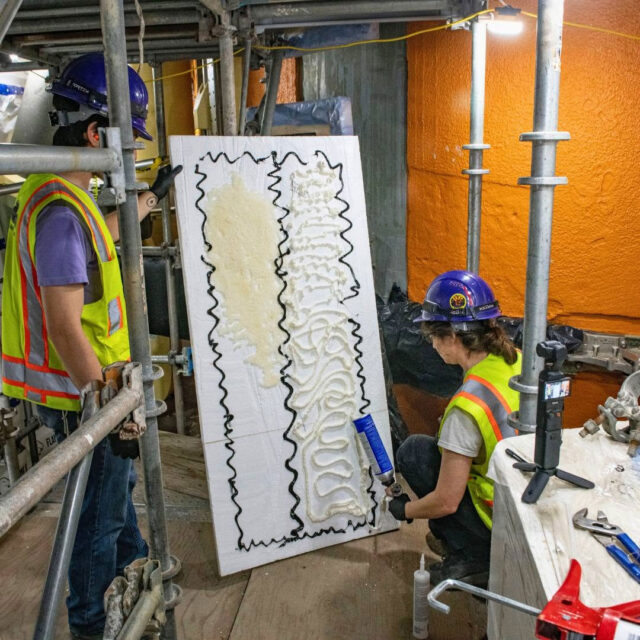 A woman applies foam to a panel besides a large aerospace tank as a colleague looks on. Both are wearing safety vests and hard hats.
Credit:
California Science Center
 Photo of Robert Pearlman
arstechnica.com
Los Angeles' California Science Center opened its Samuel Oschin Air and Space Center on November 13, putting the shuttle Endeavour on display stacked with an external tank and solid rocket boosters — the only fully authentic exhibit of a shuttle in its launch configuration. The largest component of the stack is the tank, ET-94, the last flight-worthy example of a part the program threw away on every flight it ever made.
The shuttle flew as a three-piece stack. The orbiter and the boosters came back for refurbishment; the external tank, which fed propellant to the orbiter's three main engines, was jettisoned after ascent and disintegrated on reentry. ET-94 was a lightweight tank built during the transition to a super-lightweight model and was originally slated for a science mission aboard Columbia. When the program ended, NASA donated it to the museum; it arrived by transoceanic barge and road transport, then sat at Exposition Park for nearly a decade while the center worked out how to stand a shuttle upright.
The foam work went to Natalie Rosen, who holds a bachelor's and a master's in fine arts from Cal State Long Beach and had never worked on an aircraft or spacecraft. The center was looking for a sculptor; Rosen had shaped foam for her mixed-media thesis. Her task was to rebuild what engineers had cut away — ET-94 arrived with sections of insulation dissected and removed, and Rosen sculpted a foam ice frost ramp later installed along the tank's length.
The material has a history. The insulation existed to keep liquid oxygen and hydrogen cryogenic and to shield the orbiter, and a liberation of that foam during ascent caused the loss of Columbia and its crew in 2003. The tank now on display was built for a Columbia mission that never flew.
It is also the half of the reusability problem that remains open. NASA promised aircraft-like turnaround and retired the shuttle after 135 flights at $25,000 per pound to orbit; the boosters were recovered even then, the tank never was. This week SpaceX caught a returning Starship booster with mechanical arms at its Texas launch site, and rapid reuse and orbital refueling remain unsolved. The external tank was the piece of the stack that carried the propellant, and the piece expended every single time.
Even the tank's color was contested. Shuttle enthusiasts and modelers argue over orange, cream or burnt sienna — the foam starts almost ice-cream white and ages — and Dennis Jenkins, who leads the Endeavour project, blended a special paint for the display. The shade was decided before the sculptor was hired.
ET-94 never flew. It now holds Endeavour upright as the only shuttle in the world displayed ready for launch, standing in for the one component the program never brought back.