
Serbia's student-backed parliament holds first sitting with 140-seat majority
Anti-graft newcomers from Novi Sad protest movement take power while Vučić's courts and security apparatus stay in place
Images
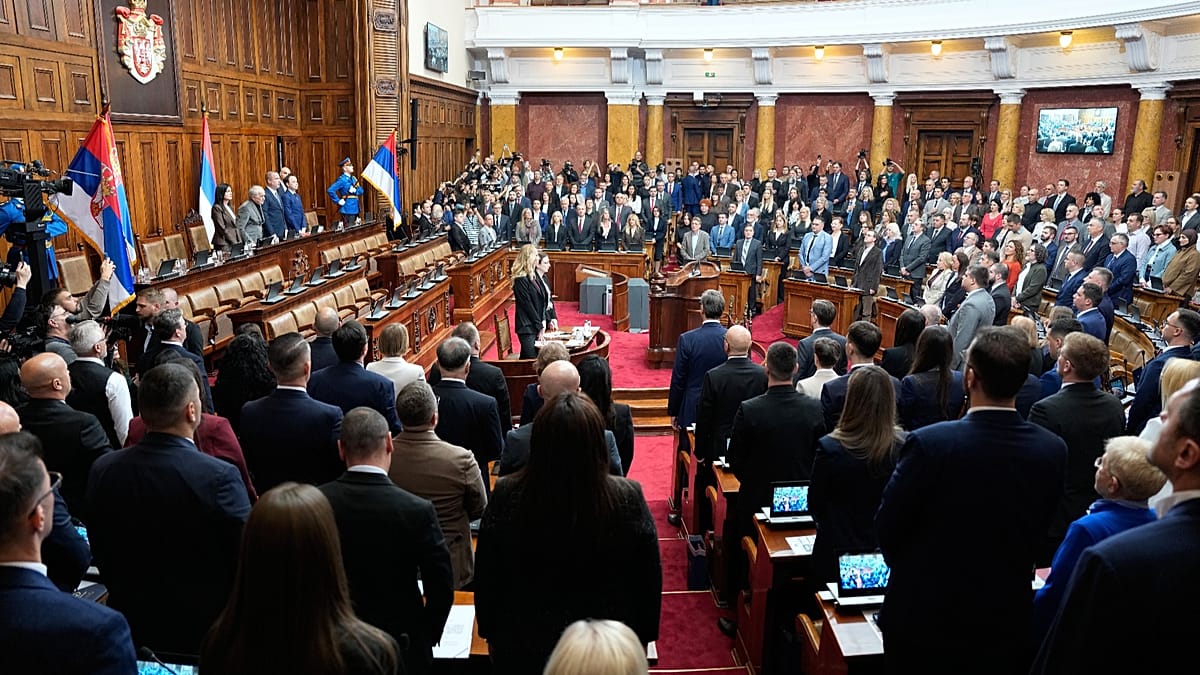 Serbia's students enter parliament after historic vote ousted Vučić
euronews.com
Serbia's new parliament held its first sitting on Tuesday, swearing in 140 lawmakers from the student-led movement that ended Aleksandar Vučić's fourteen years of power in last month's election. Hundreds of supporters gathered outside the parliament building in Belgrade, chanting protest slogans, while Vučić's Serbian Progressive Party legislators drew jeers — one SNS member had yogurt poured over her head as she climbed the parliament steps.
The Students' List holds an outright majority in the 250-seat chamber, with Vučić's coalition on 103 seats and minority parties taking the remainder. Most of the new lawmakers are political newcomers from academic and arts backgrounds, and prominent candidate Mirjana Nikolic told AFP the movement has been "studying the laws, parliamentary procedures and MPs' duties" ahead of the session.
The movement was born from catastrophe. The 2024 collapse of a railway station canopy in Novi Sad, which killed 16 people, was widely blamed on corruption and triggered Serbia's largest protests since the fall of Slobodan Milošević in 2000. Nearly two years of demonstrations converted into an anti-graft electoral platform that swept the country without party machinery — no patronage network, no media empire, no security-service allies. That absence was the movement's selling point; it is now also its governing problem.
The new majority will have to run a state staffed by the old regime. Courts, broadcasters, and the security apparatus built under Vučić remain in place, and the incoming government has pledged wide-ranging reforms — better healthcare and education, a doubled defence budget — while balancing Serbia's ties to Russia against its long-stated EU ambition and managing the unresolved dispute with Kosovo.
A presidential election must be called by 27 November and held by 27 December, after Vučić cut short his second term in September to run for prime minister. He is constitutionally barred from running for president again and has taken up a seat in parliament as opposition leader.
The bloc that spent over a decade treating Vučić as a stabilising partner now faces a Serbian government that won precisely by refusing to play that game.