
Puerto Rico households wire home batteries into virtual power plant
Network of nearly 115,000 systems has prevented or mitigated more than 60 outages since June, public utility went bankrupt nine years ago and most federal grid money has yet to arrive
Images
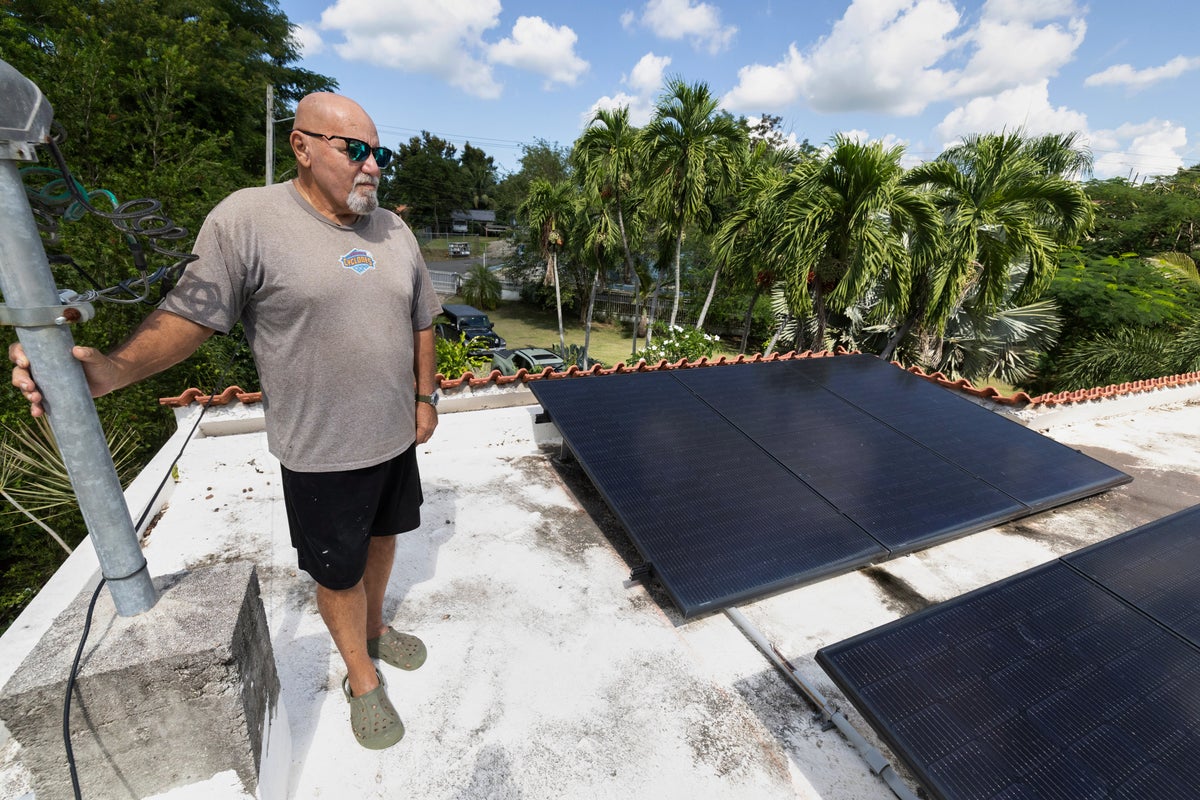 As outages persist, Puerto Rico finds a way to help keep the lights on with 'virtual power plant'
independent.co.uk
On nearly 20 days in October, the electric utility drew power from the battery attached to Hector Ríos' house in Cabo Rojo, on Puerto Rico's southwest corner, and fed it into the island's grid — and paid him for it. Ríos, 75, is one of nearly 115,000 households whose batteries have been networked into a "virtual power plant", the first of its kind in Latin America and the Caribbean and the second largest in the United States by capacity.
The island's public power utility filed for bankruptcy nine years ago. Hurricane Maria wrecked the grid in 2017 and left some communities without electricity for nearly a year; experts link the infrastructure failure to thousands of post-hurricane deaths. In the years since, few new utility-scale power sources have been built, most of the federal dollars promised for grid recovery have not reached the territory, and residents still face unpredictable blackouts and electricity rates higher than in almost any US state.
The residents built the generation themselves. Puerto Rico now counts more than 207,000 rooftop solar installations — a twenty-fold increase from before Maria, on an archipelago of fewer than 3.2 million people — and nearly every one includes a battery, the add-on that keeps a household running when the grid goes down. Households that could afford the equipment, philanthropy and some federal money drove the build-out. Ríos bought a diesel generator after Maria, then added panels and a Tesla Powerwall in 2023.
Luma Energy, the transmission and distribution utility, says the virtual plant has prevented or mitigated more than 60 outages since June 1. "There's nothing virtual about it," said Javier Rúa Jovet of the Solar and Energy Storage Association of Puerto Rico. "It's real, and it's better than a power plant." Dozens of states now run similar networks of household batteries, electric vehicles and smart thermostats, and experts expect distributed energy to expand as utilities raise prices and technology companies push to build power-hungry data centres.
The Trump administration, for its part, promotes fossil-fuel expansion and has redirected dollars away from solar adoption in Puerto Rico. New Orleans is preparing a $23 million city programme to install and network more than 1,000 batteries on homes and businesses, championed by the nonprofit Together New Orleans.
Ríos' summer electricity bill fell from about $400 to $200. Most of the federal money promised to rebuild the grid has yet to arrive.