
Malawian mothers forage crocodile-infested Shire River as maize fails
Nyika tubers once reserved for famine years now sold weekly at Sorgin Market, state grain agency Admarc rations what it is mandated to supply
Images
 Beatrice Maseko, front, packs freshly harvested nyika tubers into a sack on the Shire riverbank, where water levels have reached highs not seen in decades. All photographs by Kenneth Zindondo
theguardian.com
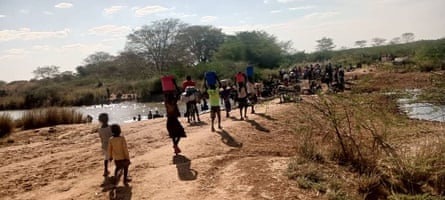 Families and foragers walk along an embankment beside the marshlands of the lower Shire River basin in Chikwawa, carrying the day’s harvest
theguardian.com
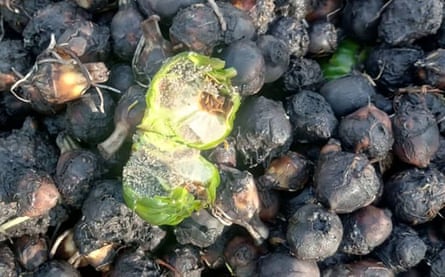 Unpeeled wild water-lily bulbs. The starchy core requires lengthy boiling to reduce bitterness
theguardian.com
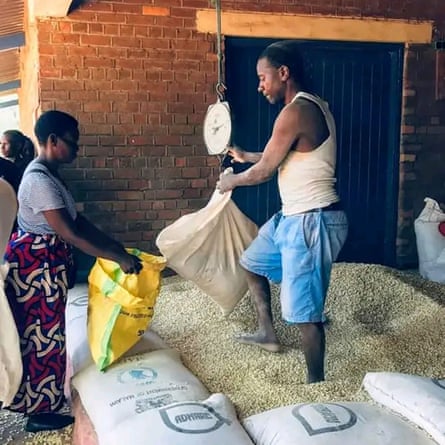 A worker weighs and bags maize in an Admarc depot. Official stocks remain limited and as it sells below the open market price, purchases have to be rationed to prevent profiteering
theguardian.com
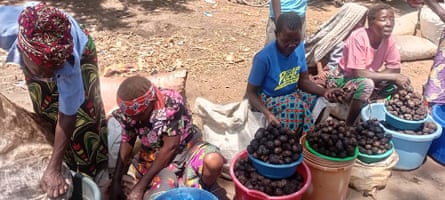 Women display fresh nyika roots in the market, waiting for buyers unable to afford maize
theguardian.com
Beatrice Maseko, a 34-year-old mother of four, spends up to five hours a day reaching into the sediment of the Shire River, feeling for the roots of wild water lilies. She works alongside a dozen other women on the riverbank in Malawi's lower Shire basin, all of them moving slowly and keeping quiet, because noise draws crocodiles. One was observed about 50 yards from the foragers. "The crocodile is a possibility, but hunger is a certainty," Maseko told the Guardian. "If I do not come into this water, my children will not eat tonight."
The tubers, known locally as nyika, come from the water lily Nymphaea petersiana, and communities along the lower Shire have harvested them during severe shortages for decades — accounts from the 2005 food crisis describe the same digging. What has changed is the schedule. A harvest once reserved for the worst drought years has become weekly and commercial: every Monday and Thursday, the tracks leading to Sorgin Market fill with vendors carrying heavy wet bundles of lily bulbs. For buyers priced out of the maize market, one basin of bulbs can mean three days of basic survival for a family. The roots are boiled, dried and pounded into a gritty grey flour for porridge.
The state has an institution for this. Admarc, the Agricultural Development and Marketing Corporation, is mandated to buy maize from farmers at a fixed price to steady markets and maintain emergency reserves. In July it was selling maize at 39,500 kwacha — about £17 — for a 50kg bag, with purchases capped at 20kg per person to prevent hoarding and resale. Logistical bottlenecks, warehouse losses and funding shortfalls mean the cheaper public supplies are heavily rationed or absent when communities need them most. The women standing in crocodile water are filling the gap the granary leaves open.
The cost is counted in limbs. In 2024, Isaac Kenneth, 28, was seized by a crocodile while harvesting the same stretch of water; fellow foragers pulled him out with deep puncture wounds and a broken ankle. In the villages of Maseya and neighbouring Kasisi, in Chikwawa district, people talk about foragers who went into the deeper channels looking for larger roots and never came back.
Extreme weather, weak support systems and rising food prices have combined to lock households across Malawi's flood-prone southern lowlands out of basic nutrition, and water levels in the Shire have reached highs not seen in decades.
Maseko keeps going in. "Every time you reach down into the mud," she said, "you wonder if your hand will come back up."