
Kate Nash funds her tour through OnlyFans as millions of streams fail to cover bus costs
Singer parks Butts for Tour Buses fire truck outside Spotify and Live Nation offices in London, the artist sells the one asset the industry left with a margin
Images
 Kate Nash … ‘I still need to sell my bum on OnlyFans to go on tour’. Photograph: Ellius Grace
theguardian.com
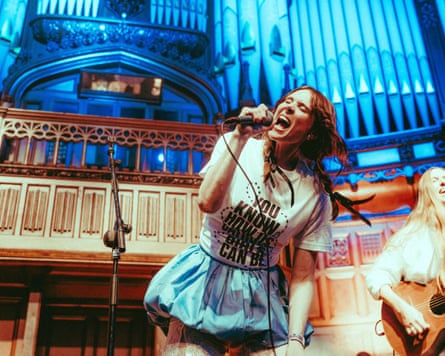 Piping up … Kate Nash performing at Other Voices in Derry in September. Photograph: Claire Loughran
theguardian.com
Kate Nash has done the arithmetic that the music industry prefers not to publish: millions of Spotify streams no longer cover the cost of taking a band on the road. So the singer is funding her tour through an OnlyFans account — and saying so in terms the platforms cannot ignore. "I have to sell my bum on OnlyFans to go on tour," she told the Guardian in an interview tied to her new release.
Nash has turned the confession into a stunt with a point. Her "Butts for Tour Buses" campaign features a fire truck bearing a large black-and-white photograph of her own backside, parked outside the London offices of Spotify and Live Nation — the streaming platform that pays fractions of a penny per play, and the concert giant that controls the venues a touring artist must rent back at market rates. The protest names the two intermediaries who take the margin on both sides of her career while the music itself has been priced at effectively zero.
The arrangement is more honest than it first looks. Recorded music was collapsed into a promotional loss leader by the platforms that distribute it; the live business was consolidated by promoters who own the rooms. What remains for the artist is whatever asset cannot be commoditised — and Nash has concluded that her body is the one item on her balance sheet still carrying a margin. She is not being starved out of the industry; she is arbitraging what it left her.
It also continues a pattern the industry has never had to account for. When streaming rendered recorded music worthless, artists were told touring was the answer. When Live Nation and Ticketmaster consolidated touring, they were told merchandise was the answer. Each substitution moves the artist one step further from the thing they became famous for, and one step closer to selling access to themselves directly — a business OnlyFans has industrialised.
Nash, who broke through in 2007 with a Number One single and has spent the years since watching that level of success become financially unsustainable, frames it as feminism and a fight with the music business. She is now booked on a tour paid for by subscribers, while the fire truck sits outside the offices of the companies whose royalty cheques could not.