
ASEAN signs first legally binding digital economy pact in Manila
Agreement eases cross-border payments and data flows from May 2027, ADB raises up to five billion dollars for infrastructure the West will neither build nor clear
Images
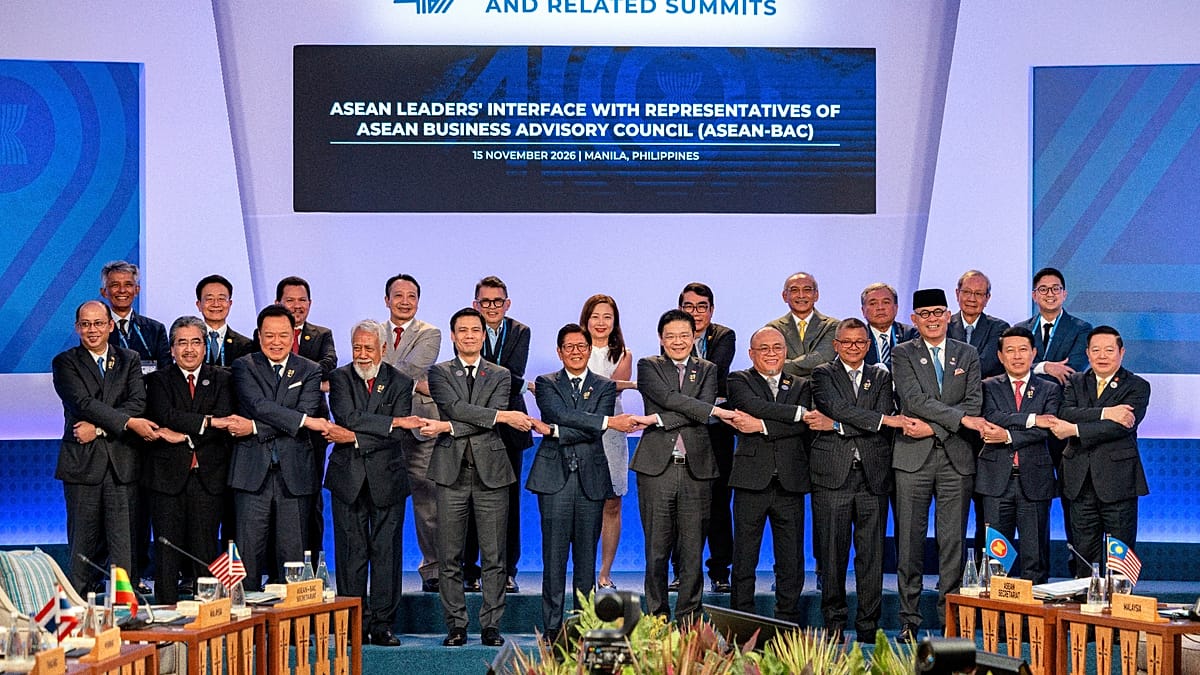 ASEAN signs deal to ease digital trade across Southeast Asia
euronews.com
Southeast Asian nations signed the Digital Economy Framework Agreement in Manila on Saturday, ASEAN's first stand-alone, legally binding treaty on the digital economy. Philippine President Ferdinand Marcos Jr. handed the signed pact to ASEAN Secretary-General Kao Kim Hourn at the bloc's summit opening, and it takes effect in May 2027, 180 days after signing.
The agreement replaces ASEAN's 2019 e-commerce accord and does three concrete things: it promotes electronic invoices, shipping documents and signatures to cut paperwork; it makes payment systems in different member states interoperable so businesses can pay suppliers and receive money across borders; and it sets rules for cross-border data transfer, limiting requirements that companies store commercial and financial information locally. Singapore's Deputy Prime Minister Gan Kim Yong said exceptions remain for privacy, business confidentiality and national security, and that countries can move at different speeds — an acknowledgment that negotiations were made difficult by the gap in members' digital readiness.
The Asian Development Bank announced an initiative on Saturday to raise up to $5 billion in public and private funding by 2030 to build the underlying infrastructure: cross-border payment systems, online identity verification and cybersecurity. Governments are already identifying payment, digital-identity and electronic-document projects that could be ready at entry into force.
The commercial stakes are large. Google, Temasek and Bain & Company forecast transactions across Southeast Asia's main digital sectors at $368 billion this year, exceeding $1 trillion by 2035. The trade the pact governs — online shopping, travel, food delivery across ten countries — clears and settles through systems built in the region, for the region.
The timing is the story. As Washington and Beijing haggle over tariff lists and Europe negotiates its place in other people's agreements, ASEAN is building plumbing: payment rails, digital identities, paperless customs, none of it routed through Western clearing systems. Singapore Business Federation chief executive Kok Ping Soon said the measure of success will be what businesses experience on the ground. By 2035 that ground may have an ordering of trade that no Western capital drafted.