
Displaced Marib school teaches 1 500 pupils in donated tents
Yemen's camp teachers on term-time contracts flee a profession without pay, a decade of war produces a cohort the Hormuz negotiations never price
Images
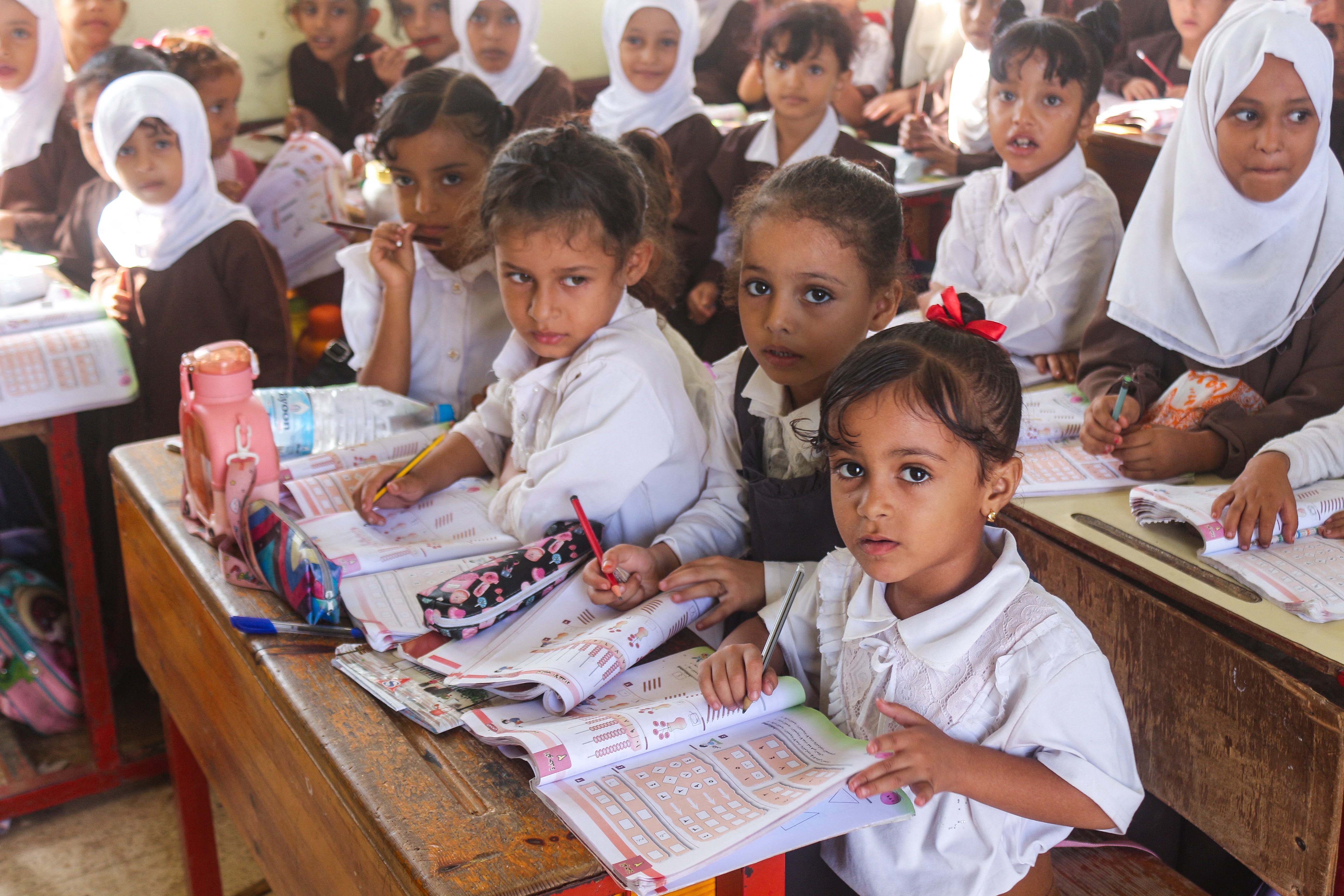 Overcrowding is affecting schools across displacement camps in Yemen (AFP/Getty)
AFP/Getty
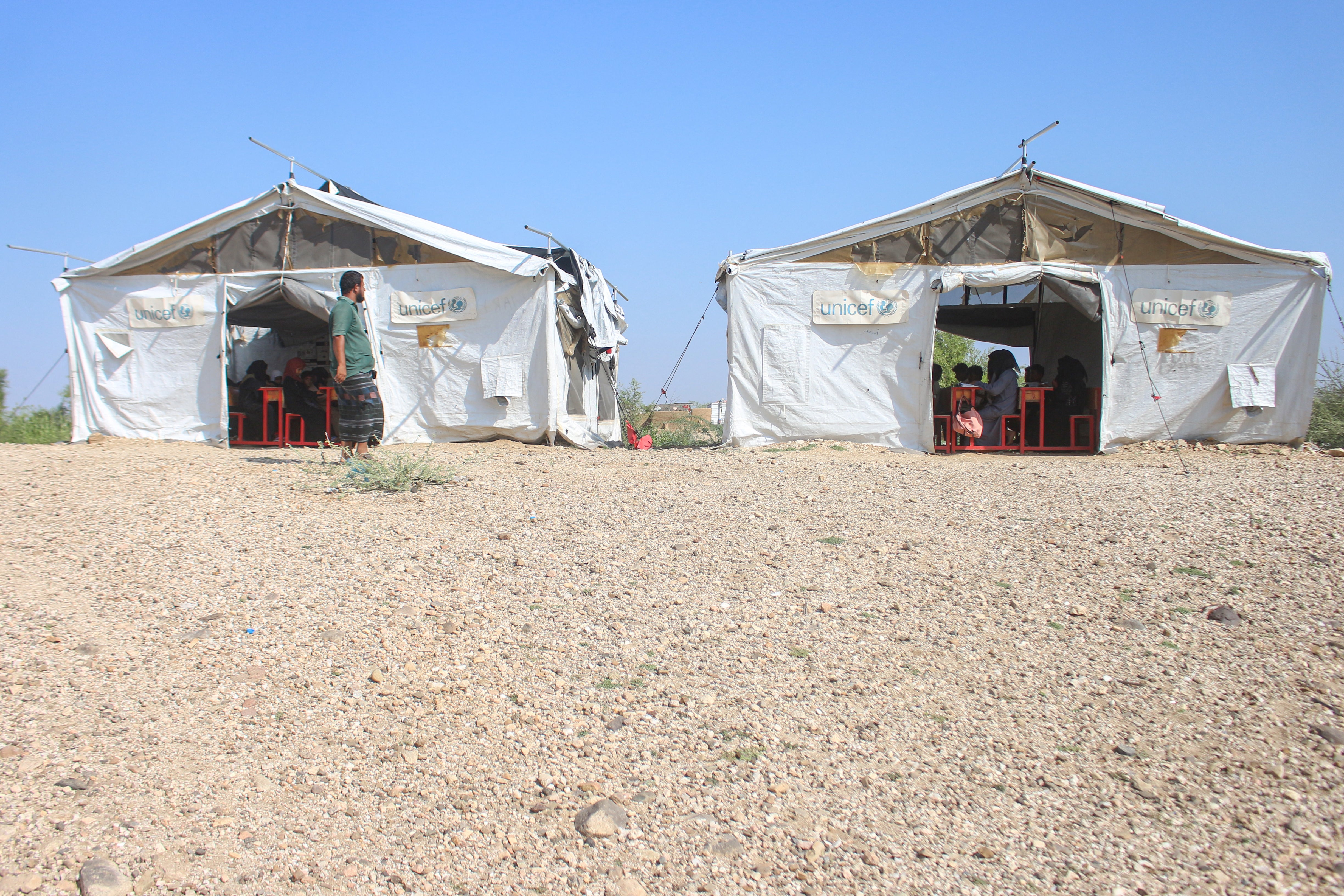 Yemeni children seen inside tent classrooms at a displacement camp in Abs in Hajjah governorate on October 31, 2026 (AFP/Getty)
AFP/Getty
Outside Al-Mil camp north of Marib, a school bus collects uniformed pupils whose families can afford private school fees in the city centre — parents who long ago gave up on securing an education inside the camp. The reporter Hesham Al-Shibili shared his vehicle with two secondary-school girls in sun hats; when he returned at midday, their complaints ran in order: overcrowded classrooms, missing textbooks, exhausting commutes, and no qualified teachers for science subjects.
Al-Raql School in the camp is itself displaced. It was formerly located in a Marib district bordering Nihm, east of Sana'a, and relocated seven years ago amid successive waves of conflict. Teachers resumed lessons under the school's original name while the Ministry of Education delayed formal recognition of the new camp facilities — an arrangement intended as a stopgap until families could return home. Today the school serves around 1,500 displaced boys and girls from northern and western Marib and neighbouring Al-Jawf, taught in tents and caravans funded by donations.
Ali Yahya, an Arabic teacher displaced from Amran governorate, lost his home, family, job and salary in the war. Camp teachers now work for 'meagre, irregular incentive payments' under contracts that run only for term-time, sending them looking for other work each summer — a structure that is driving teachers out of the profession altogether. Yahya describes children carrying severe wartime trauma with no pastoral care or psychological support: some have lost fathers, others brothers, others their homes and toys. The school has no playground or safe spaces. Textbooks are scarce, benches no longer fit the pupils, and many sit directly on the floor for the entire school day.
After visiting several schools across the camp, Al-Shibili found the same conditions throughout. Most camps lack schools altogether; where they exist, tents cannot accommodate the numbers of displaced children arriving. A decade of war has emptied the profession and the classrooms at once.
Al-Raql School still teaches under the name of a district it may never see again, in a camp named as temporary, for a cohort the negotiations over Hormuz never mention.