
Tau fragment raises prospect of diagnosing CTE in living patients
Washington University team found elevated eMTBR-tau243 in blood stored from eleven CTE cases, marker missed early disease while the only certain diagnosis still requires an autopsy
Images
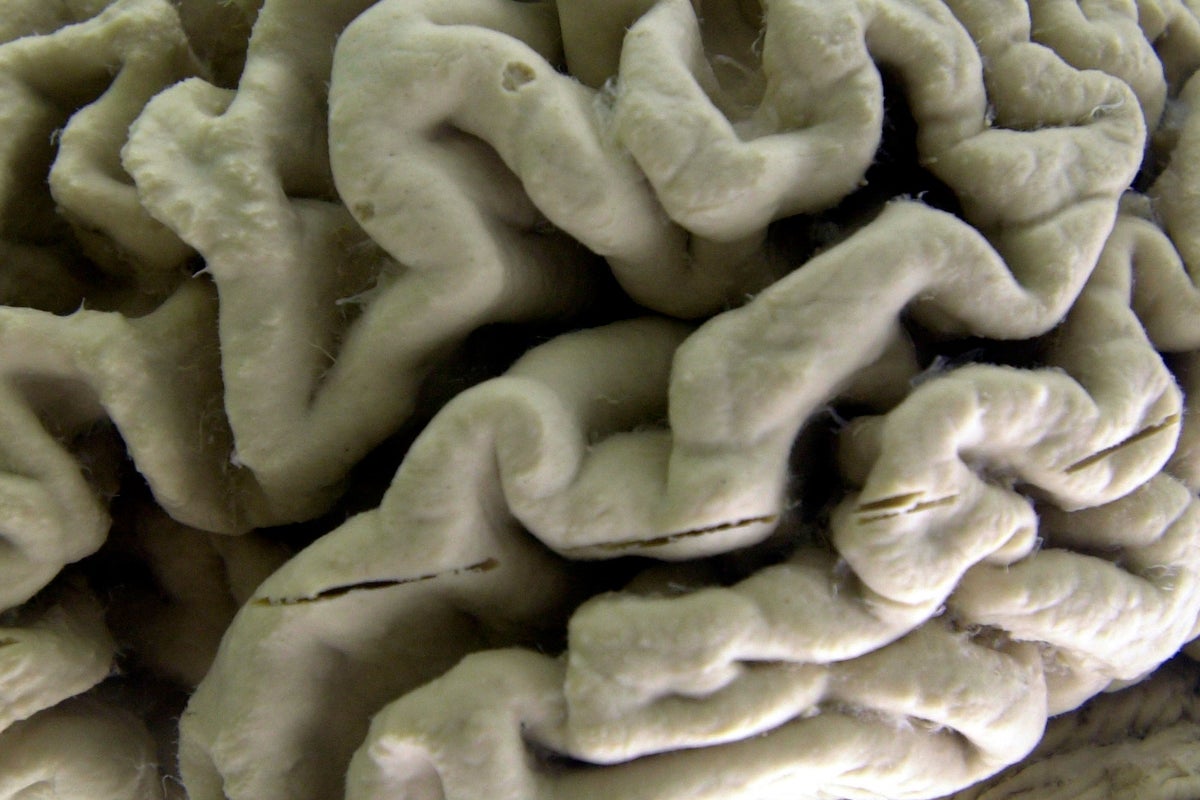 Preliminary study finds a clue in the quest to help diagnose CTE in the living
independent.co.uk
Researchers at Washington University in St. Louis have reported a preliminary hint that a blood test could one day diagnose chronic traumatic encephalopathy in the living — a disease that today can be confirmed only by examining the brain after death. In blood stored from eleven people who had been classified with CTE, levels of a tau fragment called eMTBR-tau243 ran higher than in healthy people, according to findings published late Friday in JAMA and presented at a scientific meeting in Japan.
The clue arrived by accident. Chihiro Sato, an assistant professor of neurology at Washington University and coauthor of the study, was using autopsy samples to study the fragment as a possible tracker of tau tangles in Alzheimer's disease — tau normally supports neurons but turns abnormal and tangles inside nerve cells. One sample showed high eMTBR-tau243 levels in a patient whose records showed no Alzheimer's, only advanced CTE. The team then tracked down stored blood from eleven people classified with the disease: the fragment was elevated in advanced cases but could not reliably identify early-stage CTE.
The caveats are explicit. Dr. Rudolph Castellani, a Northwestern University neuropathologist who was not involved in the work, called the finding interesting but very preliminary, requiring far larger studies to establish a real connection — abnormal tau marks several brain diseases that overlap in older adults, which makes its role in any single one difficult to isolate. Sato, who studies tauopathies, stressed that much more research is needed.
A diagnosis available only after death is never made on someone who can act on it. While confirmation requires a brain on a table, mood swings and memory loss in a living patient can be attributed to other diseases — which produce the same symptoms — and the blows that caused them stay off the medical record. A measurable blood marker would convert a posthumous finding into a clinical fact that a patient, an insurer, a pension fund or a lawyer could act on while the person is still alive. It would also land on the budgets of the leagues that employ football players, and on every organization that pays people to absorb repeated blows to the head.
Eleven stored samples now await replication in far larger studies. Until then, the only certain CTE diagnosis is the one the patient never hears.