
Universities dump Flock cameras after student campaigns
Ten campuses in seven states cancel contracts since April, Houston police ran 183 000 searches on one campus network
Images
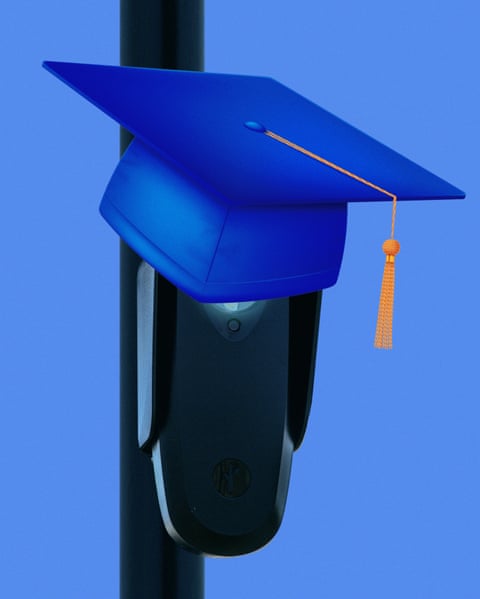 High school and college students around the country are protesting the use of Flock cameras in their campuses. Illustration: Guardian Design / Getty Images
theguardian.com
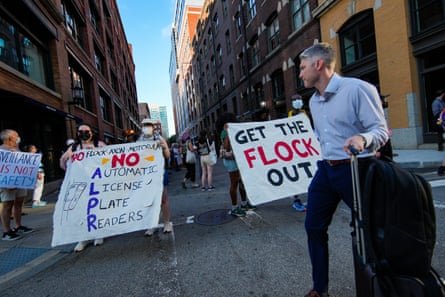 The Muslim Justice League and other activists held a protest in which they marched to Flock Safety offices on 19 August. Photograph: Boston Globe/Getty Images
theguardian.com
At least ten university campuses across seven US states have scrapped their contracts with camera maker Flock Safety since April, after student campaigns against the automated license plate readers that now track vehicle traffic across much of the country. Stanford terminated its contract this summer after computer science student Angela Nguyen collected hundreds of signatures from students, faculty and residents demanding the university drop the surveillance vendor.
The campuses pulling out include Cornell, Penn State, Emory, Kent State, Binghamton and the University of Wisconsin's Madison, Milwaukee and Oshkosh branches. Last week the University of Buffalo announced an indefinite pause on a planned 60-day pilot. At Elgin Community College, officials covered the cameras with black plastic trash bags until the company removed them once the agreement lapsed. Florida has gone further, banning license plate readers from its highways outright — though the law exempts private property.
The scale of usage explains the alarm. Houston police searched UNC Charlotte's campus camera network 183,000 times between March and May 2026, according to local outlet WBTV; the university has since restricted national access to its records. Appalachian State and UNC's Charlotte and Chapel Hill campuses kept their contracts but limited outside queries. The pattern of abuse is no longer hypothetical — a sheriff's deputy in Cherokee County was fired this month for using Flock data to target an arrested mother with a fake Facebook account.
Flock Safety counters that the cameras give campus police credible leads, citing a shooter tracked at Brown University and a suspect in over $100,000 of stolen construction equipment at UNC Charlotte. Dozens of cities have deactivated or rejected contracts this year, and vigilantes have destroyed devices outright. The retreat is uneven: universities, which answer to paying students, can walk away from a vendor mid-contract, while municipalities locked into procurement cycles and grant money keep their lenses pointed at the road.