
AI cuts gut entry-level finance jobs in Bournemouth
Barclays sheds 5000 roles while Standard Chartered plans 7000, the office where the country's cheques were once checked has stood empty since 2022
Images
 New graduate Amine Hamer, in cap and gown, sits on a bench near a sandy beach
theguardian.com
 More than 5,300 staff help process more than £750bn worth of global transactions a day for JP Morgan at the Littledown campus. Photograph: Sam Frost/The Guardian
theguardian.com
 Gareth Sherwood says the Dorset Chamber of Commerce has been coaching local business to embrace AI and increase productivity. Photograph: Sam Frost/The Guardian
theguardian.com
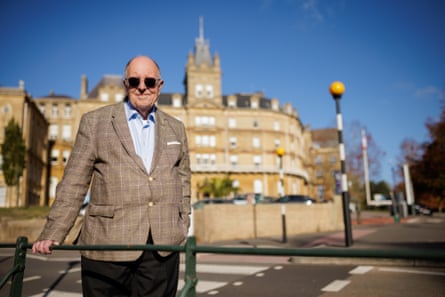 Local councillor Lawrence Williams regularly meets with JP Morgan bosses, but says he has heard nothing of AI-related job cuts. Photograph: Sam Frost/The Guardian
theguardian.com
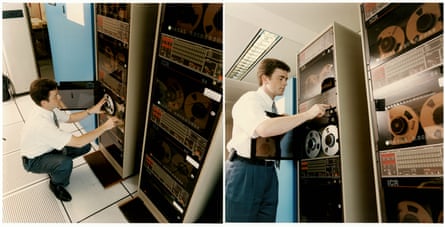 The JP Morgan Chase campus in Bournemouth dates to 1986, when it was known as Chase Manhattan. Photograph: JP Morgan Chase
theguardian.com
JP Morgan's campus a few minutes' drive from Bournemouth's beachfront, built on a former farm, processes more than a trillion dollars of global transactions a day and employs more than 5,300 people. It opened in 1986 with 650 workers and helped make Dorset one of Britain's largest financial centres outside London. The jobs now going are the ones the campus existed to supply: the entry-level rung where careers used to start.
Barclays' chief executive, CS Venkatakrishnan, announced 5,000 job cuts linked to advances in AI last month, and Standard Chartered said in May it would eliminate 7,000 roles as it doubled down on the technology. The roles at risk are data processors, compliance checkers and entry-level analysts — the work regional finance centres from Bournemouth to Leeds, Birmingham, Swindon and Cardiff were built on. Financial services accounts for a tenth of Dorset's turnover, and the county's 2,500 finance firms employ 24,000 people, according to the local chamber of commerce.
Caren Evans, a national officer at Unite, calls AI the biggest threat to the UK's financial workforce since the 2008 crisis, when banks needed multibillion-pound bailouts and then cut costs hard. Her members at NatWest, Lloyds and Barclays are "worried about losing their job, they're worried about having future skills, they're worried about having sustainable careers." One Barclays employee put it more bluntly: "You're not seen as an asset, you're seen as a problem to be removed."
JP Morgan's own chief executive, Jamie Dimon, has warned that widespread AI job losses could spark "civil unrest" unless governments and business support displaced workers — through retraining programmes, state-sponsored wage support, relocation schemes, even early retirement.
The town has been through this sequence before. Barclays House in Poole, the site through which every cheque in the country once passed for checking, closed in 2022 after 46 years; the function "went with digitisation," says Gareth Sherwood, president of the Dorset chamber, and the block still stands empty. His chamber now coaches local firms to embrace AI and lift productivity — "there's winners and losers in all change" — while adding that members "would still encourage people to use human beings."
Amine, a Bournemouth University graduate, says he is "not really sure where to go from here."