
Europe's hospitals prepare for mass casualties from missile and drone attacks
NATO's surgeon general calls healthcare a matter of national security, plans quietly assume the war will not stop at Ukraine
Images
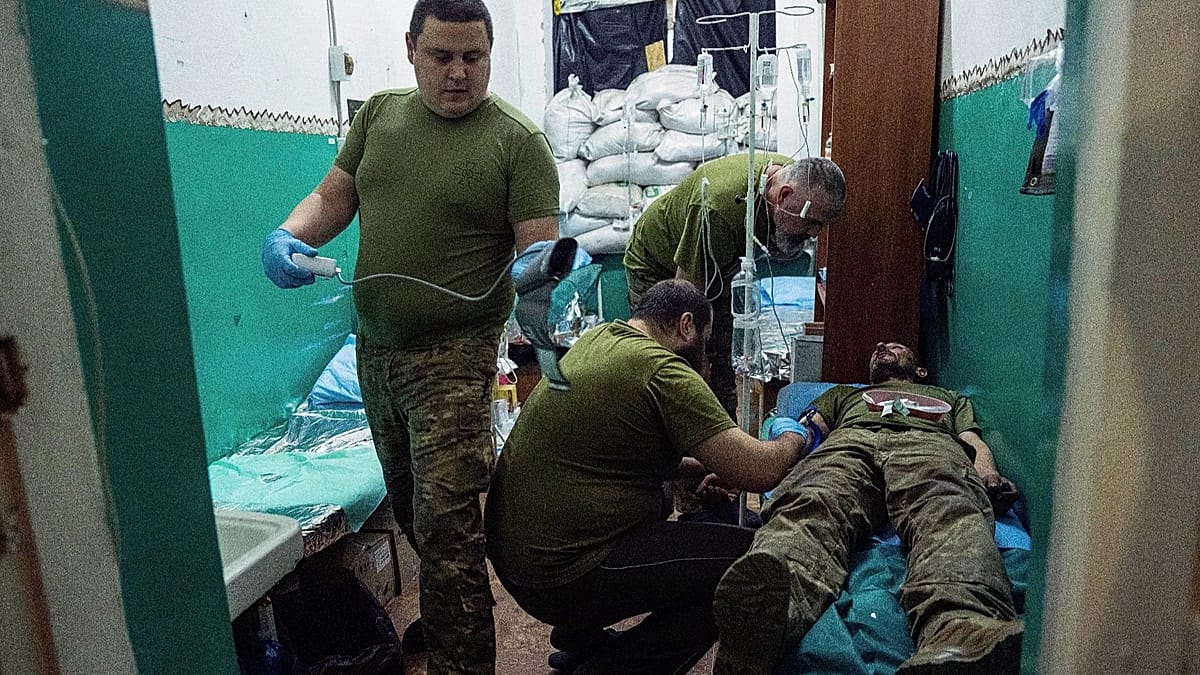 From mass casualties to AI threats: getting Europe's healthcare ready
euronews.com
EU health agencies are stockpiling broad-spectrum antivirals and monoclonal antibodies designed to protect populations before anyone knows which pathogen has been released. "First, broad-spectrum antivirals, broad-spectrum antibodies, monoclonal antibodies. That protects you from the threat, and then targeted treatment," says Laurent Muschel of the EU's Health Emergency Preparedness and Response Authority (HERA). The stockpiles are one piece of a wider mobilisation: European governments are pouring money into defence and reinforcing NATO's eastern flank while hospital planners draft mass-casualty procedures, secure supply chains and train staff for chemical, biological and radiological casualties — on the stated premise that a wider conflict is possible.
Brigadier General Petter Iversen, Norway's surgeon general and chair of NATO's committee of military medical chiefs, frames the work in security terms rather than health terms. "Healthy society, it's a resilient society," he says. "If you are resilient, you can withstand the pressure from the adversaries." The worst case on his list is weapons of mass destruction — chemical, nuclear and biological — which would generate enormous numbers of patients requiring very different treatment at the same time, a load no European system has carried.
AI is the new variable in the assessment. "You don't know what you are facing, because it can be a virus engineered with AI or a state actor developing a new virus," Muschel says. He calls the technology "fantastic" for developing new medicines and, in the same breath, a tool that helps bad actors build very powerful ones. What is missing, he says, is "the appropriate regulatory framework, the appropriate surveillance system to control the use of AI."
The preparations come in a week when European leaders gathered in Dublin to argue over who decides the continent's security architecture, and who sits at which table.
Iversen's last point is the least dramatic. Awareness of the threat, he says, does not by itself translate into preparedness — the funding still has to be secured and the training still has to be done.