
Friday the 13th arrives for third time in 2026
Weddings vanish and air fares drop while superstition quietly prices itself into the economy, psychologists blame missing 13th floors for keeping the fear alive
Images
 When does it pay to heed a superstition? Composite: Guardian Design
theguardian.com
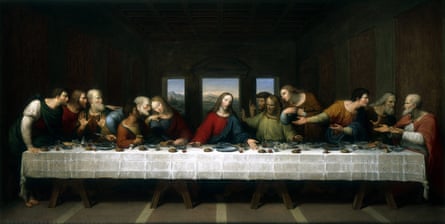 An unwelcome guest … Michael Kock’s The Last Supper (1803). Photograph: UniversalImagesGroup/Getty Images
theguardian.com
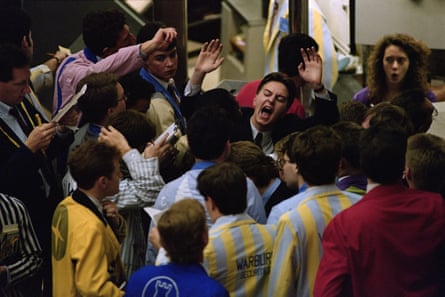 The legacy of Black Friday … chaos on the trading floor, a few days after the ‘mini-crash’ on Friday 13 October 1989. Photograph: Johnny Eggitt/AFP/Getty Images
theguardian.com
 Zero bookings … few people get married on Friday 13th. Photograph: Peter Dazeley/Getty Images
theguardian.com
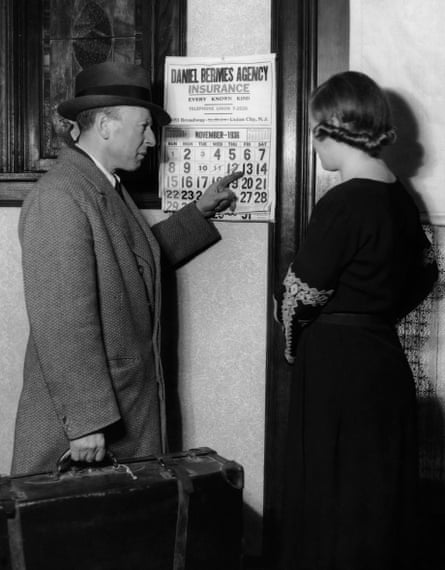 Friday 13th … a bad day to drive, but a good day to fly. Photograph: FPG/Getty Images
theguardian.com
Today is the third Friday the 13th of 2026 — the maximum the calendar allows, and the only year this decade that manages it. The date last stacked up this densely in 2015, and the occasions leave measurable traces in the economy: weddings largely vanish, air fares drop, property sales that complete on the day close at lower median prices, while motor collisions tick upward.
Caroline Smyth, a photographer and celebrant in Larne, Northern Ireland, has shot exactly one Friday the 13th wedding in fourteen years of business — her first ever booking, in September 2013, which happened to launch her career. The pattern she noticed from one data point is confirmed by agencies that watch the whole market: couples avoid the date the way investors avoid a crashing exchange, and vendors price accordingly.
What the belief costs, though, is easier to measure than what sustains it. Psychologist Stuart Vyse, author of Superstition: A Very Short Introduction, notes that many airports skip gate 13 and that in the United States, almost 80 percent of buildings that could have a 13th floor don't label one. His reading of the latter is the sharpest in the file: keeping the number out of sight keeps the fear alive, because nobody is ever forced to ride the elevator to 13 and discover nothing happens. Superstitions that are never tested are never retired.
The date's résumé of disaster is thinner than its reputation. The Norse version of events has Loki crashing a banquet in Valhalla as the 13th guest and murdering the host's servant; the Christian one has Judas 13th at the table on the eve of a Friday crucifixion. The modern fixation appears to be largely French and largely literary — an 1834 piece in Revue de Paris about a Sicilian count who killed his daughter on a Friday the 13th, and a stage comedy the same year whose hero blames his birth on the date for all his misfortunes. The most concrete entry is the 'Friday the 13th mini-crash' of October 1989, when markets fell hard enough that the trading floor was still in chaos days later — an event caused by the mechanics of futures arbitrage, not by the calendar.
Meanwhile the industries that actually interact with the date treat it as an input like any other. Airlines discount seats nobody wants. Estate agents know the median dips. Airports renumber gates so no one has to stand somewhere frightening. The superstition survives not because anyone believes it on inspection, but because so many businesses have quietly agreed never to make anyone inspect it.