
Delhi's air quality index built to discard readings above 1000 micrograms per cubic metre
36 of city's monitoring stations went dark at peak pollution hour on Diwali night, activists put under house arrest ahead of pollution protest
Images
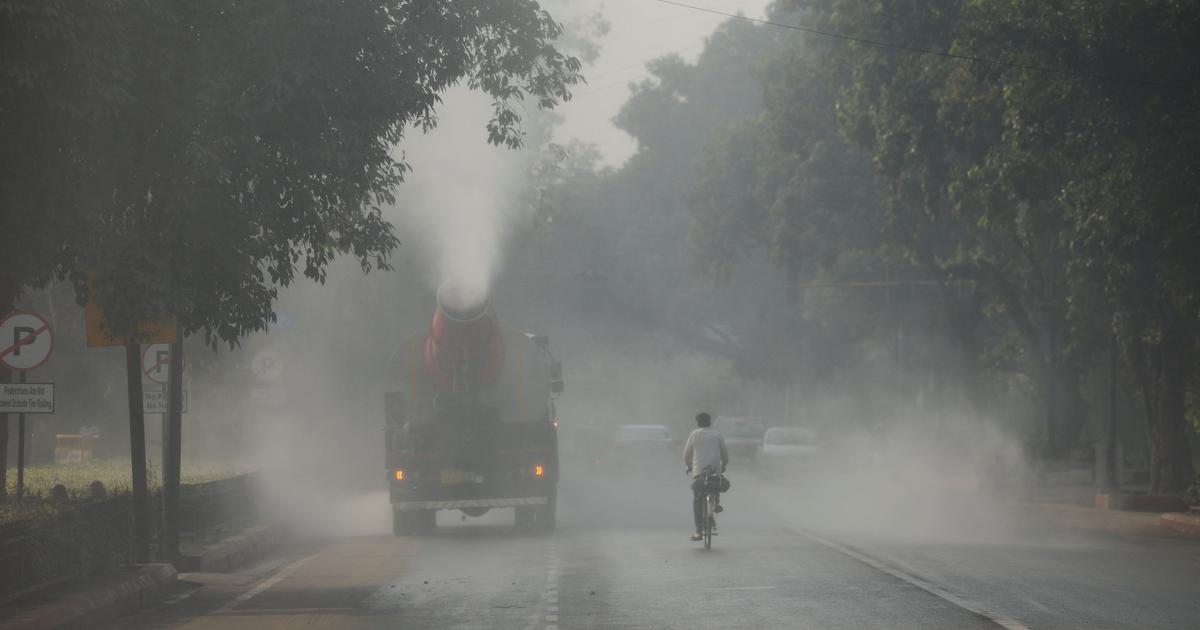 A vehicle sprays water to curb air pollution near India Gate on a smoggy morning in New Delhi.
|
Anushree Fadnavis/Reuters
scroll.in
 Representative image
|
Amit Dave/Reuters
scroll.in
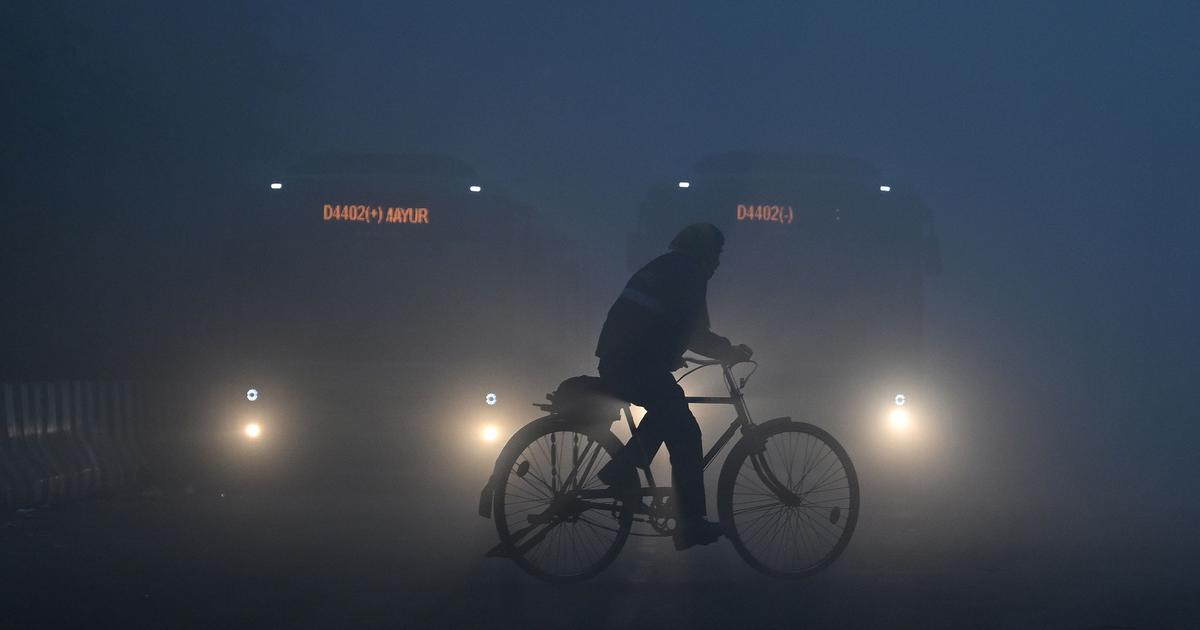 Representative image. A cyclist moves along a road amid dense smog during a winter morning in New Delhi on December 20, 2025.
|
Arun Sankar/AFP
scroll.in
India's Central Pollution Control Board has explained the missing data from Diwali night by disclosing that its air quality index is built to discard readings above 1,000 micrograms per cubic metre — the monitoring equipment was calibrated to measure only up to that ceiling, and hourly readings beyond the calibrated range are treated as outside range and excluded from the computation. The worst air produces no worst reading.
The disclosure came after the Centre for Research on Energy and Clean Air documented the pattern station by station: at 7 pm on Diwali night, one of Delhi's monitoring stations was not reporting. By 10 pm, seven were dark. By midnight, 29. At 1 am — when pollution typically peaks — 36 of the city's stations had stopped reporting, and 35 were still silent at 2 am. Data later released by the Delhi Pollution Control Committee showed particulate concentrations had far exceeded the 1,000-microgram threshold at several locations. The CPCB said momentary spikes are less relevant to health than prolonged exposure, and that it is reviewing the methodology.
The regulator's framing contrasts with the Centre for Science and Environment's analysis, released the same week, showing the baseline was already the worst in three years before any firecracker was lit: average PM2.5 in the week before Diwali stood at 236 micrograms per cubic metre, against 120 last year and 179 the year before. Between November 1 and 8, pollution transported from neighbouring districts accounted for more than half of Delhi's PM2.5, local sources contributed 33 percent, and stubble burning 14.2 percent. Among local sources, vehicles dominated at 52 percent. Punjab farm fires rose to 5,517 by Wednesday, with 1,259 police complaints filed and fines of more than Rs 85 lakh imposed — of which over Rs 37 lakh has actually been recovered.
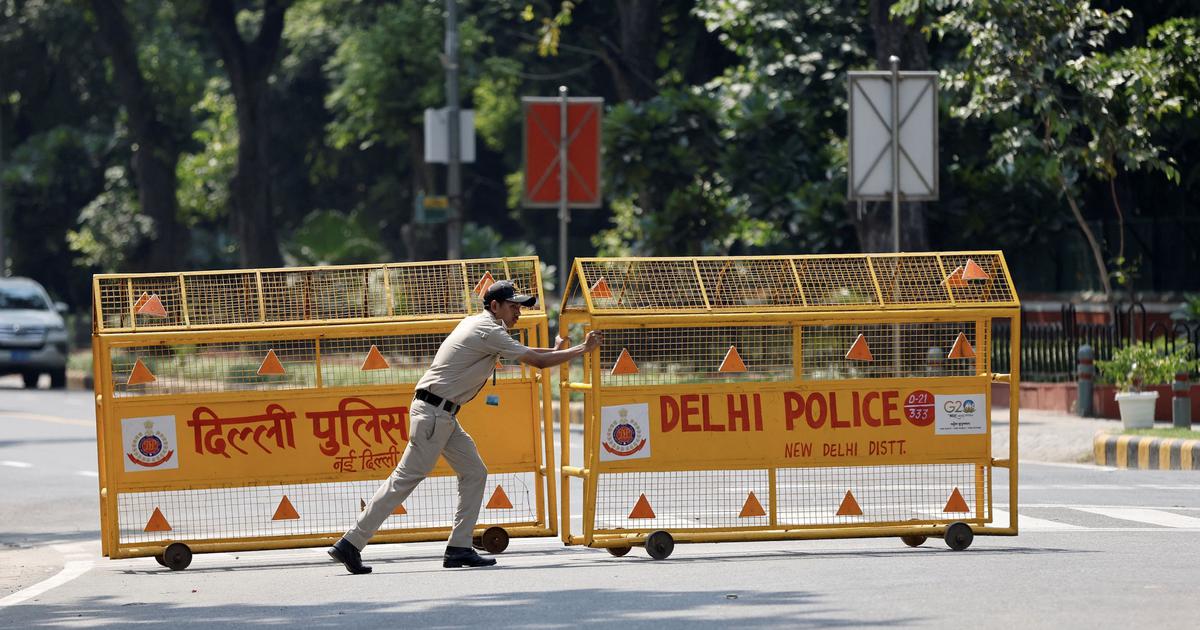
Enforcement, meanwhile, found different targets. The Revolutionary Workers' Party of India alleged that Delhi police placed several of its activists under house arrest on Wednesday to prevent a planned protest against pollution, and attempted to enter the party's Karawal Nagar office without showing documents. That afternoon the average AQI in the capital stood at 312, in the 'very poor' band, with two stations recording severe readings of 410 and 411.
The index was launched in 2015. Its equipment has not been recalibrated since.