
Taliban orders bar male doctors from examining women without guardian present
Unannounced decree enforced through clinic raids and prison warnings, women sent home mid-treatment as remaining female physicians too few to absorb patients
Images
 Male doctors have been told not to examine female patients without the presence of a male guardian or mahram. Photograph: Siddiqullah Alizai/AP
theguardian.com
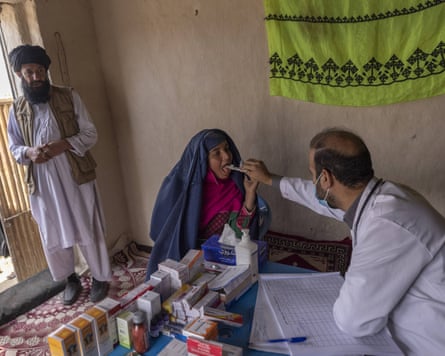 A doctor tends to a patient at a mobile health clinic in Bagrami district, Kabul province. Male doctors have been told a mahram must be present even for emergency treatment. Photograph: Bloomberg/Getty Images
theguardian.com
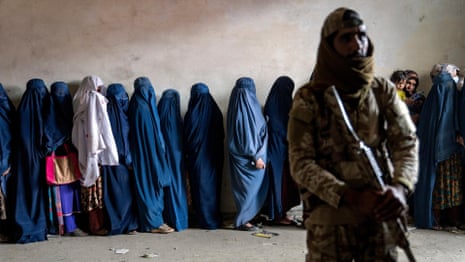 The promises the Taliban made to women, then broke – video explainer
theguardian.com
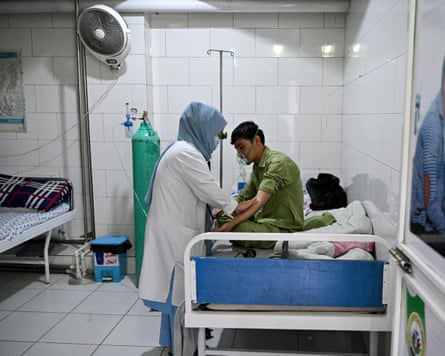 Female doctors are in short supply in Afghanistan. Photograph: Wakil Kohsar/AFP/Getty Images
theguardian.com
Male doctors across Afghanistan are being ordered not to examine female patients without a male guardian present, completing a chain of decrees that has already barred women from medical training — leaving healthcare for half the population to be dismantled by administrative instruction rather than announced law. Women told the Guardian and Zan Times they were simply sent home mid-treatment.
Farida, 37, returned from Iran to Herat earlier this year with her family, who have struggled to find work since. In July a dentist examined her ruined molars and wrote a treatment plan requiring full payment in advance. At the third session, when implants were to be fitted, the clinic told her a problem had come up. Two days later a phone call delivered the actual reason: an order from the Ministry for the Propagation of Virtue and the Prevention of Vice stating male dentists may no longer treat female patients. Three months on, her treatment remains unfinished.
No restriction has been publicly announced. But the ban appears to have spread nationwide, enforced by Taliban security forces through raids and warnings that male practitioners will be imprisoned if female patients are found in their clinics. A surgeon with fifteen years at a public hospital in northern Afghanistan said doctors may not examine women regardless of how critical the patient's condition is — the doctor is not the patient's mahram. Emergency care falls under the same rule. In Balkh province, officials have ordered hospitals and clinics to replace women's names with the word 'Bibi' on prescriptions and records.
The arithmetic closes from both ends. With women barred from medical education, the remaining female physicians are too few to absorb the patients male doctors are forbidden to see. In Kunar province, one elderly woman travelled hundreds of miles to Kandahar for dental treatment because her son ran a clinic there — access to care now depends on which men a woman happens to be related to.
For aid donors, the question is whether to fund a health system that cannot legally treat its patients. No ministry will count the preventable deaths the arrangement produces; Farida's unfinished dental work is merely the version that can still be reported.