
Singapore bars Alice Huang from re-entry as Megaspeed pledges GPU census
Ministry says US requests for cooperation went unanswered, chip-diversion probe now spans three jurisdictions days before Trump-Xi summit
Images
 Caine Prize Clears Zimbabwean Writer Of AI Allegations, Introduces New Rules
timesnownews.com
 nbcnews.com
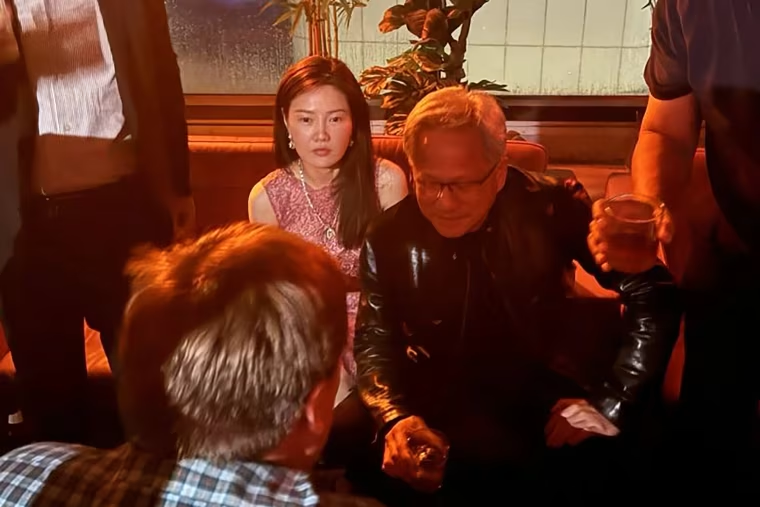 Jensen Huang and Alice Huang in Taipei, Taiwan, in 2024. NetThunder
nbcnews.com
 Amanda Silberling
techcrunch.com
Singapore has barred Alice Huang, the former Megaspeed executive identified by US intelligence as a Chinese operative, from re-entering the country, while the city-state's Home Affairs Ministry publicly complained that Washington has provided 'limited information or assistance' on the chip-diversion investigation. The ministry said on Thursday that Huang left Singapore in February, received a stern warning for providing police with inaccurate information, and now lives in Beijing with the knowledge of security officials, according to Bloomberg.
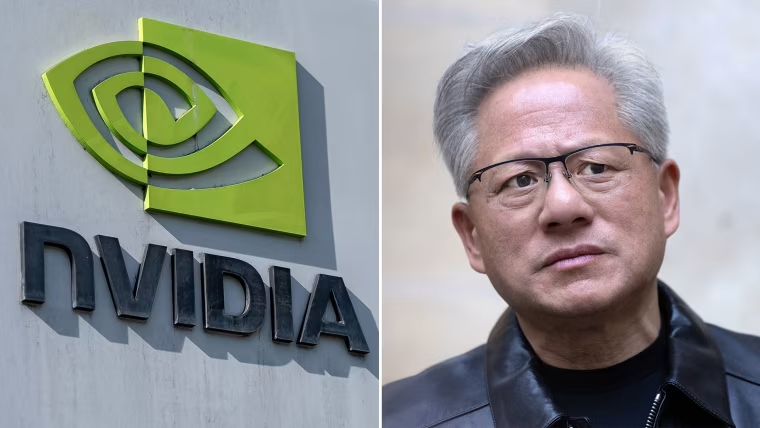
The Singapore statement landed hours before Nvidia's board accepted Jensen Huang's resignation as chief executive, following US intelligence findings that Alice Huang — no relation — was a Chinese intelligence operative who had an affair with the Nvidia founder. Megaspeed, the Singapore-based AI infrastructure firm that bought $4.8 billion of Nvidia chips over two years, simultaneously pledged to cooperate with US investigations and said it had retained a leading American law firm to conduct a comprehensive census of its GPUs and independently verify export-control compliance. The statement was signed by chairman and CEO Tan Yong Pong.
The mechanics of the case sit squarely in Asia. Singapore police began investigating Megaspeed in October 2025 over suspected breaches of domestic laws involving servers purchased in the country and then exported to Malaysia without entering the Singapore market. Investigators concluded in February there was insufficient evidence to charge Alice Huang with any offence, but inquiries into Megaspeed and six individuals continue. The ministry stressed the probe was not related to espionage — a notable qualifier, given that espionage is precisely what Washington alleges.
The friction between the two investigations is now explicit. Singapore says its requests for cooperation from US authorities have gone unanswered; a US senator has asked the Commerce Department to examine whether Megaspeed diverted Nvidia chips to China; and the Justice Department has taken over the federal investigation, according to the New York Times. Beijing, for its part, dismissed the spying allegations as smears and accused Washington of fabricating espionage narratives as a pretext for technological blockades.
The enforcement gap matters because the procurement trail does not end with Megaspeed. A Reuters investigation this week found that Northwestern Polytechnical University — one of seven sanctioned Chinese defence universities on the US export blacklist — bought Nvidia H200 chips through an intermediary for $123,000, a purchase that did not go through Nvidia and that remains visible on the university's own procurement website. Washington's attention is now turning to Jensen Huang's lobbying for looser China sales.
Nvidia named CFO Colette Kress as interim chief and appointed Harvey C. Jones, a board member since 1993, as its first-ever chairman. Huang has not responded to a request from three Republican congressmen to appear for a closed-door briefing; the House China committee chairman said a subpoena is likely if he declines. With Trump and Xi due to meet at APEC in Shenzhen within days, the summit agenda now includes a live scandal that neither government fully controls — and a compliance checkpoint in Singapore that says it is still waiting for Washington to return its calls.