
Japanese programme hands Madagascar parents control of school budgets
School for All runs in 11 African countries on meetings and meals, reading improves where the community watches the money
Images
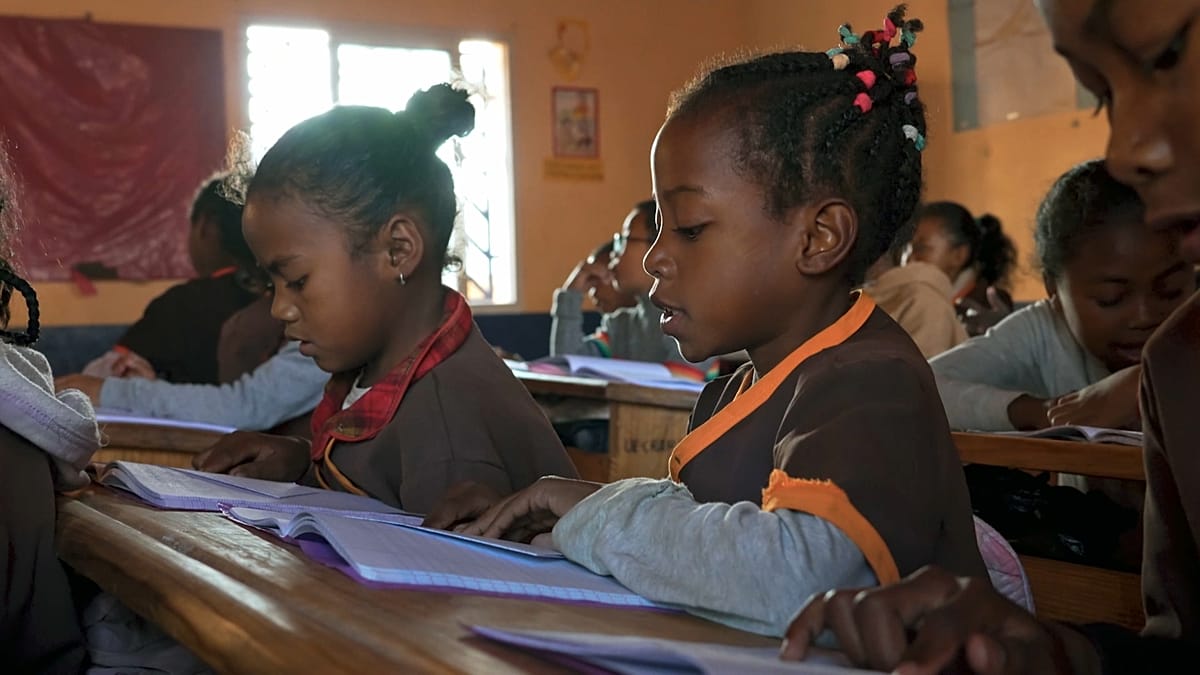 Japan's programme tackles Madagascar's learning crisis
euronews.com
On the outskirts of Antananarivo, parents, teachers and community members meet to decide their school's priorities, finances and budget allocation — and the children's reading is improving. The meetings are the School Management Committees at the centre of School for All, a programme developed by the Japan International Cooperation Agency to tackle Madagascar's low literacy and dropout rates.
The committees are the programme's central pillar. Under School for All, communities organise the children's meals, run pre-school lessons inspired by Japanese storytelling methods, and provide remedial classes for pupils falling behind. "The benefit of having the School Management Committee is first of all the transparency in the management and in the committee," Marie Harivola Malala Razanadrasoa, president of a school committee, told Euronews. "We witnessed a big improvement in reading," says Tinasoa Helimalala Rabezandry, a primary school director.
The ingredients are a committee, a legible budget, meals and extra lessons — no new hardware, no curriculum overhaul, no central grant. The standard instruments of education aid are laptops, curriculum redesign and disbursing offices; School for All's are a quorum, a budget and a pot of rice. Masahiro Hara, chief adviser to the JICA project, describes the mechanism plainly: "When all stakeholders work and create together, educational development can be sustainable and effective even with limited resources." What the committees do is move supervision out of the ministry and onto the people who bear the costs of a failing school: the households that send the children also watch the money, and money watched by the people who depend on it behaves differently from an allocation nobody present has a stake in.
Launched in Niger in 2004, School for All has expanded to 11 African countries — a two-decade run, by the standards of development assistance. Its active ingredient is still the meeting.