
M John Harrison wins Booker Prize at 81 with The End of Everything
Oldest winner in prize history spent decades arguing well-written science fiction is literary fiction, award famed for launching careers crowns a first-time shortlistee
Images
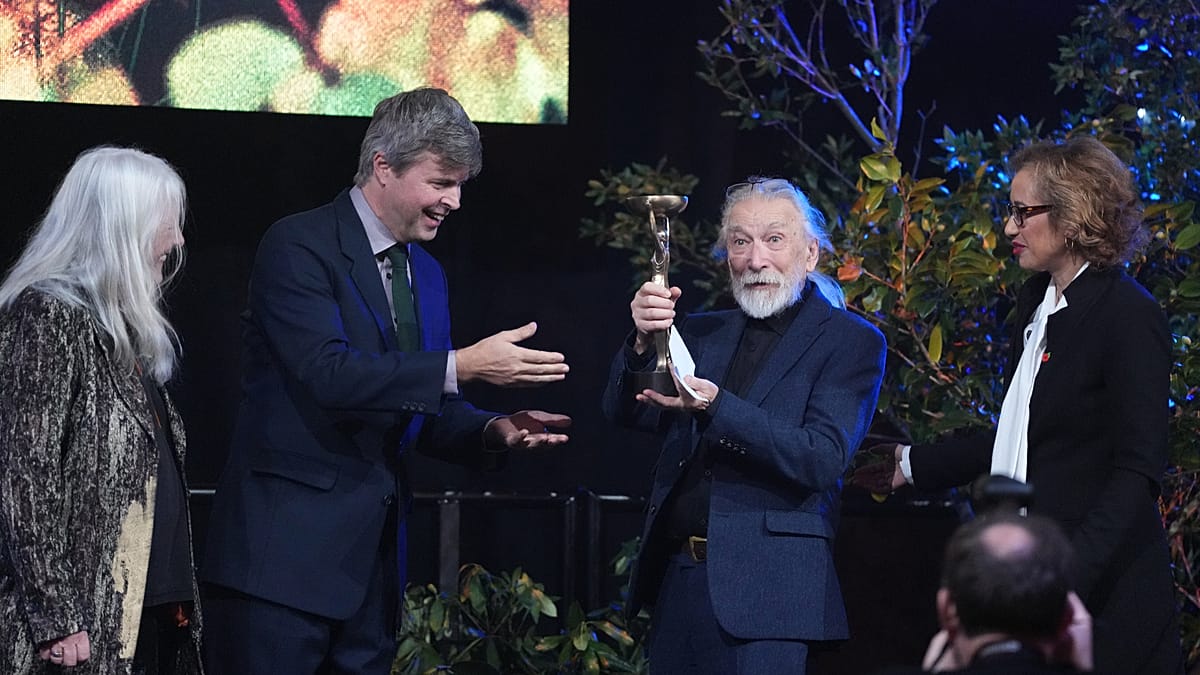 M John Harrison wins Booker Prize for 'End of Everything'
euronews.com
 $190 Billion Market Cap Wiped Out: Nvidia, Jensen Huang Face Investor Lawsuit Over Alleged Ties With Suspected Chinese Spy
timesnownews.com
M John Harrison, 81, won this year's Booker Prize on Monday night for The End of Everything, becoming the oldest winner in the award's history. The judges praised the novel's "extraordinary expert writing and huge ambition". The £50,000 prize went to a writer shortlisted for the first time.
The End of Everything is set on England's Channel coast in the near future, after an unspecified calamity has shattered society and brought an influx of enigmatic alien entities to Britain. Its central figure is a beachcomber named Phillip Tennent, who lives with his gun-toting aunt and finds a puzzling, shapeshifting artifact on the shore. Mary Beard, the classicist who chaired the judging panel, called the book "the politics of now seen through the lens of the future" — the story of a society "undergoing a catastrophe that they don't really understand".
Harrison has spent his career writing at the borders of science fiction while insisting the border does not exist. Before the ceremony he said he had been "working for 40 to 50 years to shift the balance, both as a novelist and as a critic", and asked why a well-written work of science fiction should not be considered literary fiction. The prize, open to English-language novels published in the UK and Ireland, has run since 1969 and is famed for kickstarting careers; its oldest winner had never before been shortlisted.
The shortlist of six was drawn from a longlist of 163 novels and carried two former winners, Marlon James with The Disappearers and Douglas Stuart with John of John, either of whom would have become the prize's fifth double winner after J.M. Coetzee, Peter Carey, Hilary Mantel and Margaret Atwood. The Pulitzer winner Elizabeth Strout, Luke Kennard — whose Black Bag is a satirical campus novel — and Rebecca Perry, whose May We Feed the King follows a reluctant medieval monarch, completed the list. Last year's prize went to David Szalay's Flesh.
Beard announced the winner at Old Billingsgate in London; her fellow judges included the musician Jarvis Cocker, the poet Raymond Antrobus, the journalist Rebecca Liu and the novelist Patricia Lockwood. Harrison said he feels like a proper writer at last.