
Ousted Sheikh Hasina seeks new passport from Delhi exile
Death-sentenced former premier vows December return, Dhaka demands extradition while refusing to state what happens on arrival
Images
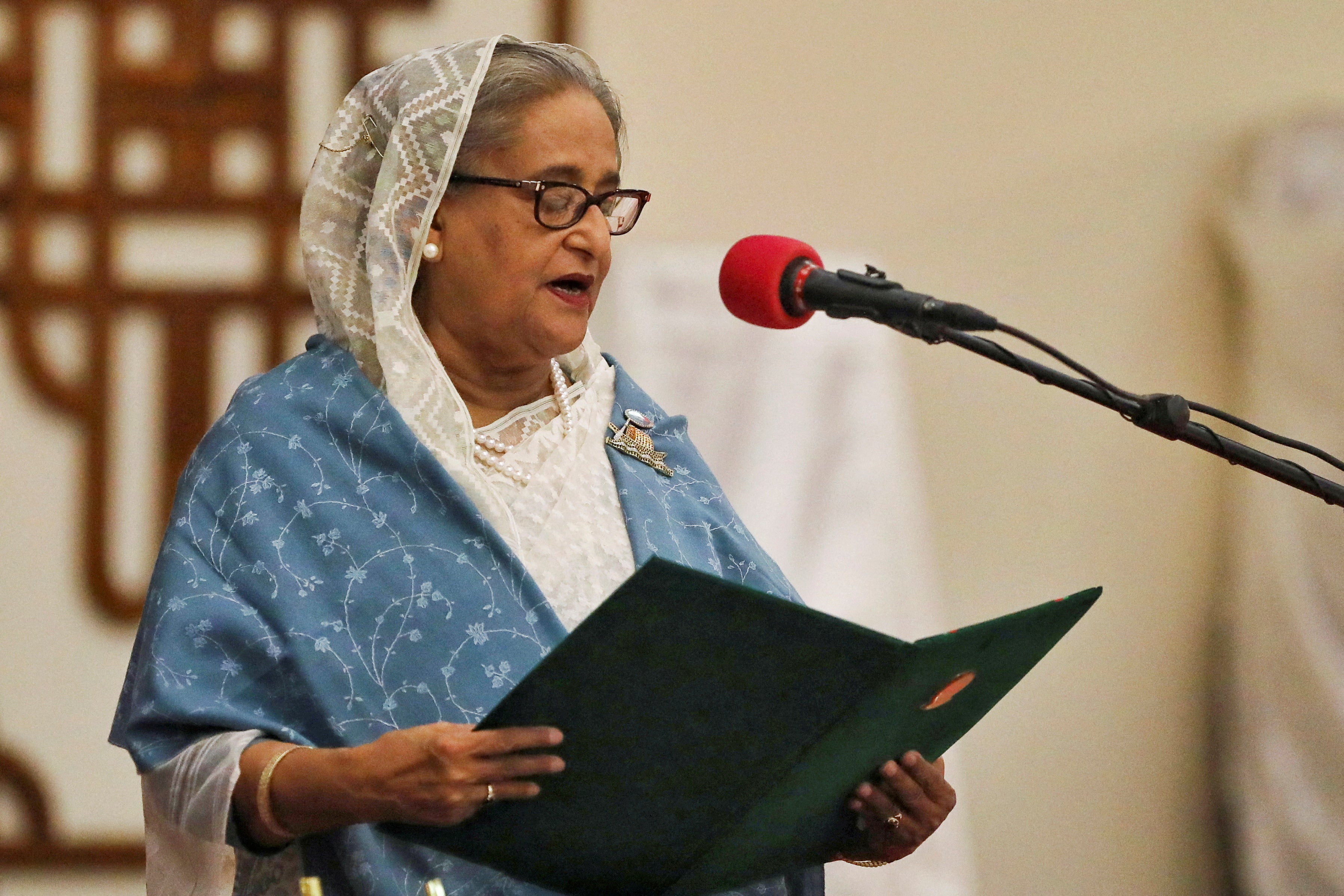 FILE PHOTO: Prime Minister Sheikh Hasina takes oath as the country's Prime Minister at the Bangabhaban in Dhaka, Bangladesh, January 11, 2024. REUTERS/Mohammad Ponir Hossain/File Photo (Reuters)
Prime Minister Sheikh Hasina takes oath as the country's Prime Minister at the Bangabhaban in Dha...
Sheikh Hasina has formally requested a new Bangladeshi passport and national identity card, according to a letter from her counsel seen by the Associated Press, sent to Bangladesh's top diplomat in London. The former prime minister's old documents were revoked after her government fell. Her aide Abu Obaidha Arin called the application "a significant step toward her homecoming" and repeated her pledge to return in December "at any cost."
Hasina has lived in exile in Delhi since the military flew her out of Bangladesh on 5 August 2024, as student-led protests closed in. Since then the ledger has grown heavy: a special tribunal sentenced her to death in 2025 for crimes against humanity, finding she ordered a crackdown that left hundreds dead; the United Nations put the toll near 1,400. Bangladesh's junior foreign minister Humaiun Kobir told reporters in Dhaka on Thursday that his government wants her handed over under an active extradition treaty with India. "She is a terrorist. She is a fugitive," he said. India has declined.
The same government that demands her return, however, dismissed until recently the idea that she needed fresh documents to come home. Hasina's Awami League was barred from contesting the February election held after her ouster, and Tarique Rahman — son of her longtime rival — won a landslide. She rejects the tribunal's verdict and the legitimacy of the entire process.
The passport application forces each party to show its cards. Dhaka can issue the document and arrest a death-sentenced former premier on arrival, or issue it and negotiate — reviving a party machine that still commands millions of loyalists. Delhi can keep sheltering her as leverage over a neighbour whose new government it did not choose, or hand over a fallen ally and demonstrate that refuge in India is conditional. Hasina can return and face the gallows ordered by a court she does not recognise, or stay in Delhi as a permanent irritant to a neighbour she can no longer govern.
For now the letter sits with a diplomat in London, and the applicant is a 78-year-old conviction carrying the death sentence of a country she once ruled.