
Last witnesses of Kristallnacht dwindle as Germany marks 88th anniversary
94-year-old survivor tells police officers their predecessors guarded the camps and carried out deportations, memory passes from those who were there to institutions that commemorate them
Images
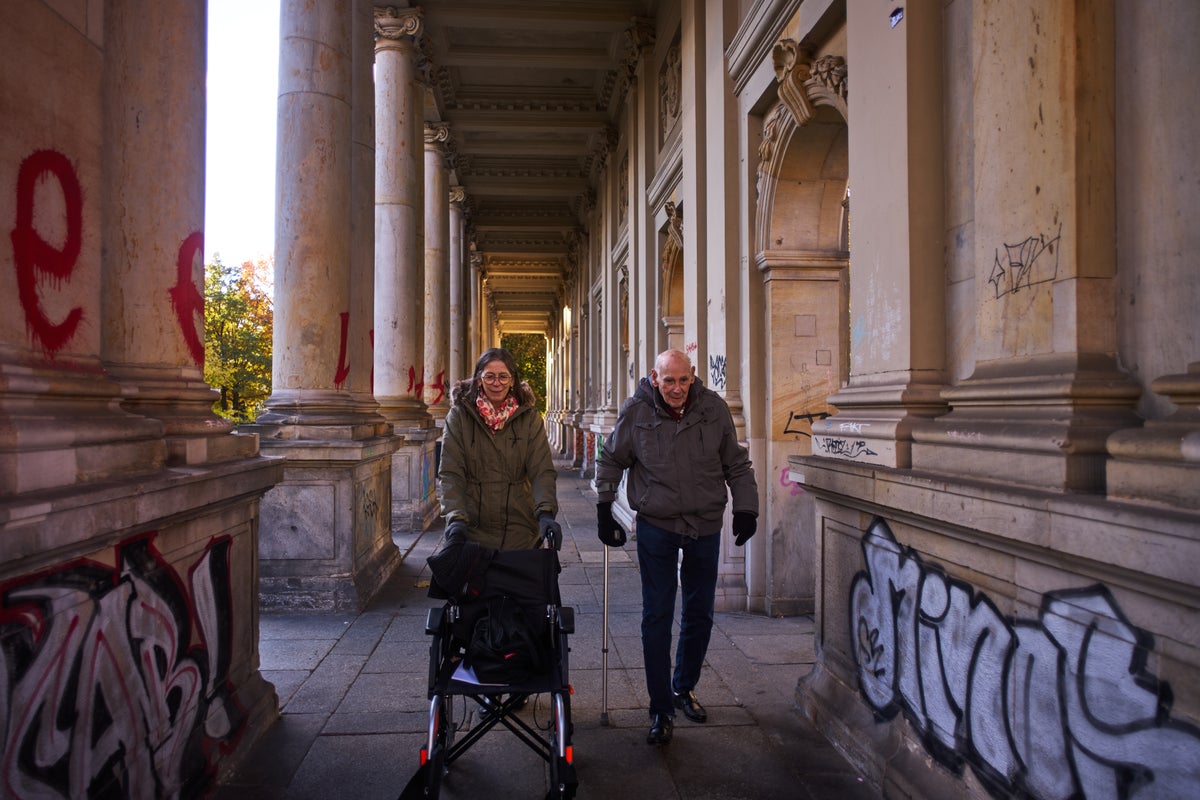 Remembering Kristallnacht: Witness says night of terror risks being a lesson not learned
independent.co.uk
George Shefi, 94, sat down on a park bench in Berlin's Schoeneberg district — a bench he was barred from sitting on as a Jewish child. He is one of the last living witnesses of Kristallnacht, and Germany marks the 88th anniversary of the pogrom on Monday.
He was six years old on 9 November 1938, when his mother kept him home for three days. When he was allowed out again, his Jewish school inside a Berlin synagogue had been burned down and the Jewish hat store opposite his home looted. He watched the owner try to clean up while a crowd of 30 to 50 people jeered. In July 1939 his mother put him on a Kindertransport to England with 300 other Jewish children. He never saw her again: Marie Spiegelglas was deported to Auschwitz and murdered in 1943.
Shefi, who survived the London Blitz in foster families and later settled in Jerusalem, where he ran a tool shop and served as a volunteer police officer, returned to Berlin to speak to school groups — and to German police officers. Jochen Kopelke, chairman of the German Police Union, has made educating officers about Jewish life a priority. "We have noticed with many police officers in Germany that they do not know anything about Jewish life," he told the Associated Press. Officers protect synagogues, he said, but they also need to know what their institution did: "The police in the Nazi era actively took part in the Shoah, participated, guarded concentration camps, deported people."
Shefi's own account of the anniversary is less ceremonial. He stopped hating Germans about a decade ago, concluding that children today cannot be blamed for what happened 80 years ago — but told young Germans they will be responsible for what happens in the next five or ten. Without knowing the history of the Holocaust, he says, one cannot prevent it from happening again. He describes antisemitism as on the rise, in Germany and well beyond it.
At least 91 people died during Kristallnacht, 7,500 Jewish businesses were vandalised and more than 1,400 synagogues were targeted by arsonists, according to Yad Vashem. The pogrom marked the escalation from boycotts, legislation and expulsions to systematic mass murder; six million European Jews were killed.
Shefi now spends his Berlin visits teaching German police officers what their predecessors did — from the bench in Schoeneberg where he was once not allowed to sit.