
Ava DuVernay releases 14th on Netflix
Follow-up to Oscar-nominated 13th documents systematic assault on birthright citizenship and equal protection, director says neighbours are hiding in their houses
Images
 ‘America is sitting in a dark, dangerous room – I’m trying to turn on a little light’ … Ava DuVernay Photograph: Christina House/Contour RA by Getty Images
theguardian.com
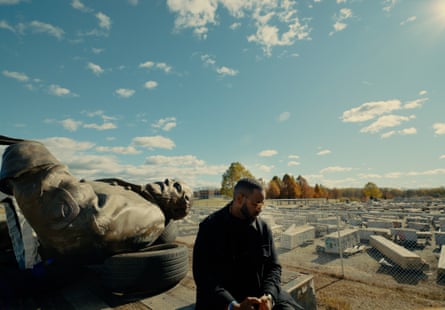 ‘Statue slayer’ Devon Henry in 14th. Photograph: Netflix
theguardian.com
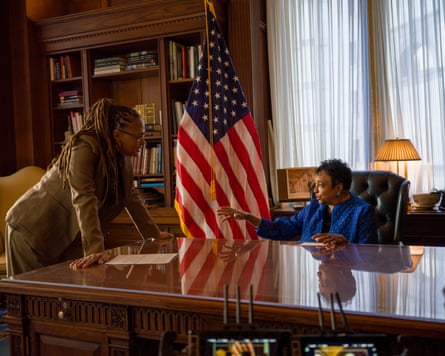 DuVerney talks to the former librarian of Congress Carla Hayden. Photograph: Paul Garnes/Netflix
theguardian.com
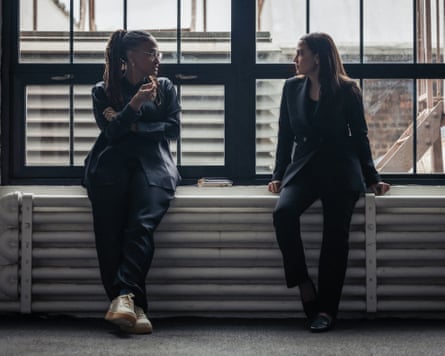 Ava DuVernay and Alexandria Ocasio-Cortez in 14th. Photograph: Courtesy of Netflix/Ryan Postas/Netflix
theguardian.com
Filmmaker Ava DuVernay has released a follow-up to her Oscar-nominated 2016 documentary '13th', titled '14th', examining the constitutional amendment that established birthright citizenship and what she describes as the current administration's systematic attempts to dismantle it. The film streams on Netflix.
DuVernay, who lives in Los Angeles, says she began the project after President Trump issued an executive order in January 2025 aimed at rescinding birthright citizenship — the first and best-known of the amendment's five sections. For a full year she believed she was making a film about that single provision. Then, as she travelled the country interviewing constitutional experts, her team found what she calls a broader pattern: 'systematically, the other parts of the 14th amendment were also being attacked.' She describes the pattern as 'like such a design, so purposeful.'
The director's account of her own city is as bleak as her constitutional analysis. She says she has seen people in her neighbourhood pulled out of their cars, that a woman who sold flowers next to her office was there one day and gone the next, and that people she knows personally are hiding in their houses — a comparison she makes to 'Anne Frank vibes.' Asked in a Guardian interview how she kept focus through what she calls 'a very tough two years,' she became tearful and said the film 'saved' her.
The original '13th' traced the 13th amendment's exception clause — slavery 'as a punishment for crime' — through a century of carceral exploitation of Black Americans. '14th' extends the argument to the Reconstruction-era guarantees now under litigation: citizenship, due process, and equal protection. Devon Henry, the contractor known for removing Confederate monuments, appears in the film.
The distribution question hangs over the project. A documentary arguing that a president is dismantling constitutional protections now reaches audiences through a platform that depends on favourable regulatory treatment from the same administration — a tension '14th' does not examine. DuVernay, who spent years in corporate PR before turning to film-making, counts Oprah Winfrey and the Obamas among her friends, and summarises her thesis in a caption line: 'America is sitting in a dark, dangerous room — I'm trying to turn on a little light.'