
Thailand prepares to deport two long-held Uyghurs to China
Men who fled as part of 200-strong group in 2014 say return means slavery, Beijing's trade leverage outweighs UN protests over last year's 40 forced disappearances
Images
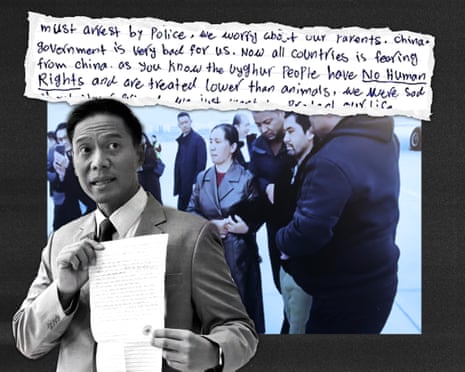 Two Uyghur men at risk of deportation from Thailand have shared letters with human rights groups saying they do not want to go back to China. Illustration: Guardian Pictures/EPA
theguardian.com
 Uyghurs are taken away for questioning in 2014 in Thailand after crossing to south-east Asia through China’s southern border. Photograph: The Asahi Shimbun/Getty Images
theguardian.com
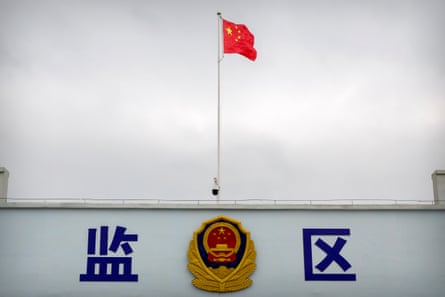 A detention centre in China’s Xinjiang region, where treatment of the Uyghurs has been condemned by the UN as a potential crime against humanity. Photograph: Mark Schiefelbein/AP
theguardian.com
Two Uyghur men held for over a decade in Thai immigration detention have pleaded with Thailand's human rights commission not to be sent to China, with letters describing what awaits them there. "Sometimes I thought why I'm a human being," one wrote to his girlfriend in July. "What I do wrong against China … no want to go back to China."
The two men were part of a group of more than 200 Uyghurs — men, women and children — detained by Thai police in 2014 near the Malaysian border after fleeing China. In the years since, the women and children have been released to Turkey. The men have been deported to China in batches. Last year, Thai authorities sent 40 of them back despite pleas from the UN and the men themselves; the US and Canada had reportedly offered to resettle them. The UN says the whereabouts of the returnees remain unknown.
The two men now facing deportation had just completed seven-year prison sentences — for offences stemming from an attempted escape from immigration detention in January 2020. Thailand's national security council chief, Chaipruak Doungprapat, told reporters that the pair, along with three other Uyghurs still imprisoned, have arrest warrants outstanding in China. It is not clear whether Beijing has filed a formal extradition request. Human Rights Watch's Asia director, Elaine Pearson, noted that previous Thai governments kept Uyghurs in inhumane detention for years and then complied with Beijing's demands, after which they were forcibly disappeared. The deportations have drawn criticism from the UN and from US Secretary of State Marco Rubio.
Bangkok's arithmetic is not complicated. China is Thailand's largest trading partner, and Uyghur detainees have no constituency inside Thailand that matters electorally. Washington's objections carry a price of roughly zero. Beijing has defended its Xinjiang policies — which have placed hundreds of thousands of Uyghurs in detention camps — as counter-terrorism and poverty alleviation, and relatives say the government is paranoid about Uyghurs reaching safety abroad in numbers, preferring to have them returned.
Both men were transferred to an immigration detention center in recent weeks, typically the final step before removal. One told the Guardian he wanted to go anywhere else but China.