
Paraguays ousted president Peña under house arrest after impeachment over Ueno bank collapse
2.9 million frozen accounts represent 60 percent of adults, resignation gambit to reach senator-for-life immunity fails as prosecutors open money laundering probe
Images
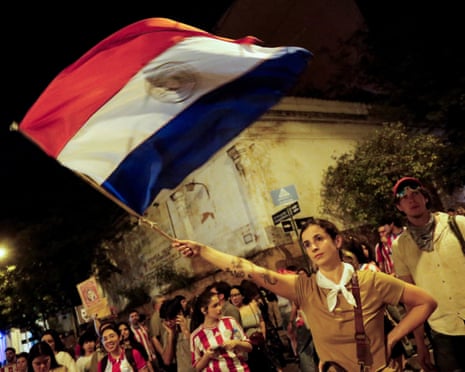 People protest on the street near Congress, following former President Santiago Pena's removal from office in an impeachment trial that looked at his connections to digital lender Ueno. Photograph: César Olmedo/Reuters
theguardian.com
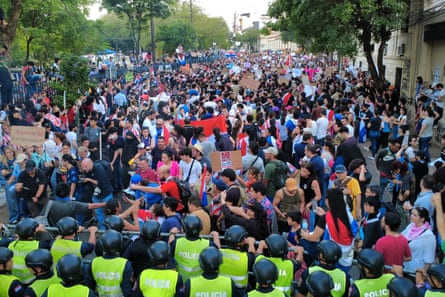 Demonstrators take part in a protest against the banking crisis. Photograph: Jose Bogado/AFP/Getty Images
theguardian.com
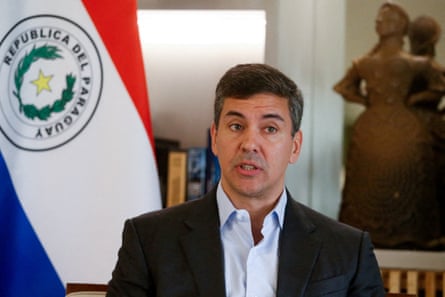 A file photo of Paraguay’s impeached president Santiago Peña. Photograph: César Olmedo/Reuters
theguardian.com
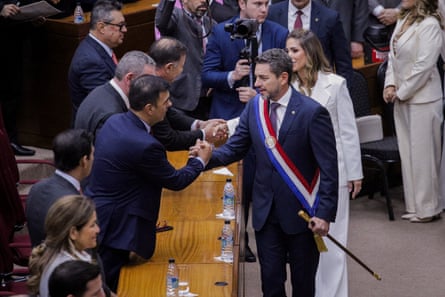 Pedro Alliana is sworn in as president of Paraguay on Friday. Photograph: Nathalia Aguilar/Anadolu/Getty Images
theguardian.com
Paraguay's Congress concluded Santiago Peña's impeachment trial on Friday, and minutes later a prosecutor arrived at his home with police to place the ousted president under house arrest. The trial examined his ties to the digital lender Ueno, whose suspension this week froze the accounts of 2.9 million people — roughly 60% of Paraguay's adult population, left unable to pay for bread and water with their own money. Vice-president Pedro Alliana was being sworn in as the country's new leader as the arrest warrant, which also covers former central bank chief Carlos Carvallo Spalding, was executed.
The sequence of appointments reads like the indictment itself. Soon after taking office, Peña named Spalding, a former CEO of Ueno, to head the central bank; three months later Spalding approved Ueno's licence as a digital bank — regulating the company he used to run. Ueno became one of Paraguay's largest banks by deposits within a few years. Peña held about one million dollars in shares in a company that became Ueno Holding in 2022, and only disposed of them in April 2025, well into his presidency. He has said he bought the shares purely as an "investor".
Peña tried to resign on Thursday rather than face the conclusion of the trial. The move mattered because former presidents in Paraguay automatically become senators for life, with special jurisdiction shielding them from ordinary courts. Lawmakers refused the resignation, keeping him subject to the prosecutors who on Thursday opened an investigation into illicit enrichment, money laundering and influence peddling. Rumours that he had fled to Argentina circulated until prosecutor Elena Fiore Franco confirmed outside his home that he had voluntarily let officers in.
Peña left his defence to his lawyers during the proceedings and instead kept posting on social media, bidding farewell "with gratitude, while fully recognising the anguish of those who are now waiting for answers" — the 2.9 million Ueno customers still locked out of their money. One of Donald Trump's main allies in the region until this week, the 47-year-old economist watched protests spread across the country, some turning violent, while his own Colorado party declined to save him.
The bank that grew under a president's protection now determines his legal status, and the regulator he appointed decides whether 2.9 million depositors get their money back.