
At least one worker a day loses a limb in Panipat
Guardian on-the-ground report from world's largest textile recycling hub finds no safety gear in 20,000 factories, Western discarded clothes become furnishings for H&M Home and Ikea
Images
 A worker operates a cylinder carding machine, which separates, cleans and blends fibres, at a factory in Panipat, one of the world’s largest textile recycling hubs
theguardian.com
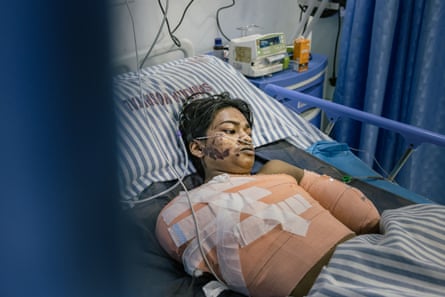 Suraj Kumar: ‘I wish I had died rather than lost both my arms’
theguardian.com
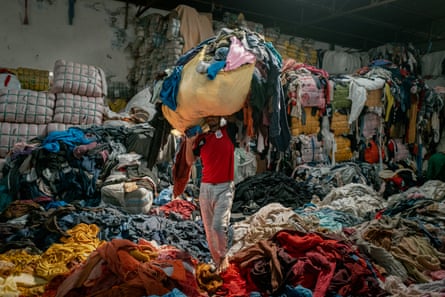 A worker among piles of secondhand clothing at a warehouse in Panipat
theguardian.com
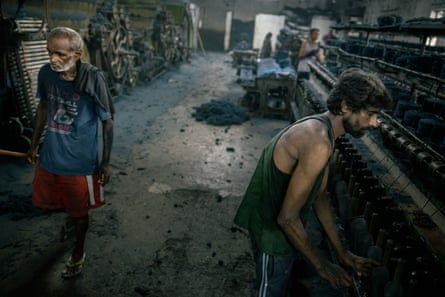 Workers process shredded textiles into yarn at a factory in Panipat: the city’s 20,000 factories employ about 300,000 people
theguardian.com
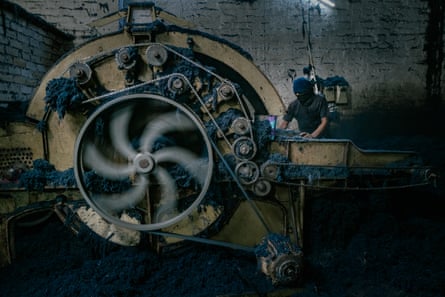 A man operates a cylinder carding machine. Injuries are common in Panipat’s factories because machinery often lacks the necessary safety mechanisms
theguardian.com
Suraj Kumar, 19, travelled from West Bengal to Panipat, an industrial city in the northern Indian state of Haryana, to feed discarded clothes into shredding machines — work he hoped would let him send money home to his parents. In late August, an electrical short circuit propelled him into the mechanism. Both of his arms were crushed. "I wish I had died rather than lost both my arms," he told the Guardian. He is an only child who now fears becoming a financial burden on the parents he set out to support.
Panipat is one of the world's largest textile recycling hubs, processing by some estimates more than a million tons of used clothing every year — garments discarded in the US, Canada and Europe, torn back into fibres, spun into yarn and made into finished home furnishings sold by brands including H&M Home, Ikea, Primark, Tesco and Walmart. Some 20,000 factories employ around 300,000 people.
The local cost of the West's circular fashion is counted in limbs. Ramesh Chaudhary, an environmental activist who has tracked injuries across Panipat for five years through a network of labour contractors, estimates at least one worker loses a limb every day, rising to as many as five on some days — and not all cases reach him. During one week in August, the Guardian monitored reports from eleven private and two government hospitals in the city and counted six textile workers with severe limb injuries: two lost an arm, one man lost both arms, one a hand, one a leg, one their fingers.
The mechanics are unglamorous. Machinery often lacks safety mechanisms, and cutting the power to a spinning machine may not stop it immediately — by the time it halts, a caught worker is already catastrophically injured. On numerous visits to spinning units and factories, the Guardian saw no one wearing any safety gear, and none of the workers interviewed reported having received safety training. India's 1948 Factories Act places a duty on factory owners to protect workers' health and safety.
The clothes arrive in Panipat carrying the moral surplus of Western consumers — the sense that a garment's second life cancels its first. European regulation governs what may be exported as waste; nothing in it governs what happens to the hands that process it.