
Royal Navy launches strike drones from HMS Queen Elizabeth in historic first
British-built one-way aircraft fly from carrier deck alongside F-35B jets, attritable airframes rewrite the loss calculus that keeps carriers away from real fights
Images
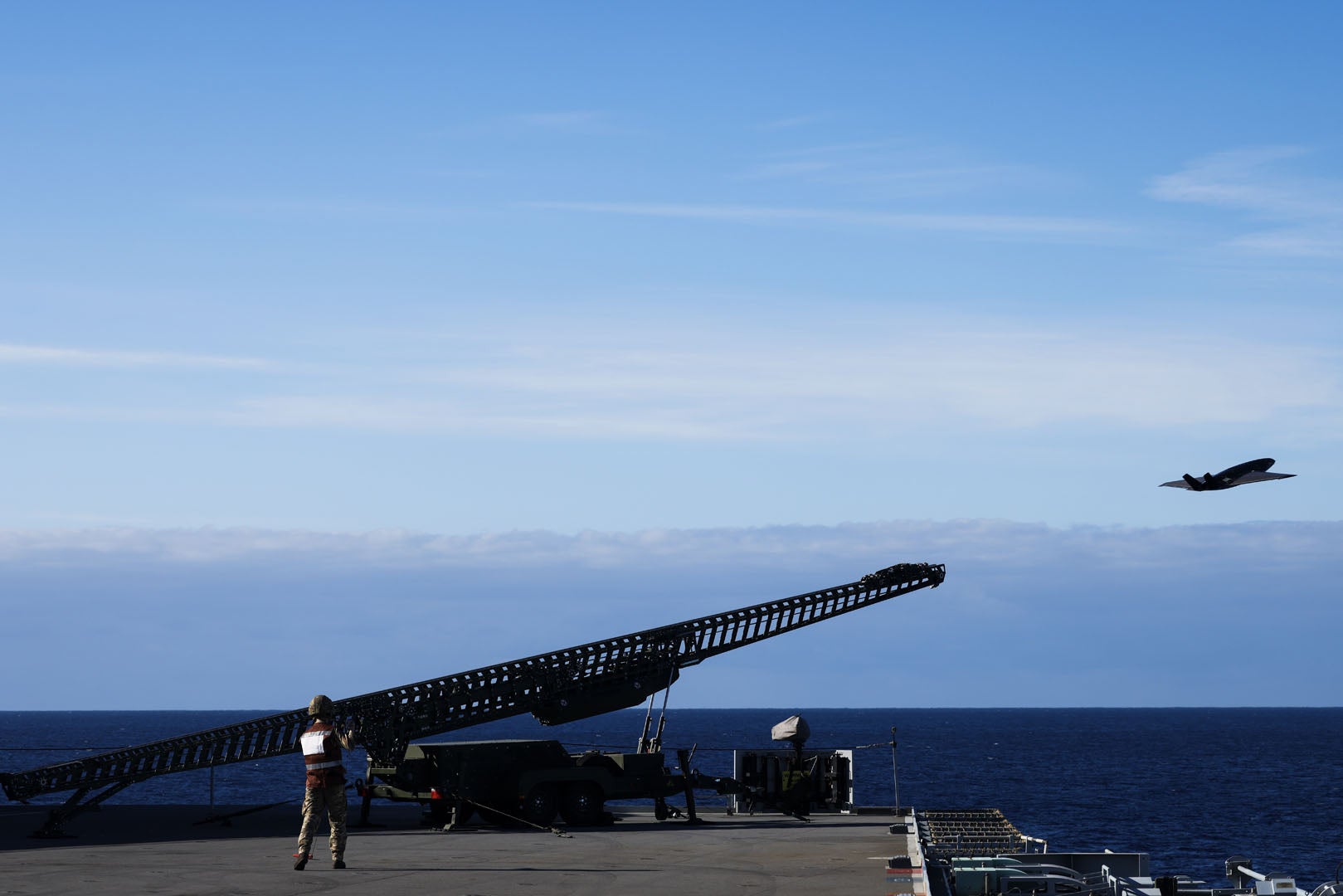 The Royal Navy has successfully launched strike drones from an aircraft carrier for the first time (MoD)
MoD
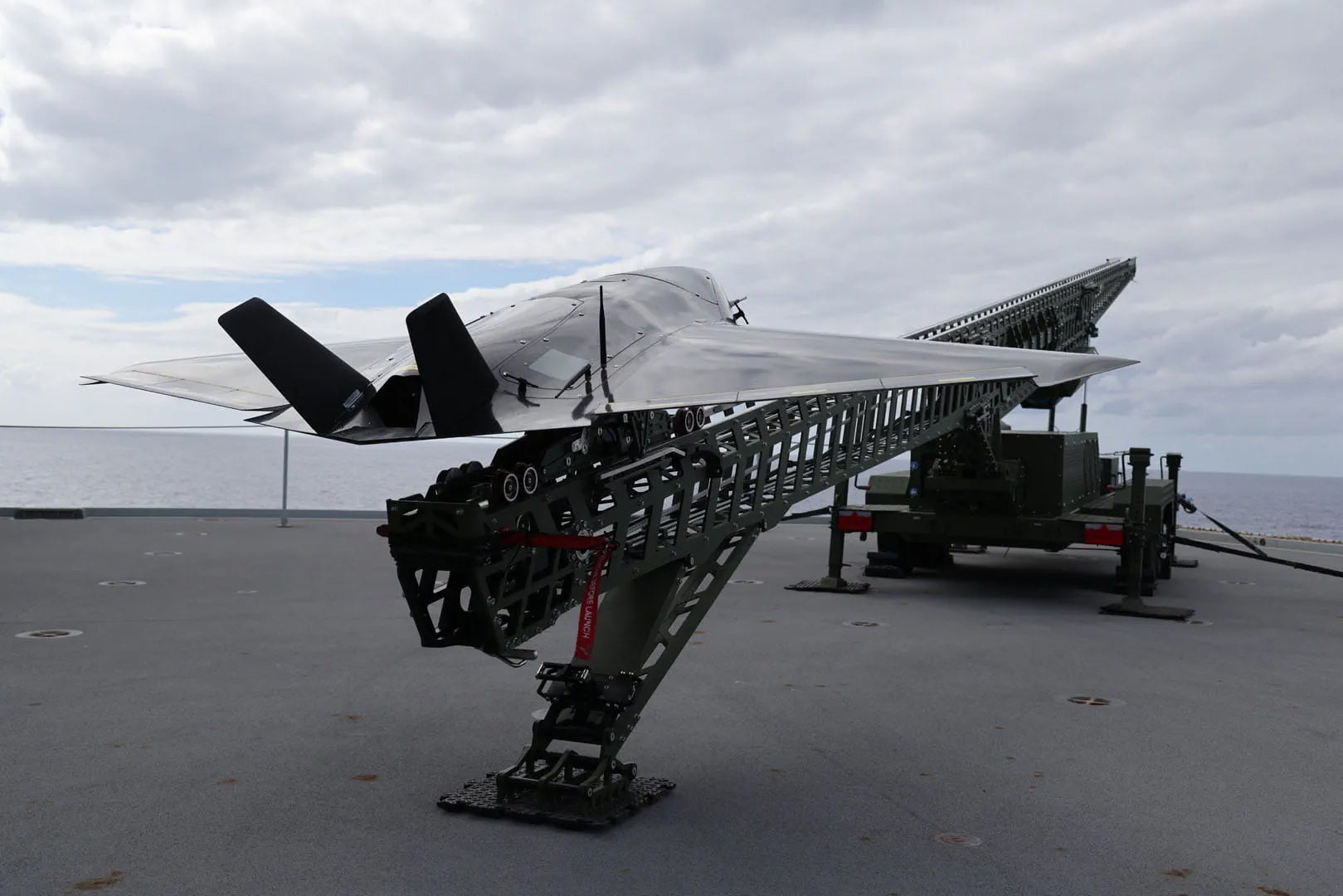 A Nyan drone awaits launch from the flight deck (MoD)
MoD
The Royal Navy has launched strike drones from an aircraft carrier for the first time, flying British-made Nyan Maritime one-way drones from the flight deck of HMS Queen Elizabeth in the North Atlantic in mid-October. The trials, run alongside F-35B stealth jets, mark the first time autonomous strike systems have operated from a British carrier — a ship class whose entire design was built around the fighter it now flies alongside.
Each F-35B costs nine figures and depends on a support chain spanning the Atlantic, which is precisely why Western carriers spend their deployments at a careful distance from anyone who can shoot back. A one-way drone built by Callen-Lenz in Wiltshire changes that arithmetic: a captain who can lose an airframe priced like a car can send aircraft into an opponent's missile envelope and still keep his ship in the fight. The number that matters is no longer tonnage or sortie rate but cost per lost airframe.
The carrier hosted the exercise concurrently with Heavy Lift Challenge 3, which put a Tekever AR5 fixed-wing uncrewed aircraft — a seven-metre wingspan, 80 kilograms of payload — on a carrier deck for the first time. The drone had already flown from the experimentation ship XV Patrick Blackett earlier this year; the move to Queen Elizabeth puts it on an operational hull. The Royal Navy worked with experts from across the Armed Forces and industry on the flights.
The trials sit inside the government's Defence Investment Plan, which allocates more than £5 billion for autonomous systems by 2030, including at least £1.3 billion for a hybrid fleet of crewed and uncrewed ships and at least £210 million for low-cost, long-range one-way attack drones across the Navy, Army and RAF. The first large autonomous vessels are scheduled to be in service by 2030.
Britain is running the experiment while the F-35 order book is still open — and before a single hull has to answer the question of what a 65,000-tonne carrier is for.