
CCRC took five years to reject four of Jeremy Bamber's ten appeal points
Guardian re-examines White House Farm massacre 40 years on, police force was allowed to interview the witness whose testimony undermined its own case
Images
 Jeremy Bamber summary farm evidence files Composite: Composite: Guardian Design; Peter Case/Mirrorpix/Getty; Ted Blackbrow/ANL/Shutterstock
theguardian.com
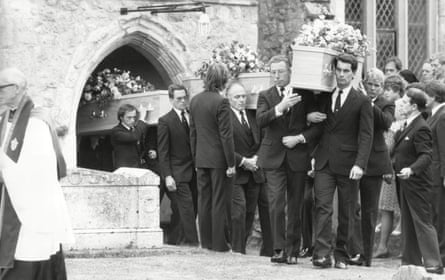 The funeral of Sheila Caffell, her twin sons and her parents in August 1985. Photograph: Chris Barham/ANL/Shutterstock
theguardian.com
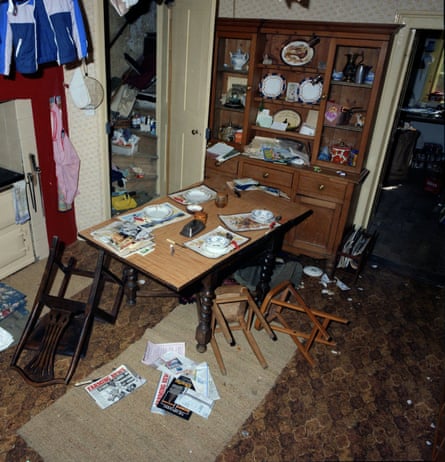 A crime-scene photograph taken at White House Farm after the massacre.
theguardian.com
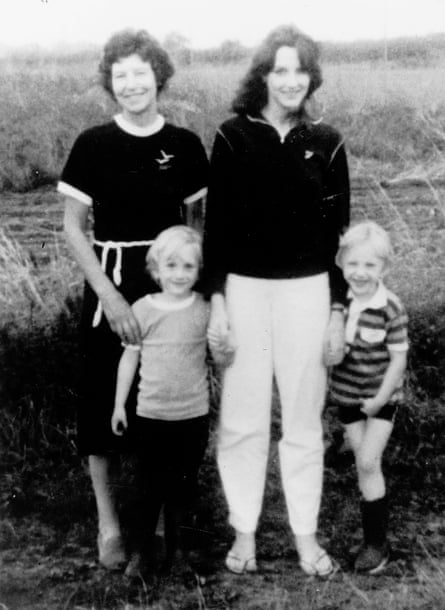 June Bamber (left), Caffell and her twins Nicholas and Daniel, who were all found dead at White House Farm. Photograph: Trinity Mirror/Mirrorpix/Alamy
theguardian.com
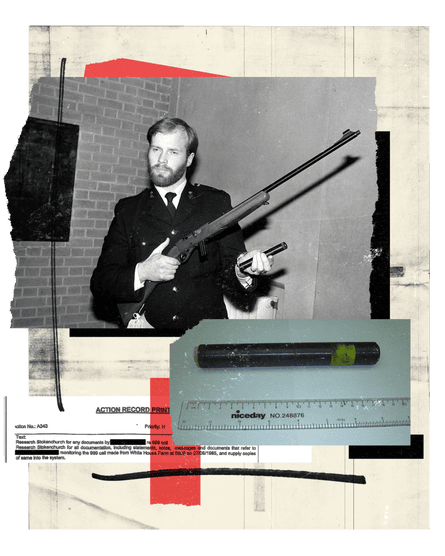 Composite: Guardian Design; PA; supplied image
theguardian.com
Forty years after Jeremy Bamber was convicted of murdering five members of his family at White House Farm in Essex, the Guardian has published a new interactive investigation into one of British legal history's most contested convictions. Bamber has always protested his innocence, and his case has now been before the Criminal Cases Review Commission three times.
The commission referred the case to the court of appeal once, in 2001. That panel concluded: "The more we examined the detail of the case, the more likely we thought it to be that the jury were right." In 2012 the CCRC refused to refer it back. Bamber made a new submission in 2021 containing ten points; the commission has so far rejected four of them. Examining those four points has taken five years.
In 2024, the investigative journalist Heidi Blake challenged the safety of the conviction in the New Yorker, in a piece later adapted into the podcast "Blood Relatives." Blake interviewed Nicholas Milbank, a former Essex police officer, who told her he had been monitoring the open phone line at the farmhouse on the night of 7 August 1985. Milbank said that at 6.09am he received a 999 call from inside the house — at a time when Bamber had been standing outside with police for two hours. If accurate, the call is difficult to reconcile with the prosecution's account that Bamber's sister, found dead inside, had killed the family and herself.
What followed is the story's sharpest detail. The CCRC did not interview Milbank itself. It allowed Essex police — the force Milbank had worked for, and whose original investigation the call would undermine — to interview him instead. Essex police reported back that Milbank had never, to his knowledge, spoken to the New Yorker. The commission chose to believe Essex police rather than the New Yorker.
The Guardian's reporting on the case was begun by the late Eric Allison, its former prisons correspondent, alongside the author of the current investigation. Bamber was initially jailed for a minimum of 25 years; his sentence was later upgraded to a whole-life term.