
Putin seizes Japan Tobacco's Russian operations by decree
4 000-employee business holding 40 percent of the cigarette market passes to state-linked holding, $4.6 billion invested since 1999 becomes a bargaining chip
Images
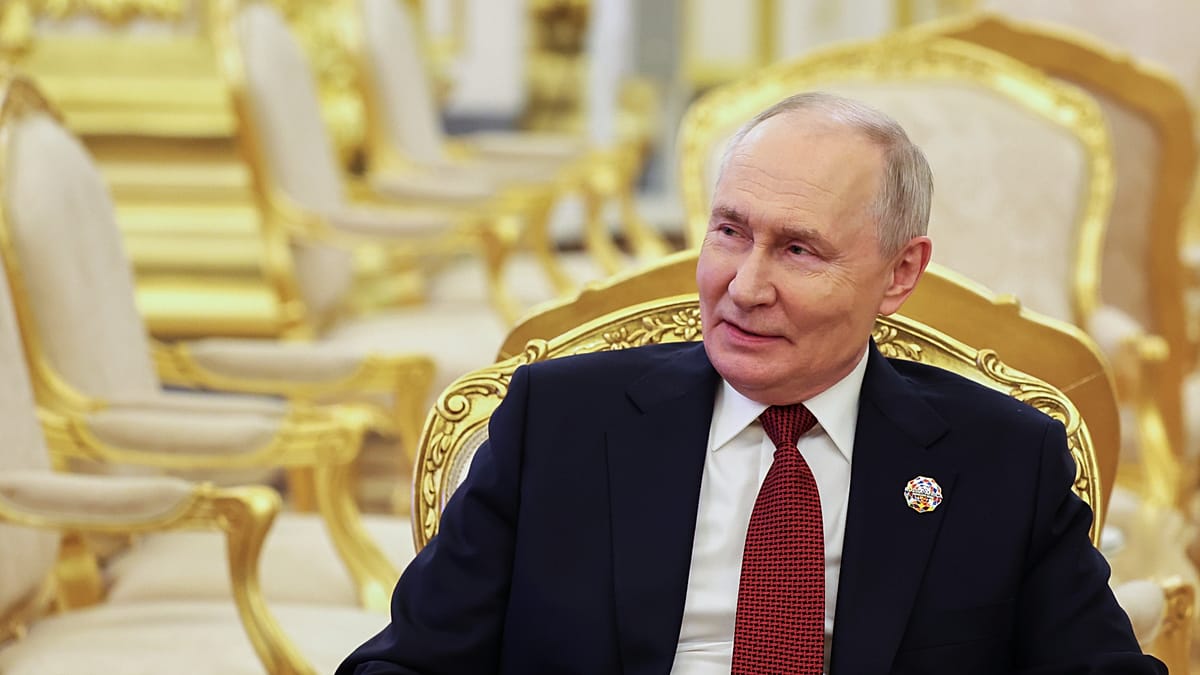 Putin seizes Russian operations of Japanese tobacco giant JTI
euronews.com
Russia has seized the local operations of Japan Tobacco International, transferring the world's third-largest tobacco company's Russian business to a state-linked holding by presidential decree. JTI's factories in St Petersburg, Rostov-on-Don and the Lipetsk region — roughly 40 percent of the Russian cigarette market, staffed by around 4,000 employees — now sit under AO Promyshlennye aktivy, a vehicle already used to take control of assets belonging to Nestlé, Auchan, Leroy Merlin and Metro.
The mechanics matter more than the headline. External management, as Moscow presents it, means state-appointed administrators run a company's Russian assets without the foreign owner's consent and without compensation. Ownership papers may survive; control does not. For companies that chose to stay after the 2022 invasion, calculating that suspended investment plus compliance would preserve their stake, the decree answers the question they had postponed: the asset was always Moscow's to take. Dividend caps for firms from 'unfriendly' states had already trapped profits inside Russia, and substantial exit fees ensured that leaving was expensive too. Staying and leaving both led to the same place.
JTI had the most institutional history of almost any foreign firm in Russia. It entered the market in 1999, bought local producer Donskoi Tabak in 2018, and its parent group had invested $4.6 billion in the country over more than two decades, according to a company profile updated in November 2025. Its portfolio spans Winston, Camel and Sobranie alongside domestic labels like Pyotr I and Russky Stil — brands that kept generating revenue through three years of war.
The timing points beyond tobacco. Last month Russia arrested Yuki Imai, a journalist with the Hokkaido Shimbun, on espionage charges, and the Russian Foreign Ministry has accused Tokyo of systematically using journalists to gather intelligence inside Russia. Japan rejected the accusation. Tokyo joined some Western sanctions after 2022 but never cut the commercial ties that full alignment with Washington's sanctions regime would have required — and JTI's continued presence in Russia was the most visible example of that half-measure. The seizure suggests the distinction bought Japan nothing. Putin said on 1 October that the external-management mechanism lets Russia prepare 'retaliatory measures' against any future nationalisation of Russian assets abroad, while leaving open the return of control to former owners if 'conditions improved' — a formulation that turns every foreign asset in Russia into a bargaining chip.
The precedent extends past Japan. Every remaining Western company on the external-management list now negotiates from a position that no longer exists.