
US voters pass 44 local bans on data centers in one election day
First binding verdict on AI buildout lands at zoning level where lobbying does not reach, UK grid already queues more datacentre demand than national peak
Images
 Hegseth vows to keep fighting Iran
cbsnews.com
 "Voice of Logan Airport" winner
cbsnews.com
 Political twists and turns of 2026 midterms
cbsnews.com
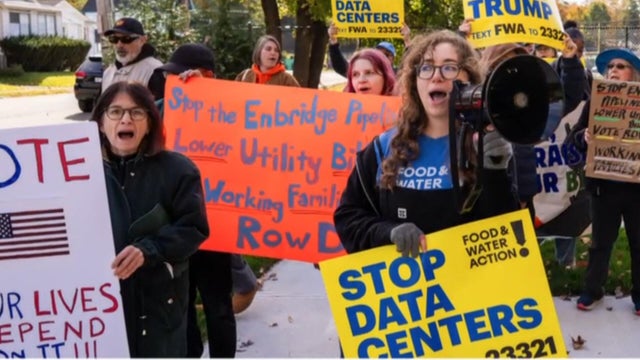 Americans vote against data centers
cbsnews.com
 Trump files appeal in "hush money" case
cbsnews.com
Voters approved 44 local ballot measures restricting data centers on a single election day, the first binding democratic verdict on the AI buildout and one that arrived simultaneously across districts rather than through any coordinated campaign. The measures passed amid concerns over the facilities' power usage and over potential job losses tied to artificial intelligence. The incentive map is unusually clean. The megawatts, the water draw and the grid strain land on the towns hosting the facilities; the profits accrue to hyperscalers headquartered elsewhere. A municipal zoning board is one of the few actors the industry cannot lobby past, because its members answer to voters who pay the local electricity rates. Tuesday's results suggest those voters have started reading their utility bills. The scale of what they were voting on is not small. In Britain, the national grid faces 73 gigawatts of queued datacentre connection requests against a national peak demand of roughly 45 gigawatts — the equivalent of one and a half Britains' worth of electricity waiting in a connection queue. American local grids face the same arithmetic in smaller increments, which is precisely why it surfaces at the level of county ballots rather than federal regulation. Activists in 15 countries staged two days of protests against datacentres this week, demanding a moratorium on large AI projects. The difference between the two stories is who holds the pen: protesters can be dispersed, but 44 zoning restrictions that passed by vote cannot be negotiated away by a vendor's government-relations team.