
Gavin Newsom commutes all 548 death sentences in California
Western hemisphere's largest death row converts to life without parole, voters rejected repeal at the ballot box in 2016
Images
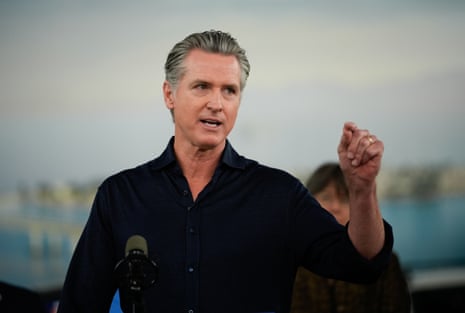 Gavin Newsom speaks during an event at the Bridge Yard Facility in Oakland, California, on 7 August 2026. Photograph: Tayfun Coşkun/Anadolu/Getty Images
theguardian.com
 Newsom said the decision to clear death row was among the most difficult choices of his career (AP)
independent.co.uk
 Newsom is known as a Trump critic and grew in popularity in part because of his social media posts mocking the president (AFP via Getty Images)
AFP via Getty Images
Gavin Newsom announced on Thursday that he will commute all 548 death sentences in California, converting what his letter describes as the largest death row in the western hemisphere to life imprisonment without the possibility of parole. The 529 men and 19 women covered can no longer be executed under a future administration, and the mass commutation is the largest clearing of any US death row in modern history. California has not carried out an execution since 2006.
Voters rejected a ballot measure to repeal the death penalty in 2016, and Newsom spent his second term acting against it by administrative means: an execution moratorium in 2019, the dismantling of the death chamber at San Quentin prison, transfers of the condemned to facilities with greater freedom of movement — while the sentences themselves stayed on the books and hundreds kept living under death warrants nobody was carrying out. His office's figures describe that limbo: 220 of the 548 had waited 15 years or more for habeas counsel to be appointed, 139 had waited 20 years or more, and 45 had exhausted their appeals — executable the day any successor lifted the moratorium. Thursday's announcement followed the failed execution of Christa Pike in Tennessee, which drew global outrage and renewed calls for a nationwide pause on capital punishment.
"I take this action because I firmly believe that state-sanctioned killing is incompatible with California's values," Newsom wrote, adding that "I alone bear responsibility for this decision and its impact, just as I alone would bear responsibility for each execution," and acknowledging the announcement "may surface excruciating memories for victims' families." The ACLU, which is separately suing to have California's death penalty statute struck down as racially discriminatory, applauded the move, as did Martin Luther King III, the death-penalty lawyer Bryan Stevenson, and Jeanne Woodford — the former state prisons director who oversaw four executions and now says she is haunted by the fear of executing an innocent person, noting that more than 200 people sentenced to death nationwide have been exonerated.
Newsom leaves office after eight years as a probable candidate for the presidency in 2028, having peaked at 40 percent in prediction markets for the Democratic nomination and having said he will stand aside only if Kamala Harris runs. Under the state constitution, the California Supreme Court must still approve clemency for anyone convicted of multiple felonies before those conversions take final effect.
In 2016, California's voters were asked whether to keep the death penalty and voted to keep it. On Thursday, a governor at the end of his term retired it by letter.