
Israeli election commission finds no fraud in vote Netanyahu disputed
Final results strip his coalition of its majority, Herzog expected to hand coalition talks to Eisenkot
Images
 The Israeli president, Isaac Herzog (right), receives official results of the general election from the chair of the Central Elections Committee, Noam Sohlberg. Photograph: Abir Sultan/EPA
theguardian.com
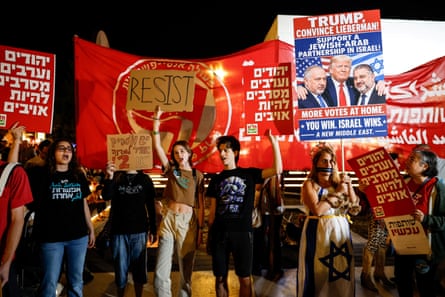 People take part in a rally in Tel Aviv calling for the opposition to form a government with the Palestinian-led parties after last week’s general election. Photograph: Jamal Awad/Reuters
theguardian.com
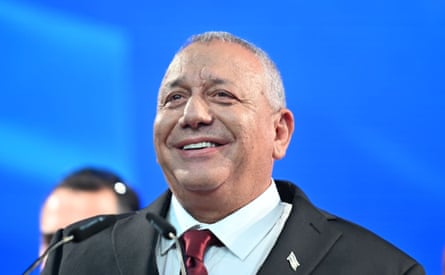 Gadi Eisenkot has secured the public support of all the Jewish Israeli opposition parties. Photograph: Paulina Patimer/JNA/Zuma Press/Shutterstock
theguardian.com
Israel's Central Elections Committee confirmed the final results of last week's general election on Wednesday and formally rejected Prime Minister Benjamin Netanyahu's claims of mass voting fraud, finding no evidence of irregularities that compromised the integrity of the vote. The confirmed results strip Netanyahu's far-right coalition of its governing majority.
Committee chair Noam Sohlberg said some "suspicions" remained under investigation but that they did not cast doubt on the election as a whole or justify delaying the results. The rejected allegations had included large-scale foreign interference and voter fraud — promoted by Netanyahu after Arab parties won 19 Knesset seats on historic turnout among Palestinian citizens of Israel, including Bedouin women voting in unprecedented numbers.
The fraud claims did not stand alone. The Shin Bet security service, headed by Netanyahu's handpicked chief David Zini, had demanded to interrogate senior politicians from the Palestinian-led parties — a demand the attorney general, Gali Baharav-Miara, blocked, saying she had been presented with no evidence of wrongdoing. "In a country governed by the rule of law, neither citizens nor elected officials can be interrogated without evidence that justifies doing so," she said. Haaretz reported the attempted interrogations targeted four politicians.
Challenger Gadi Eisenkot, a former military chief of staff who lost his son fighting in Gaza, accused Netanyahu of conducting a "pogrom against democracy" and of weaponising the security services against domestic opponents. "The employees of the Ministry of Defense, law enforcement and the civil service in Israel are servants of the state, not the king," Eisenkot said. A rally in Tel Aviv has called for the opposition to form a government with the Palestinian-led parties.
President Isaac Herzog, who denounced racist attacks on Palestinian citizens who voted, will choose which politician gets the first chance to build a coalition — and is expected to name Eisenkot, possibly within days. The coalition mathematics that follow run through one of two calculations: a government resting on the 19 Arab mandates, unthinkable for Netanyahu's bloc, or payment to the ultra-Orthodox parties in the form of the military service exemption that costs the state 35 billion shekel a year. The Ra'am party has already recommended Eisenkot, and the Joint List has said removing Netanyahu is its priority.
The man who alleged the vote was stolen lost it by the count everyone now accepts, including his own appointees.